
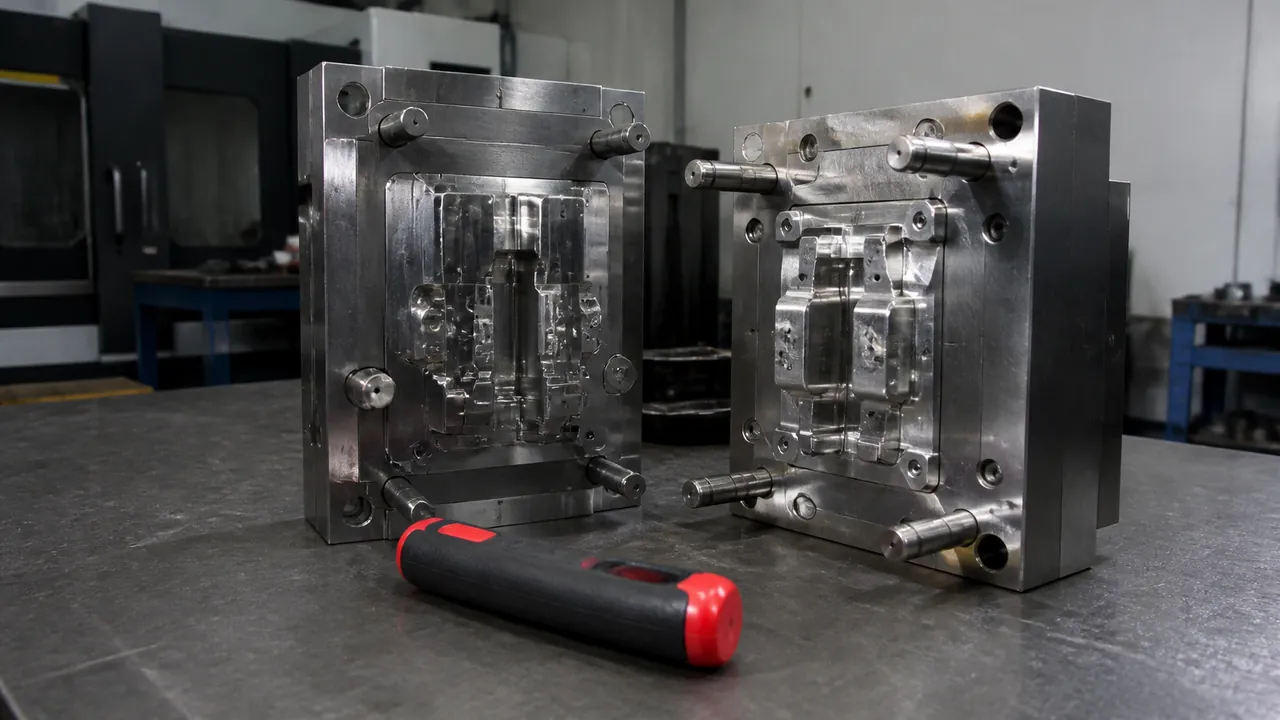
The Critical Role of Precision Robotics Structural Parts
In the rapidly evolving landscape of industrial automation, the difference between a market-leading robotic system and a costly failure often lies in the unseen components: the structural parts. These are the frames, arms, bases, end-effector mounts, and joint housings that form the skeleton of every robot. Unlike off-the-shelf electronic components, structural parts are highly specialized, engineered to withstand specific loads, vibrations, and thermal conditions. The selection of a robotics structural part supplier is therefore not merely a procurement decision; it is a strategic engineering choice that impacts the performance, lifespan, and total cost of ownership of your robotic fleet.
Choosing the wrong supplier can lead to misalignment, premature wear, and catastrophic failure in high-cycle applications. Conversely, the right partner brings material science expertise, precision machining capabilities, and rigorous quality control to the table. This article provides a comprehensive guide to navigating this critical supply chain decision, ensuring that your robots are built on a foundation of uncompromising quality.
Understanding the Engineering Demands of Robotic Structures
Before evaluating suppliers, one must understand what makes robotic structural parts uniquely challenging. A robot arm experiences dynamic loads that change direction and magnitude thousands of times per minute. This requires materials and geometries that offer a specific combination of stiffness, damping, and weight optimization. The primary materials used in this domain include:
- Aluminum Alloys (6061-T6, 7075-T6): Preferred for their excellent strength-to-weight ratio and machinability. They are ideal for moving links and wrist housings where mass inertia must be minimized.
- Carbon Fiber Composites: Used in high-speed, high-payload robots where minimal deflection is critical. They offer superior stiffness but require specialized fabrication processes.
- Cast Iron & Nodular Iron: Typically used for robot bases and pedestals. Their high mass provides stability and dampens vibration, which is essential for precision positioning.
- Hardened Steel: Reserved for high-wear components like gear housings and bearing journals where surface hardness is non-negotiable.
The manufacturing process is just as critical as the material. A structural part must maintain tight geometric tolerances—often within ±0.01 mm—to ensure that joints align perfectly. If a supplier uses inferior CNC machining centers or lacks temperature-controlled environments, the parts will expand, contract, and warp, leading to inaccuracies in the robot's end effector. Furthermore, surface finishing is not cosmetic; it affects friction, corrosion resistance, and the ability to seal against contaminants.
Key Performance Metrics for Structural Integrity
When assessing a potential supplier, you must verify their ability to meet specific performance metrics. These are not general manufacturing standards but rather robot-specific requirements:
- Dimensional Tolerance: The ability to hold tight tolerances on complex 3D geometries, including true position, concentricity, and flatness.
- Surface Roughness (Ra): For mating surfaces, a Ra of 0.8 µm or better is often required to prevent fretting and micro-movement under load.
- Material Traceability: Full certification of material composition and heat treatment, ensuring that the part does not fail due to internal stress fractures.
- Fatigue Life: The supplier should provide data or simulations showing that the part can withstand the expected number of load cycles without cracking.
A supplier that cannot demonstrate control over these parameters is a liability. Look for certifications like ISO 9001:2015 for quality management and AS9100 if you are in aerospace-adjacent robotics, as these indicate a culture of rigorous documentation and continuous improvement.
Evaluating Supplier Capabilities: Beyond the CNC Machine
Many machine shops claim to make "precision parts," but few understand the specific demands of robotics. A true robotics structural part supplier offers more than just machining hours; they provide engineering collaboration. Here are the core competencies to evaluate:
1. Design for Manufacturability (DFM) Expertise
Your supplier should not just read your drawings; they should challenge them. An experienced partner will review your part design and suggest modifications that reduce cost without sacrificing strength. For instance, they might recommend adding internal ribbing to prevent warping during heat treatment or changing a corner radius to allow for a stronger tool path. This proactive approach is a hallmark of a value-add supplier. They use software like Finite Element Analysis (FEA) to predict how the part will behave under load, identifying stress risers before metal is even cut.
2. Multi-Process Integration
Robotic structures rarely require only machining. A complex arm might need: - Welding: For fabricated bases. - Heat Treatment: To relieve stress and achieve target hardness. - Surface Coating: Such as hard anodizing for aluminum or powder coating for corrosion resistance. - Precision Grinding: For bearing seats that require a mirror finish.
If you must outsource these steps to different vendors, you risk tolerance stack-up and logistical delays. The ideal supplier has these capabilities in-house or has strategic partnerships with vetted local shops. This ensures that the part is handled minimally and that the final inspection is done on the complete assembly, not just the raw machined piece.
3. Quality Assurance and Metrology
Ask about their inspection equipment. A reputable supplier will use a Координатно-измерительная машина (КИМ) for dimensional verification. However, for large structural parts, they should also have portable arm CMMs or laser trackers to verify features in situ. They should provide a detailed Inspection Report (FAIR) with every shipment, showing actual measured values versus nominal values. Be wary of suppliers who only provide "certificates of conformance" without data—this is a red flag indicating they did not actually measure the part.
4. Scalability and Production Volume
Are you building a prototype or scaling to 1,000 units per year? The supplier's capacity must match your growth. A job shop that excels at one-off prototypes may struggle with repeatability when you need a batch of 50. Conversely, a high-volume production house may not be flexible enough for iterative design changes. Look for a supplier that offers a clear roadmap for scaling: they should have multiple CNC cells, automated pallet systems, and the ability to add shifts without compromising quality.
Material Sourcing and Supply Chain Resilience
The global supply chain for aluminum and specialty steels has been volatile. A supplier who cannot secure raw material is a bottleneck. Inquire about their sourcing strategy. Do they have long-term contracts with mills? Do they stock raw material for common alloys? A strategic supplier will purchase material in bulk and store it in a controlled environment to prevent corrosion and moisture absorption. This is particularly critical for aluminum, which can develop oxide layers that affect welding and anodizing quality.
Furthermore, consider the geopolitical and logistical stability of the supplier's location. If you are in the EU, a supplier in Asia may offer lower prices, but shipping costs and lead times of 6-8 weeks can cripple your production schedule. Sometimes, a slightly more expensive local supplier who can deliver in 2 weeks is the smarter economic choice when you calculate the cost of inventory holding and downtime.
Applications Across the Robotics Spectrum
The right structural supplier will be versatile. Different robotic applications impose unique demands on the structure:
- Articulated Robots (6-axis): Require hollow-bore arms for internal cabling. The supplier must be able to machine long, deep bores with high concentricity to prevent cable chafing.
- Delta Robots: Demand ultra-lightweight carbon fiber arms to achieve accelerations of 10g+. The supplier must have expertise in composite layup and bonding, not just metal cutting.
- Collaborative Robots (Cobots): Need force-sensing housings with capacitive or torque-based sensors. The structural part must be machined with non-magnetic materials to avoid interfering with sensor readings.
- Heavy-Payload Systems (Mobile Manipulators): Require robust bases with integrated fork pockets and mounting points for ballast. The supplier must excel in heavy plate fabrication and welding distortion control.
Ask potential suppliers for case studies or references in your specific niche. A supplier that has only worked on small medical devices may not have the overhead crane capacity or machining envelope to handle a 500 kg mobile robot base.
Best Practices for Supplier Partnership
Once you have identified a potential partner, the way you engage with them determines success. Here are actionable best practices:
1. Provide a Complete Digital Twin
Do not send just a 2D PDF. Share the native CAD file (STEP or Parasolid) along with a detailed specification sheet that includes load conditions, safety factors, and environmental exposure. This allows the supplier to run their own simulations and flag potential issues before quoting.
2. Insist on a PPAP (Production Part Approval Process)
Even for small batches, request a PPAP-like submission. This includes: - Process Flow Diagrams - Failure Mode and Effects Analysis (FMEA) - Control Plans - Measurement System Analysis (MSA)
This formalized documentation ensures that the supplier has thought through every step of the manufacturing process and has controls in place to prevent defects.
3. Schedule On-Site Audits
Virtually reviewing a supplier is insufficient. Visit their facility to observe housekeeping, machine maintenance logs, and operator training. Look for how they handle non-conforming parts. Do they quarantine them? Do they conduct root cause analysis? A clean, organized shop floor is usually a proxy for a disciplined quality system.
4. Negotiate on Tolerances, Not Just Price
The cheapest quote is often the one with looser tolerances or "best effort" language. Be explicit about your critical-to-quality (CTQ) features. If a bore is CTQ, the supplier must charge for the extra inspection time. Do not force them to cut corners on inspection to meet your target price. Instead, negotiate on lead time or payment terms to achieve a fair total cost.
Conclusion: The Strategic Value of the Right Partner
Selecting a robotics structural part supplier is a long-term investment in your product’s reliability and your brand’s reputation. The cheapest quote will inevitably lead to higher scrap rates, field failures, and warranty claims that dwarf any initial savings. By prioritizing engineering capability, material traceability, and rigorous quality assurance, you build a supply chain that can scale with your innovation.
Remember, the structural part is the last thing to fail in a robot—but when it does, the consequences are catastrophic. It is the silent backbone that carries every payload and executes every movement. Treat it with the same respect you give your control software and actuators. Engage with suppliers as technical partners, not just vendors. Through comprehensive evaluation, clear communication, and a commitment to quality, you will find a partner who ensures your robots stand the test of time, delivering precision performance day after day.