
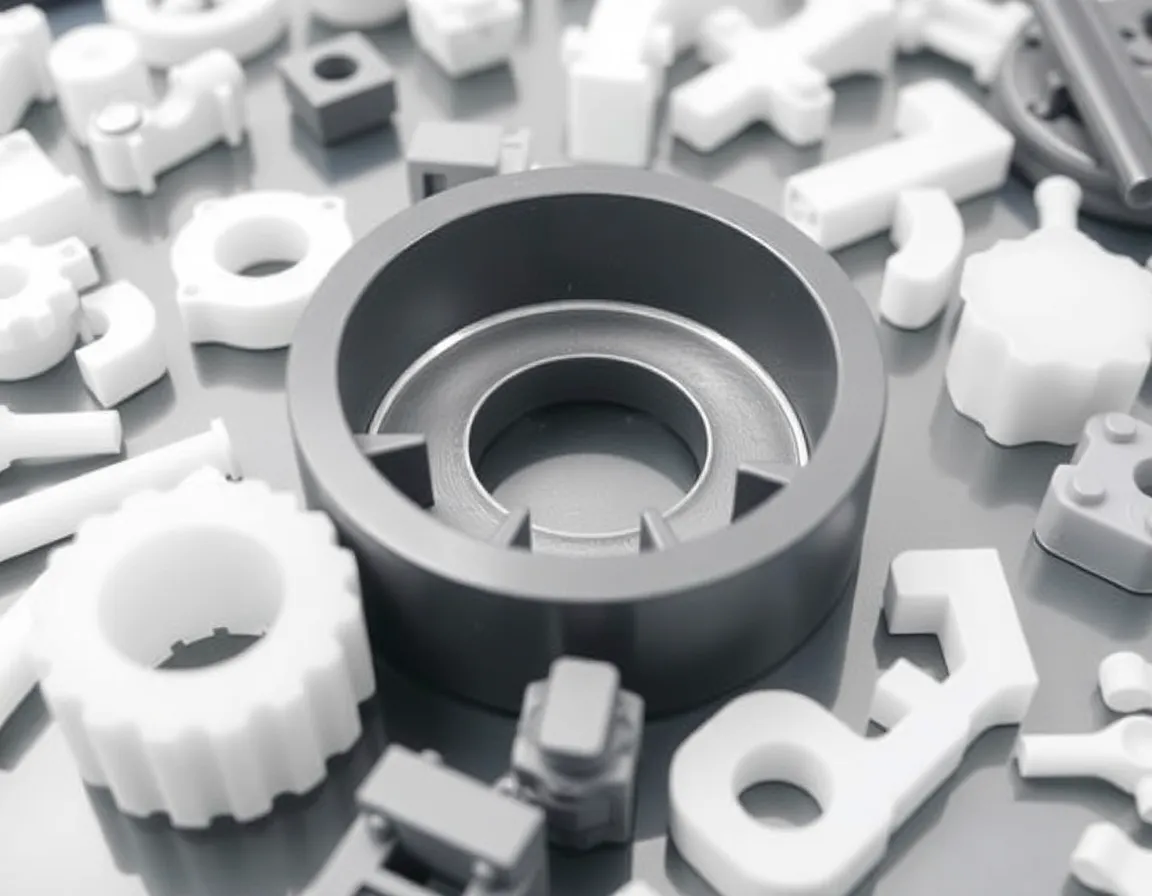
Understanding ODM Plastic Part Manufacturing
In the competitive landscape of product development, the term ODM (Original Design Manufacturer) has become a strategic differentiator for brands seeking to launch high-quality products without the heavy burden of in-house design and engineering. ODM plastic part manufacturing refers to a business model where a manufacturer designs and produces a plastic component or product based on its own existing intellectual property, which is then customized and branded by a client. Unlike OEM (Original Equipment Manufacturer), where the client provides the complete design, ODM offers a pre-existing foundation that can be tailored to specific market needs.
This approach is particularly prevalent in industries such as consumer electronics, medical devices, automotive interiors, and household appliances. The manufacturer owns the core design, tooling, and production process, while the buyer selects from existing catalogs or requests modifications to dimensions, colors, materials, and surface finishes. This collaborative model accelerates time-to-market and reduces upfront costs, making it an attractive option for startups and established enterprises alike. In essence, ODM plastic part manufacturing bridges the gap between a raw concept and a shelf-ready product by leveraging the manufacturer's specialized expertise in mold design, material science, and high-volume injection molding.
The process typically begins with a technical review of the client’s requirements. The ODM partner will suggest existing molds or designs that can be adapted. If a suitable platform exists, the manufacturer handles CAD modifications, prototype sampling, and production runs. For plastic parts, this often involves sophisticated techniques such as multi-cavity molding, insert molding, and two-shot injection to achieve complex geometries and functional integration. The result is a seamless collaboration where the client focuses on branding and distribution while the ODM partner ensures manufacturability, consistency, and cost efficiency.
Key Benefit 1: Significant Reduction in Development Costs
One of the most compelling advantages of engaging an ODM for plastic parts is the dramatic reduction in product development costs. Designing a plastic component from scratch requires substantial investment in industrial design, engineering analysis, and—most critically—prototype tooling. A single injection mold can cost anywhere from $10,000 to over $100,000 depending on complexity. When you partner with an ODM, you are essentially sharing or eliminating these costs because the manufacturer has already amortized the tooling over multiple clients or internal product lines.
Furthermore, ODM manufacturers have established supply chains for raw materials like ABS, polycarbonate, and nylon. They purchase these resins in bulk, securing lower per-unit prices that are passed on to the buyer. This economic advantage is impossible to replicate when sourcing materials independently for a one-off project. Additionally, the cost of iterative design errors is minimized. Since the ODM has already refined the part for manufacturability, you avoid the expensive trial-and-error cycle that plagues custom designs. For startups with limited capital, this financial barrier reduction is often the difference between launching a product and shelving an idea.
Lower Tooling Investment
Because the ODM owns the mold base, you only pay for modifications or a new insert, not the entire mold frame. This can reduce tooling costs by 40-60% compared to a fully custom mold. For short-to-medium production runs, this is a game-changer, allowing you to test market demand without committing to massive capital expenditure.
Key Benefit 2: Accelerated Time-to-Market
In today’s fast-paced consumer environment, being first to market can define a product’s success. ODM plastic part manufacturing excels at compressing the development timeline. A typical custom product journey—from concept, through design, tooling, and validation—can take 6 to 12 months. With an ODM, the design phase is largely complete. The manufacturer can provide samples within days or weeks, not months, because the core geometry and mold flow analysis have already been validated.
This speed is not just about the initial sample. ODM partners have established production schedules and spare capacity. They can slot your order into their existing workflow without the need for lengthy machine setup or process optimization. Furthermore, any required modifications—such as changing a snap-fit feature or adjusting wall thickness—are handled by engineers who already know the part’s behavior. This eliminates the back-and-forth communication delays often seen when working with a contract manufacturer on a brand-new design. For seasonal products or rapidly evolving tech gadgets, this acceleration in the supply chain is indispensable.
Key Benefit 3: Access to Specialized Engineering Expertise
Plastic part design is a specialized discipline that goes beyond simple 3D modeling. Issues like draft angles, gate placement, weld lines, and sink marks can ruin a product if not handled correctly. ODM manufacturers employ teams of process engineers who have spent years perfecting the art of injection molding. By partnering with them, you gain access to this deep well of knowledge without having to hire a full-time engineering staff.
These experts can advise on material selection based on mechanical stress, chemical resistance, and thermal stability. They understand how different polymers flow within a mold and can predict potential defects before a single part is produced. Moreover, they can suggest design-for-manufacturing (DFM) improvements that enhance part strength while reducing cycle time. This expertise is not just about avoiding errors; it is about optimizing the product’s performance. For instance, an ODM might suggest using a glass-filled polypropylene instead of a standard ABS to increase rigidity without adding weight, a change that a non-specialist would never consider.
Design for Manufacturability (DFM) Reviews
A professional ODM will conduct a thorough DFM review of any requested customizations. They will simulate the injection process using mold flow analysis software to ensure the part fills correctly and cools uniformly. This proactive approach prevents costly production delays and ensures that the final plastic part is consistent across every unit in the batch.
Key Benefit 4: Scalability and Production Flexibility
ODM plastic part manufacturing offers unmatched scalability for your product line. Whether you need 1,000 units for a pilot launch or 1 million units for national distribution, the ODM’s facility is equipped to handle the volume. They have a range of injection molding machines—from small 50-ton presses to large 500-ton units—allowing them to match the machine size to the part’s shot weight and clamp force. This flexibility ensures you are not paying for an oversized machine running at low efficiency.
Additionally, ODMs often offer alternative production methods, such as gas-assisted injection molding for hollow parts or overmolding for soft-grip surfaces. This versatility means you can evolve your product line without switching manufacturers. As your sales grow, the ODM can add more cavities to the mold or run multiple shifts to meet demand. Conversely, during slow periods, they can adjust production schedules to avoid excess inventory. This dynamic scaling capability is a logistical advantage that is difficult to achieve with a purely custom manufacturing setup.
Key Benefit 5: Consistent Quality and Regulatory Compliance
Quality control is paramount, especially in sectors like medical or food-contact plastics. Reputable ODM manufacturers operate under strict quality management systems, often certified to ISO 9001 or ISO 13485. They employ in-process inspection, automated vision systems, and statistical process control (SPC) to monitor critical dimensions and cosmetic surfaces. Because they are producing the same part repeatedly, they have refined their quality protocols to a high standard of reliability.
Furthermore, ODMs are well-versed in regulatory requirements. They can provide material data sheets, UL flammability ratings, and RoHS or REACH compliance documentation. If your plastic part needs to meet FDA standards for indirect food contact or specific automotive standards like SAE, the ODM has the documentation and experience to ensure compliance. This reduces your liability and administrative burden, as you do not have to research global regulations yourself. The manufacturer’s established track record with regulatory bodies also speeds up the certification process for your final product.
Rastreabilidade e Documentação
Professional ODMs maintain detailed batch records and lot traceability. If a defect is found in the field, they can quickly identify the exact raw material batch and processing conditions used. This level of traceability is crucial for recalls and warranty management, protecting your brand’s reputation.
Key Benefit 6: Easier Customization and Branding
Contrary to popular belief, choosing an ODM does not mean you are stuck with a generic, off-the-shelf part. Most ODM plastic part manufacturing services offer extensive customization options. You can alter the part’s texture, choose a custom Pantone color, or add a metallic finish. For branding, the manufacturer can integrate a logo directly into the mold via etching or use pad printing and laser engraving for post-molding decoration.
Mechanical customization is also possible. You might need a different mounting bracket, a unique snap-fit location, or an additional hole for a sensor. The ODM’s engineering team can modify the CAD file and cut a new steel insert to accommodate these changes. This hybrid approach—using a proven base design but adding your unique features—provides a level of product differentiation that is often mistaken for a fully custom design. This is particularly valuable in consumer electronics, where the internal chassis might be standard, but the external casing is unique to your brand.
Key Benefit 7: Reduced Risk and Simplified Project Management
The final, and perhaps most strategic, benefit is risk mitigation. When you work with an ODM, you are dealing with a single point of responsibility. They manage the mold, the material procurement, the injection molding process, and often secondary operations like ultrasonic welding or assembly. This eliminates the complexity of coordinating multiple vendors, which is a common source of delays and quality inconsistencies. If a problem occurs, there is no finger-pointing between the tool maker and the molder; the ODM is accountable for the entire integrated process.
Moreover, the technical risk is lower. Because the ODM’s design has been produced successfully in the past, the likelihood of catastrophic failure is minimal. You are not betting on untested engineering. This reliability extends to cost predictability. The ODM can provide accurate quotes based on historical production data, helping you manage your budget with confidence. For a company looking to expand its product portfolio without overextending its resources, ODM manufacturing offers a pragmatic, low-risk pathway to innovation.
Best Practices for Partnering with an ODM
To maximize the benefits of ODM plastic part manufacturing, you must approach the partnership strategically. First, conduct a thorough audit of the manufacturer’s facility. Look for certifications, clean room capabilities, and machine maintenance logs. Second, request a non-disclosure agreement (NDA) to protect your market strategy and any proprietary modifications you intend to make. Third, ensure that the contract clearly defines intellectual property ownership for any new tooling or design changes you fund. You do not want to pay for a mold modification that the ODM then uses for a competitor.
Additionally, communication is key. Assign a dedicated project manager from your side to interface with the ODM’s technical team. Provide clear specifications for your target market and required performance standards. Share your sales forecasts so the manufacturer can plan material purchases and machine capacity. Finally, insist on a pre-production sample approval process. This is your final opportunity to inspect the part for cosmetic defects, dimensional accuracy, and functional fit before mass production begins. By following these practices, you transform the ODM relationship from a simple vendor transaction into a long-term strategic alliance.
Evaluating Material Options
During the initial consultation, discuss the environmental conditions your product will face. If it is an outdoor device, you will need UV-stabilized polymers. If it is a medical implant, you need biocompatible grades. The ODM’s material specialist can guide you through trade-offs between cost, strength, and appearance, ensuring the final plastic part meets all performance criteria.
Applications Across Diverse Industries
The versatility of ODM plastic part manufacturing is evident in its widespread adoption. In the medical industry, ODMs produce syringes, diagnostic housings, and surgical instrument handles. In consumer electronics, they manufacture smartphone cases, earbud enclosures, and laptop frames. The automotive sector relies on ODMs for interior trim clips, dashboard components, and fluid reservoirs. Even the packaging industry benefits from ODM-produced caps, closures, and dispensing pumps that require precise tolerances and leak-proof seals.
Each of these applications demands a different balance of aesthetic quality, mechanical strength, and regulatory compliance. The ODM’s ability to maintain a diverse portfolio of proven designs allows them to quickly adapt to these varying requirements. For product managers, this means they can source a high-quality plastic part that has already been battle-tested in the market, significantly de-risking the launch of their own branded version.
In conclusion, ODM plastic part manufacturing is not merely a cost-cutting tactic; it is a strategic lever for innovation and market agility. The seven key benefits—cost reduction, speed, expertise, scalability, quality, customization, and risk mitigation—collectively empower your business to compete effectively. By leveraging the ODM’s existing infrastructure and knowledge, you can focus your internal resources on what matters most: understanding your customers, building your brand, and expanding your market reach. In a world where product lifecycles are shrinking, the ODM model provides the operational backbone needed to thrive.