
Multi-material polymer manufacturing requires seamless synchronization between machine hydraulics, dual injection barrels, and rotating mold cores. Combining rigid structural engineering thermoplastics with flexible elastomeric seals or contrasting aesthetic colors eliminates secondary manual assembly lines. Executing this multi-polymer integration within a single machine cycle reduces piece-part labor expenses while eliminating tolerance stack-up errors.
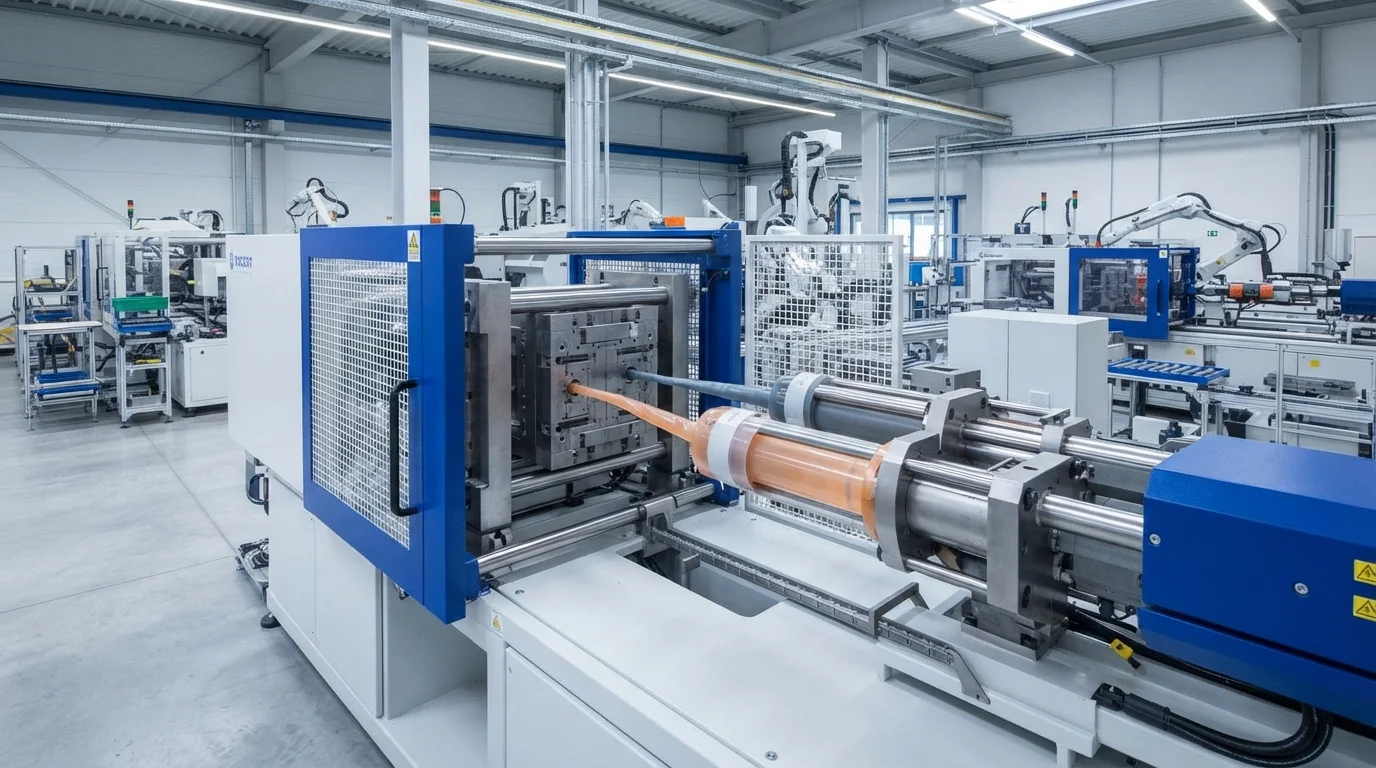
Achieving high interfacial bond strength without causing cosmetic flashing or core shift demands strict control over melt temperatures and cavity pressures. This technical engineering guide examines multi-stage injection sequencing, interfacial bonding chemistry, and scientific process control parameters.
The Complete 3-Stage Cycle: First Shot, Mold Rotation & Second Shot
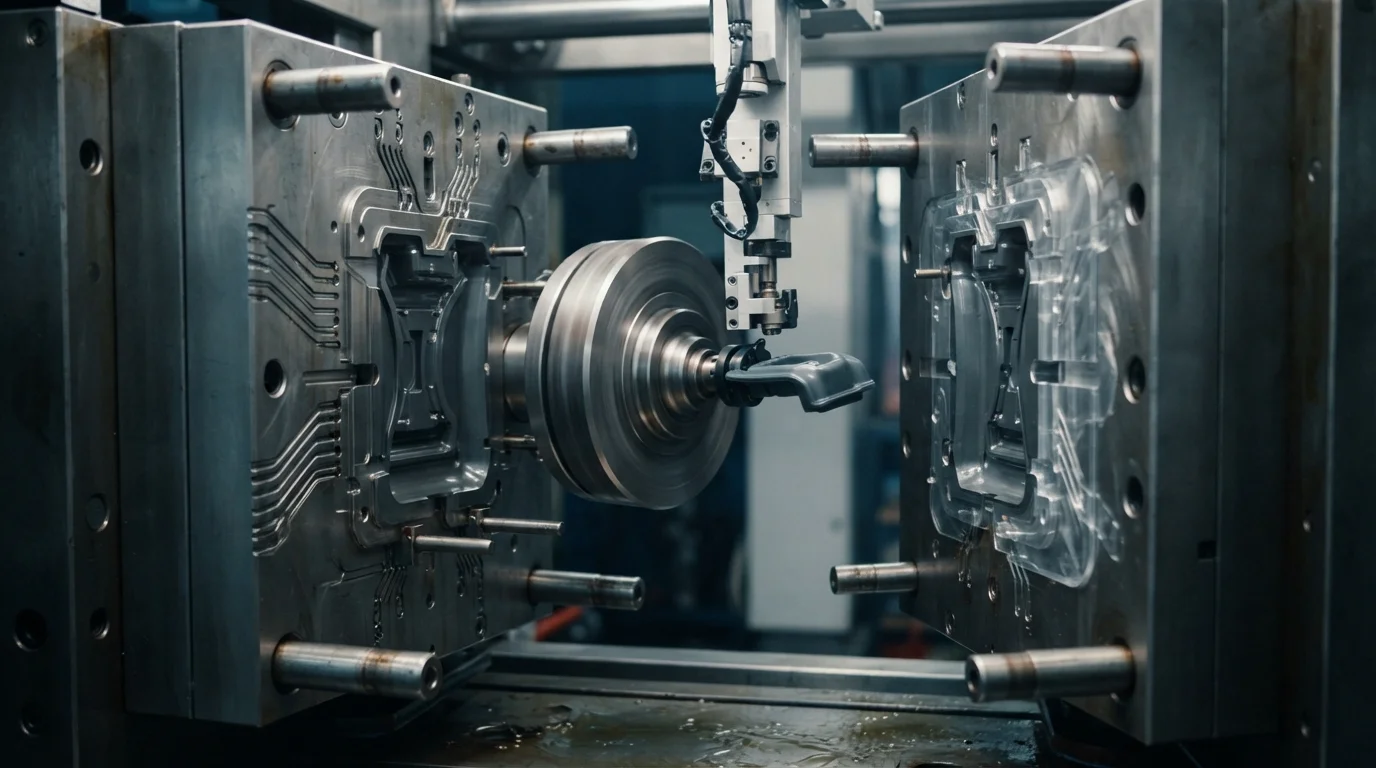
Mastering the two shot injection molding process requires precise synchronization across three automated in-mold stages. Primary injection forces rigid engineering resin through the first nozzle to form the structural substrate. Once the primary shot solidifies sufficiently to retain geometric stability, the clamping unit opens, and a precision لوحة دوارة دقيقة swivels the core plate 180 degrees.
Secondary injection immediately shoots the second resin or elastomer over designated substrate contact zones. Both material layers cool concurrently inside the tool before hydraulic or pneumatic ejectors push the completed dual-material assembly out cleanly.
Sequential 2K molding cycle stages include:
- Primary substrate injection—Injecting rigid thermoplastic through the primary barrel establishes the structural frame and dimensional baseline.
- Rotary core 180-degree indexing—Swiveling the mold core platen 180 degrees aligns the warm substrate with the secondary injection cavity.
- Secondary over-molding injection—Shooting soft elastomer or a secondary colored resin encapsulates designated substrate regions.
- Simultaneous cooling and ejection—Cooling both material stages concurrently maximizes press throughput before automated part ejection.
Thermal Bonding vs. Mechanical Interlocking at the Interface
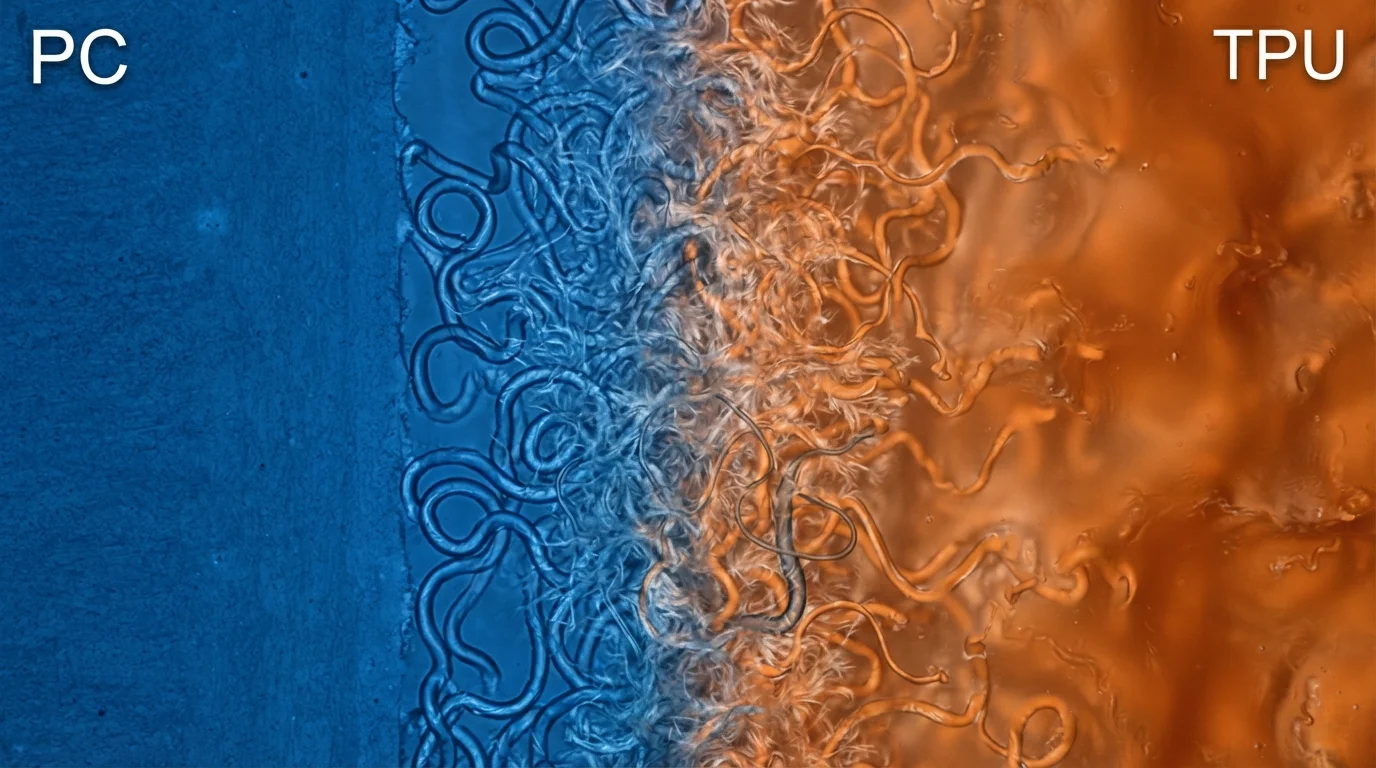
Thermal management during the two shot injection molding process dictates whether the two polymers achieve permanent chemical fusion. Injecting the second material onto a warm substrate boundary allows interfacial molecular diffusion to occur before the interface freezes. Molten second-shot resin melts a microscopic skin layer on the substrate, permitting polymer chains from both materials to entangle.
When chemical compatibility between selected resins is low, tooling engineers incorporate mechanical undercuts, through-holes, or dovetail channels. Physical interlocking anchors flexible elastomers onto rigid substrates molded from PA66 أو بولي كربونات (PC), preventing edge peeling under dynamic shear.
| Polymer Combination | Rigid Substrate | Secondary Resin | Interfacial Bond Mechanism | الميزة الهندسية الأساسية |
|---|---|---|---|---|
| Rigid + Soft Elastomer | ABS / PC+ABS سبيكة | SEBS-based TPE | الاندماج الجزيئي الكيميائي | Ergonomic soft-touch grips & vibration dampening |
| Rigid + High-Wear TPU | بولي كربونات (PC) | Ester-based TPU | الانتشار عالي القوة | Scratch-resistant automotive dials & buttons |
| Structural + Seal TPV | PA66-GF30 (مملوء بالزجاج) | Santoprene TPV | Chemical + Mechanical Interlock | IP67 waterproof environmental sealing |
Scientific Process Controls for Repeatable 2K Cycles
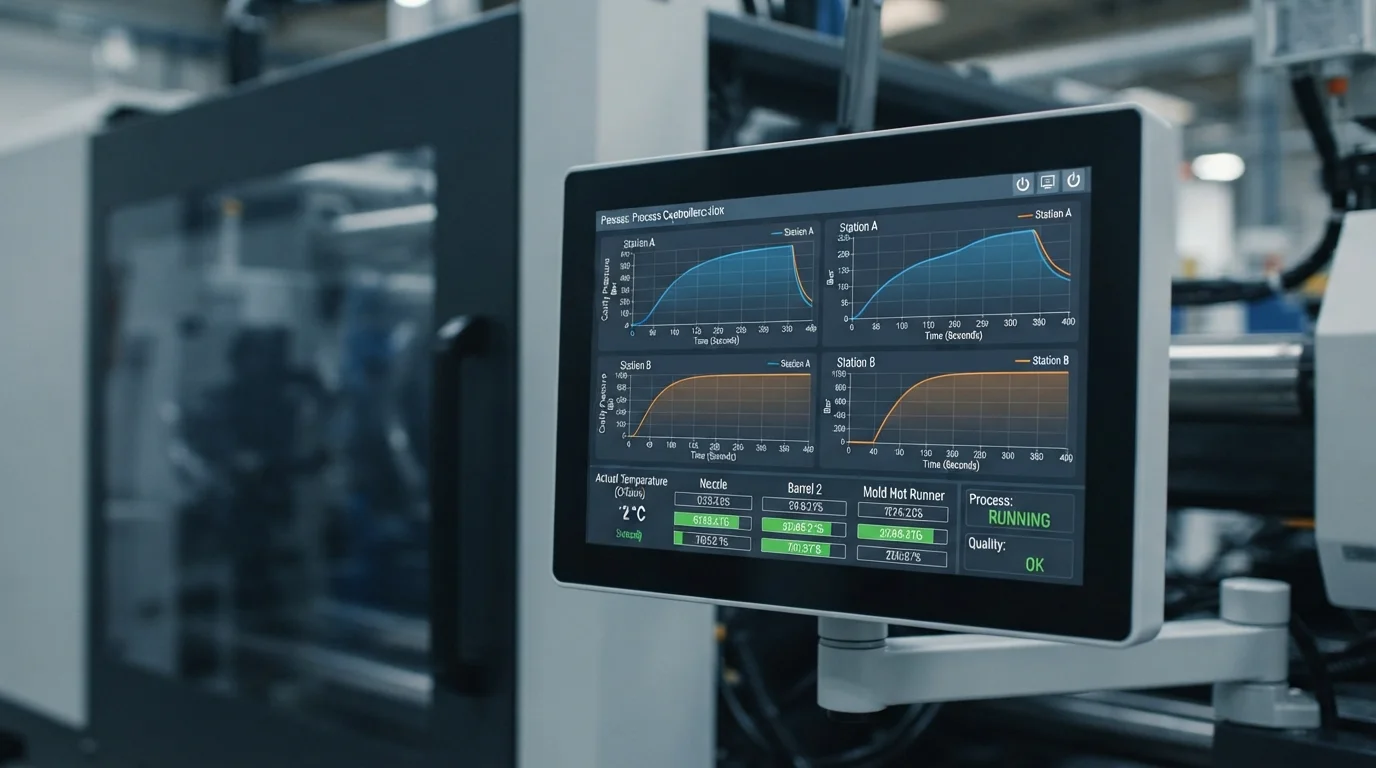
Maintaining dimensional consistency across high-volume 2K production runs requires closed-loop cavity pressure monitoring. Embedding cavity pressure transducers behind shut-off steel lands provides real-time feedback on melt compression. Real-time transducer monitoring detects raw material viscosity shifts, preventing short shots or parting line flash before defective components drop.
Balancing mold cooling channels between station one and station two prevents asymmetrical core contraction and post-mold warpage. Controlling thermal transitions during the two shot injection molding process is essential for zero-defect component repeatability.
Why Choose JUCHENG for Turnkey 2K Manufacturing
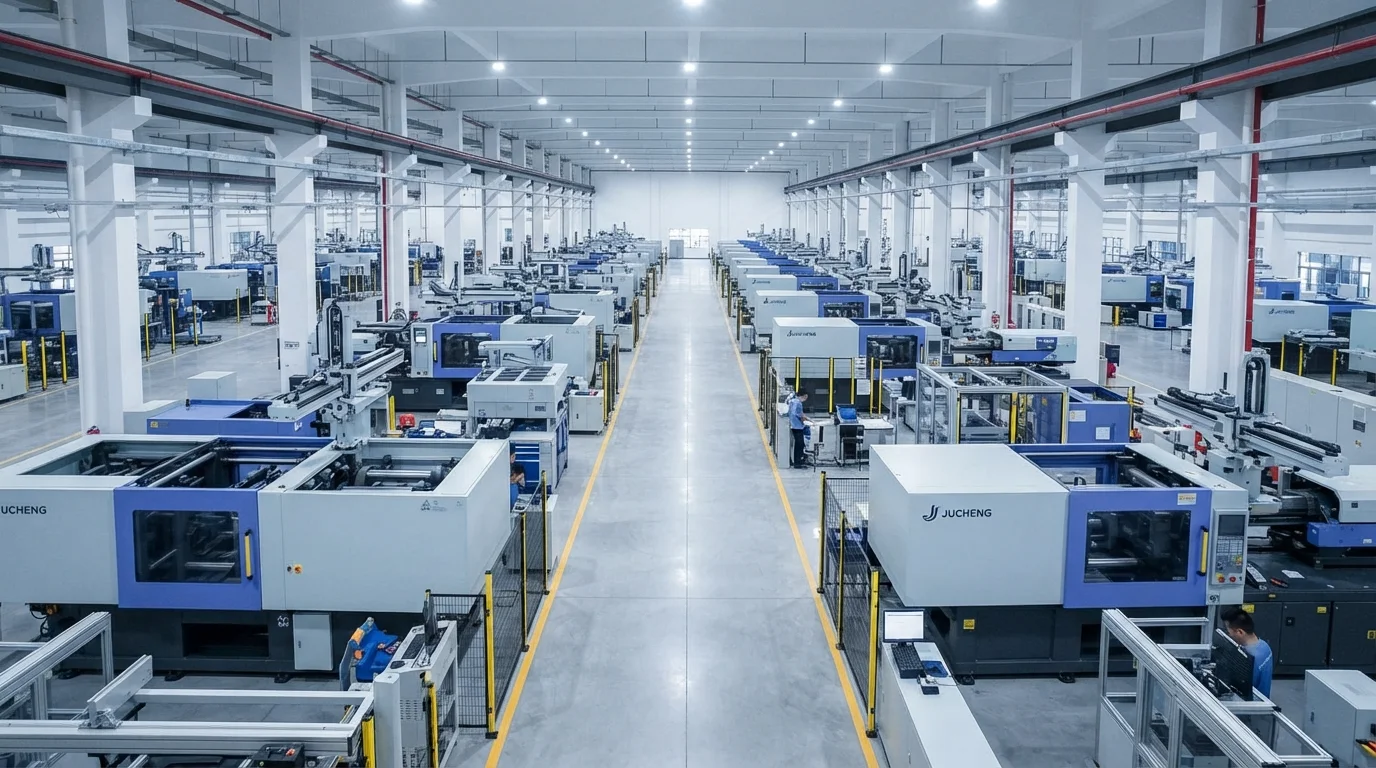
Partnering with JUCHENG for multi-material encapsulation projects provides access to an extensive production floor equipped with 35+ automated injection presses ranging from 15T to 3000T clamping force. Our facility operates dedicated multi-barrel presses fitted with high-precision hydraulic and servo-electric rotary platens. Toolmakers machine precision shut-off lands from hardened الفولاذ المقاوم للصدأ S136 أو فولاذ الأدوات H13, guaranteeing flash-free sealing over 1,000,000 cycles.
Quality management systems certified to IATF 16949 and ISO 13485 back every multi-shot production run, offering full PPAP Level 3 documentation for automotive programs. Operating an ISO Class 8 cleanroom molding department protects medical components from particulate contamination during molding and drop-packaging. Controlling thermal transitions during the two shot injection molding process is essential for high-yield قولبة الحقن ثنائية اللقطة.
الأسئلة الشائعة (FAQs)
What are the three main stages of the two shot injection molding process?
The three main stages include primary substrate injection, 180-degree mold core rotation indexing, and secondary overmold injection. Both materials then cool concurrently before automated ejector pins push the completed multi-material part out of the press.
How does mold rotation work in two-shot injection molding?
Mold rotation is powered by a hydraulic or servo-electric turntable platen mounted on the moving press platen. After the first shot cools to hold shape, the tool opens, swivels the core plate 180 degrees with ±0.01 mm positioning accuracy, and closes for the second shot.
Why is substrate surface temperature critical during second-shot injection?
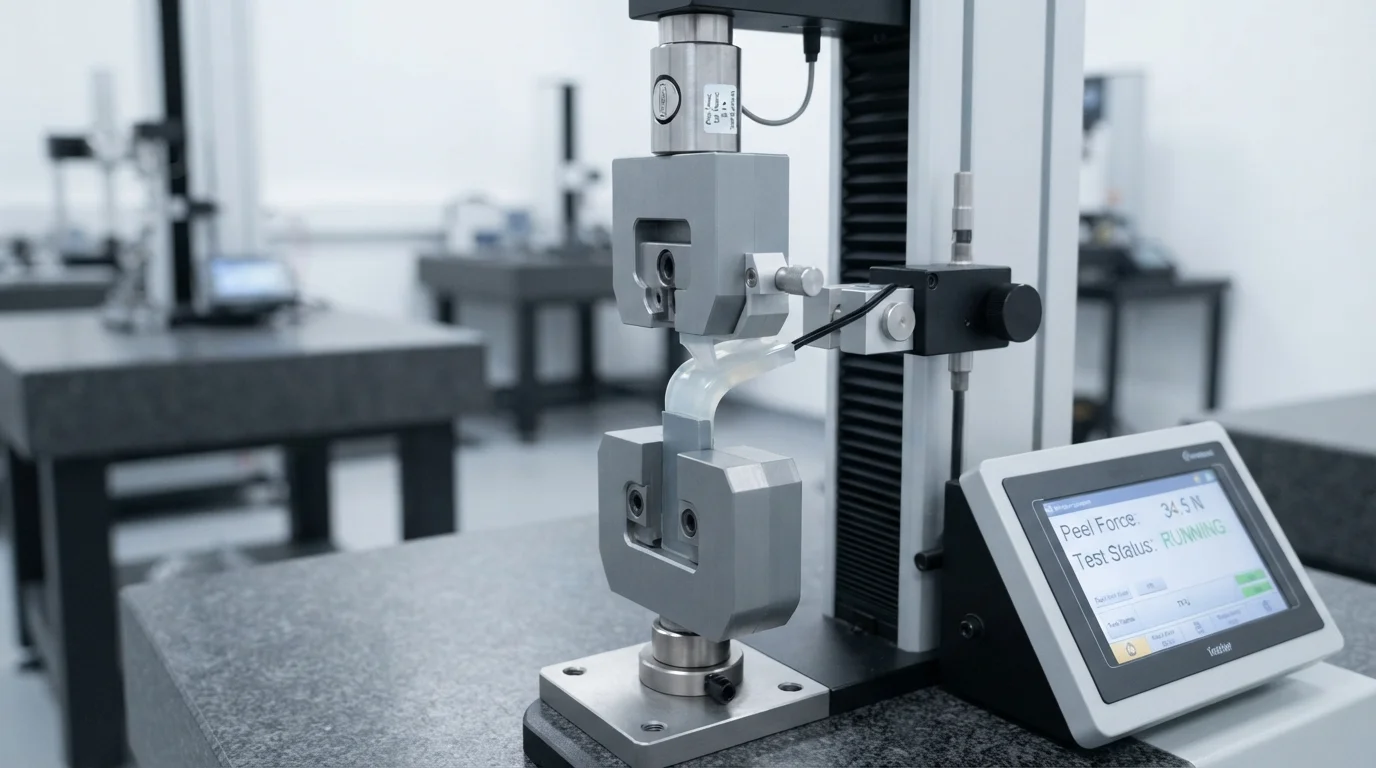
Substrate surface temperature determines whether molecular chain diffusion can occur. If the substrate surface is too cold, the second-shot resin solidifies prematurely without melting the boundary skin, resulting in weak interfacial adhesion and part delamination.
How do mechanical undercuts improve 2K joint strength?
Mechanical undercuts, such as 90-degree dovetail grooves and through-holes, physically trap the second-shot resin inside the rigid substrate frame. Mechanical anchoring prevents elastomeric layers from peeling off under dynamic shear stress if chemical bonding is compromised.
What causes second-shot plastic flash in two-shot injection molding?
Second-shot flash occurs when mold shut-off lands are improperly fitted or when second-stage injection packing pressure is excessively high. Maintaining shut-off steel tolerances tighter than 0.01 mm prevents low-viscosity soft resin from bleeding over substrate surfaces.
Why is two-shot molding more cost-effective than overmolding for large production runs?
Two-shot molding completes both material injections within a single machine cycle, completely eliminating secondary manual handling and transfer labor. Lower cycle times, reduced scrap rates, and zero assembly fixtures quickly offset the higher initial tooling investment on high-volume runs.