
Multi-material polymer encapsulation introduces complex processing variables where minor temperature fluctuations or tooling misalignments trigger catastrophic quality rejections. Shop-floor scrap rates in multi-resin manufacturing often escalate when soft elastomer grips peel away under mechanical shear or bleed across cosmetic parting lines. Diagnosing interfacial adhesion failures, flash at shut-off boundaries, and substrate thermal remelting requires understanding the interaction between melt rheology and cavity steel mechanics.
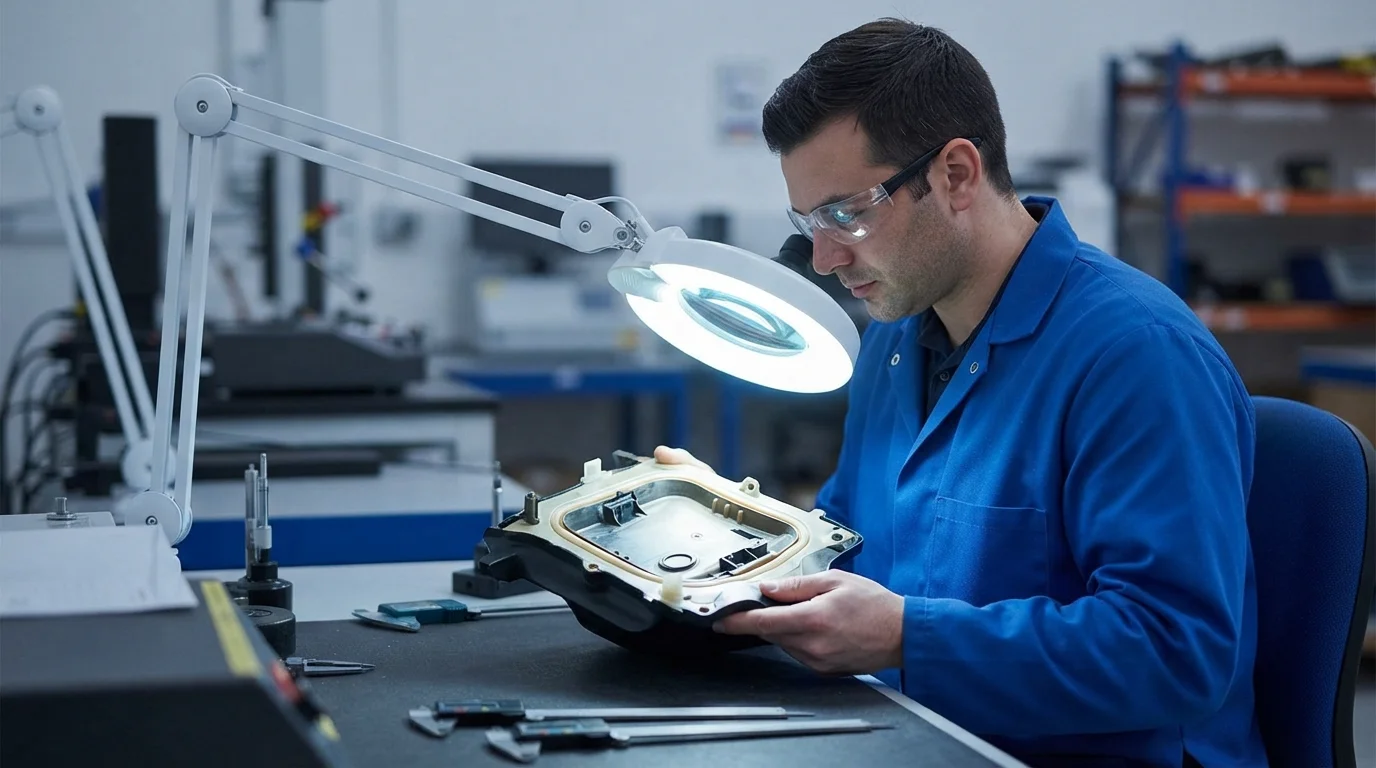
Rather than adjusting press parameters randomly, experienced processing engineers deploy structured troubleshooting methodologies based on polymer physics. This technical troubleshooting guide reviews root cause mechanisms, mold steel corrections, and parameter tuning strategies for resolving primary overmolding defects.
Defect 1: Poor Adhesion & Peeling at the Soft-Hard Interface
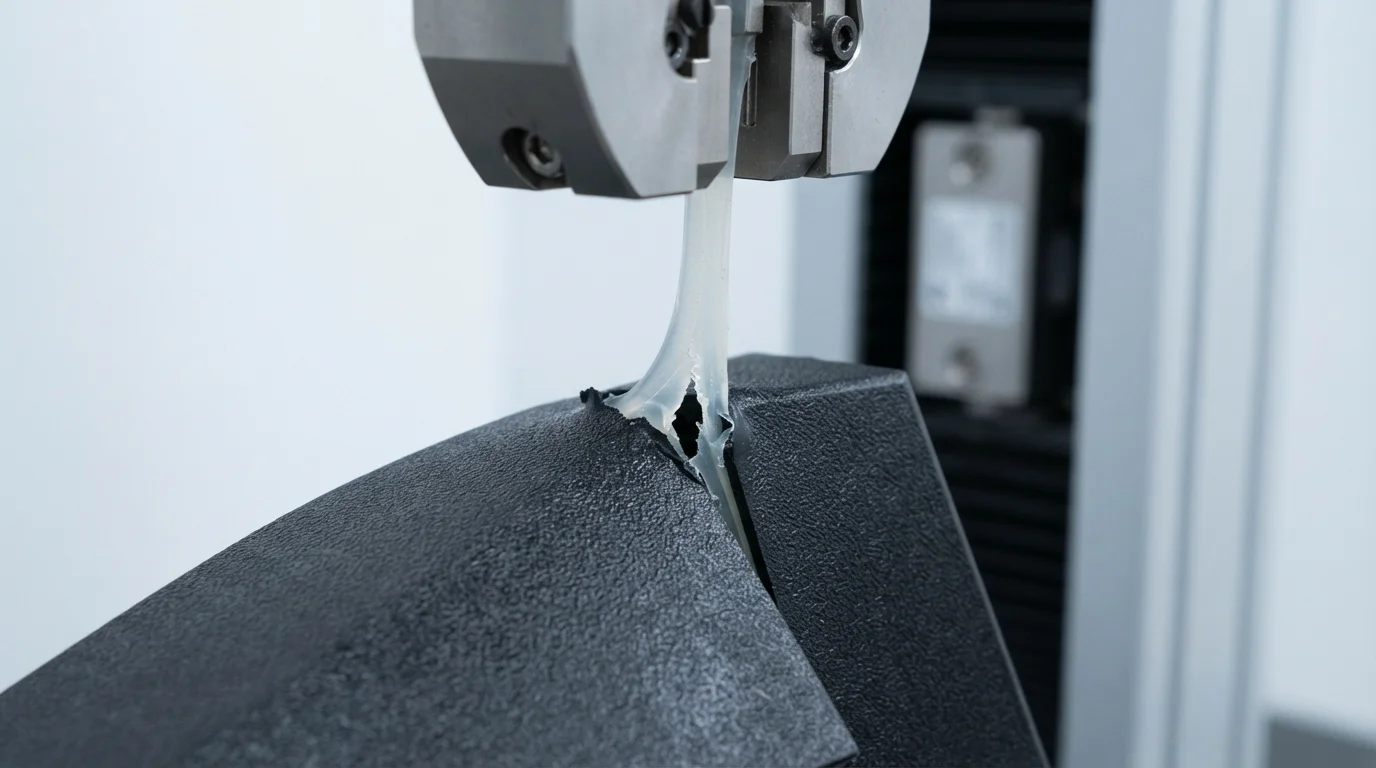
Executing structured overmolding troubleshooting protocols isolates whether adhesion failures stem from chemical incompatibility, surface contamination, or inadequate thermal boundary energy. Interfacial bond failure—known as interfacial delamination—occurs when the second-shot elastomer melt fails to interdiffuse with the rigid substrate skin. Cold substrate surfaces quench incoming TPE أو TPU melt immediately upon contact, freezing polymer chains before molecular entanglement occurs.
Increasing rigid substrate cavity preheating temperatures to 70°C-90°C maintains boundary heat, allowing molten elastomer chains to diffuse deeply into the substrate. Selecting compatible resin pairings and incorporating mechanical undercuts or dovetails ensures robust joint retention even under aggressive chemical exposure. Table 1 below outlines root cause analyses and engineering solutions across primary encapsulation defects:
| Defect Phenomenon | Primary Root Cause | Tooling Modification | Process Parameter Correction |
|---|---|---|---|
| Interfacial Peeling / Delamination | Cold substrate surface or resin incompatibility | Add 90-degree mechanical dovetail grooves | Increase substrate preheat to 70-90°C and raise 2nd shot melt temp |
| Elastomer Flash at Parting Lines | Worn shut-off lands or excessive packing pressure | Grind shut-off steel fitment tighter than 0.01 mm | Reduce second-stage holding pressure and clamp force |
| Substrate Thermal Deformation | Excessive second-shot melt temp or high gate shear | Relocate gates away from thin substrate ribs | Lower secondary injection velocity and optimize cooling lines |
Defect 2: Elastomer Flash (Over-flash) at Tooling Shut-Off Lands
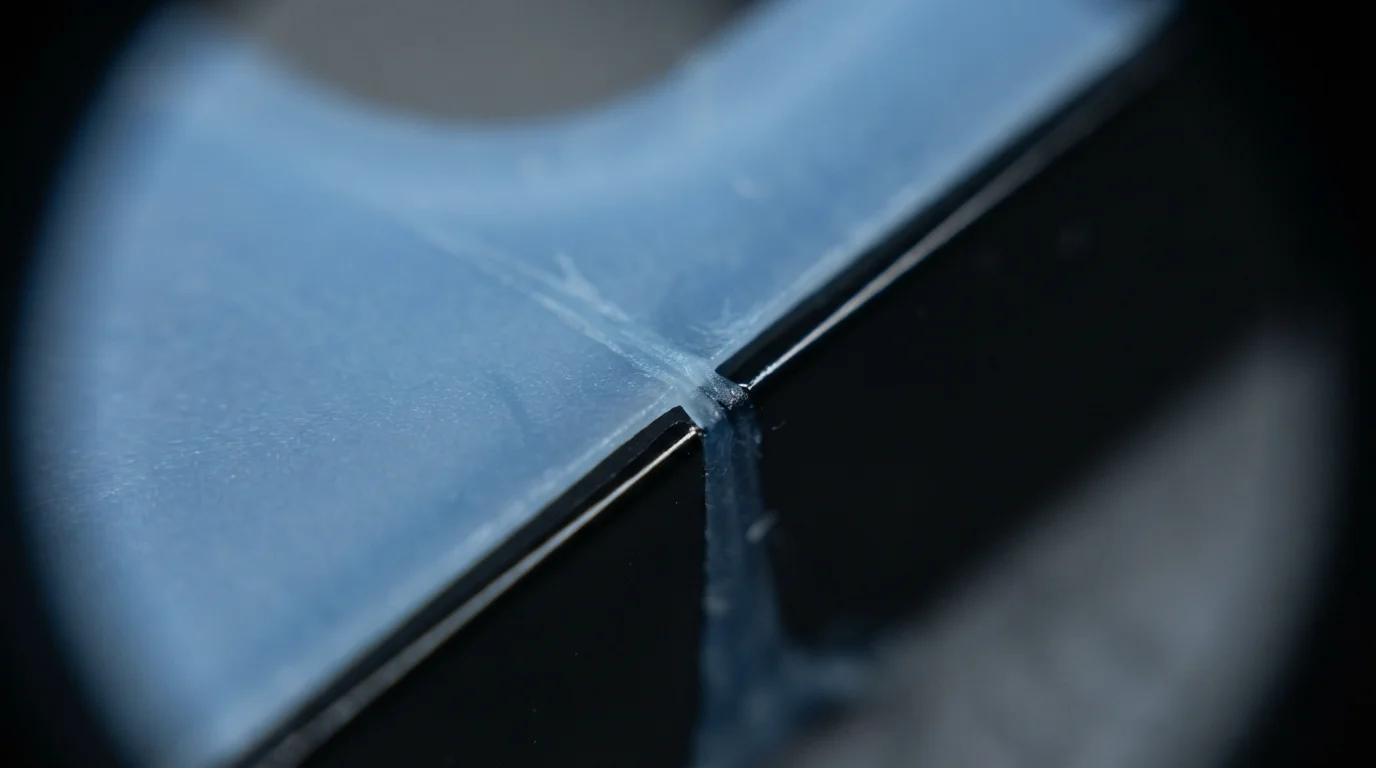
Applying rigorous overmolding troubleshooting to flash issues requires inspecting the mechanical contact fitment between mold steel and pre-molded substrates. Low-viscosity soft elastomers flow aggressively under high injection pressure, penetrating microscopic clearances along cavity أسطح الإغلاق. Worn tool steel, dimensional tolerance drift in rigid substrates, or excessive second-stage packing pressure forces molten rubber over appearance faces.
Maintaining shut-off land fitment tolerances tighter than 0.01 mm creates a sharp mechanical barrier that halts elastomer bleed. Incorporating spring-loaded floating core shut-offs accommodates minor substrate thickness variations dynamically, eliminating flash without crushing plastic walls.
Flash prevention engineering steps include:
- Shut-off land inspection—Checking cavity sealing shoulders with optical profilers verifies zero steel wear or micro-gaps.
- Holding pressure decay—Stepping down second-shot pack pressure gradually prevents low-viscosity elastomer from overcoming clamp shut-offs.
- Perimeter step height verification—Designing a 0.5 mm 90-degree step along the overmold edge creates a clean physical cutoff line.
- Clamp tonnage balancing—Ensuring balanced hydraulic clamping force prevents platen deflection during peak injection pressure.
Defect 3: Deformation and Remelting of the Rigid Substrate
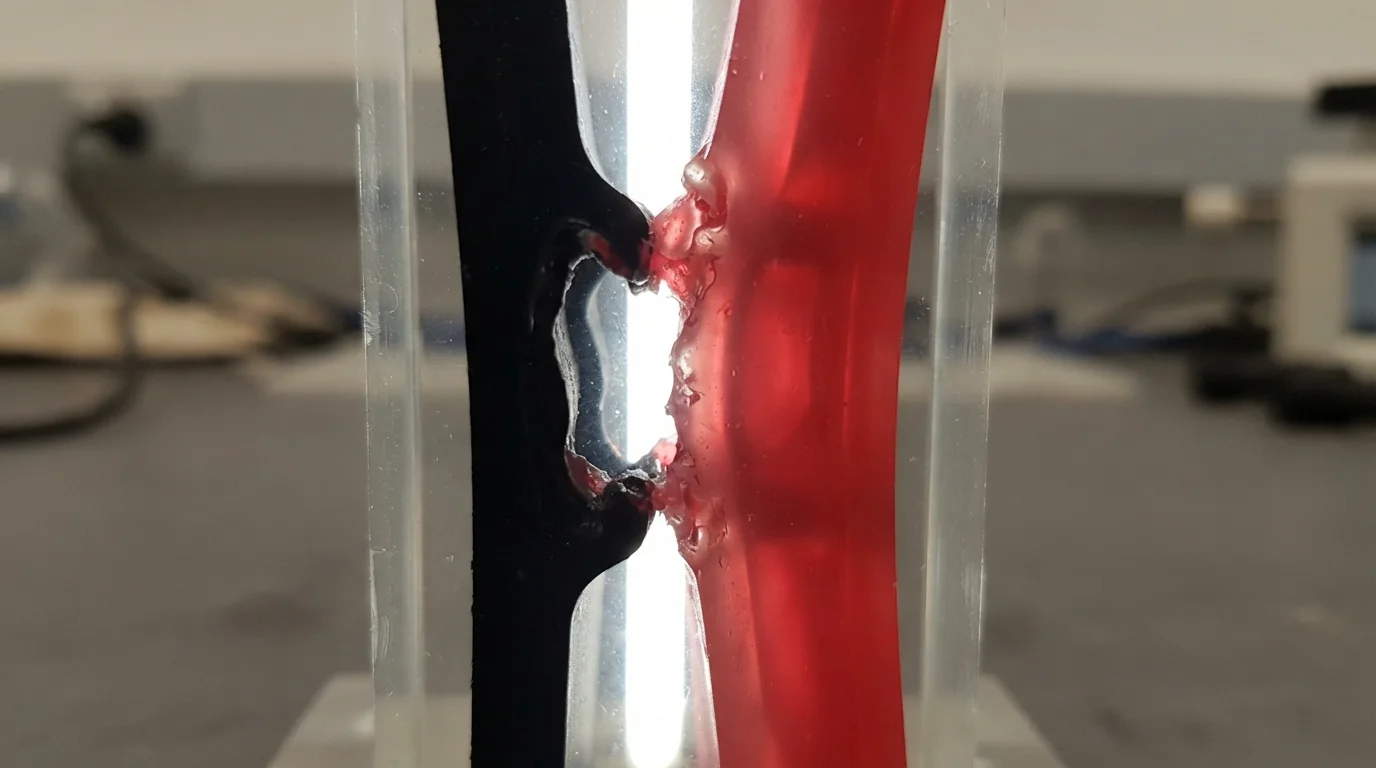
Directing superheated elastomer melt onto thin-walled plastic sections triggers localized substrate remelting and structural warpage. Rigid substrates molded from lower-heat polymers like PC/ABS or standard polyamides soften rapidly when subjected to concentrated second-shot thermal energy. Localized melt washing deforms internal structural ribs and forces substrate resin into the overmold layer, causing unsightly color bleeding.
Systematic overmolding troubleshooting prevents thermal wash-out by repositioning injection gates onto thick substrate sections. Balancing mold cooling circuits keeps substrate core temperatures stable, preventing heat accumulation during continuous automatic cycling.
Why Choose JUCHENG for Zero-Defect Overmolding
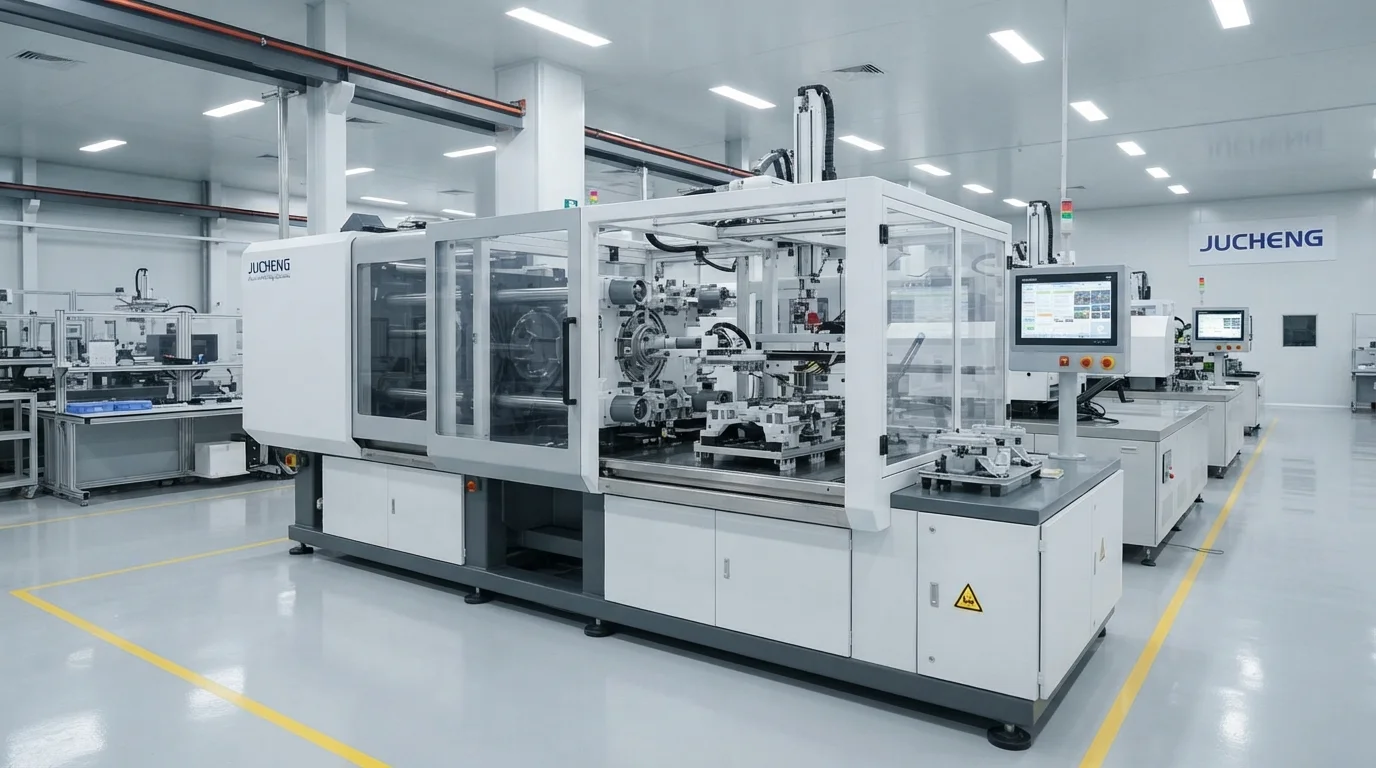
Partnering with JUCHENG eliminates overmolding defects through advanced mold engineering, automated press cells, and scientific process validation. Our facility operates 35+ automated injection presses ranging from 15T to 3000T clamping force alongside an in-house tool room with 25 sets of 5-axis CNC machines. Toolmakers machine precision shut-off lands from premium hardened S136 stainless steel أو H13 tool steel, guaranteeing flash-free sealing over 1,000,000 cycles.
Quality management systems certified to IATF 16949 and ISO 13485 back every multi-shot production run, offering full PPAP Level 3 documentation. Operating an ISO Class 8 cleanroom molding department protects medical overmolded components from airborne contamination during processing. Effective overmolding troubleshooting resolves delamination and maintains precision in حقن القولبة الزائدة.
الأسئلة الشائعة (FAQs)

Why does TPE peel off rigid plastic parts after molding?
Peeling occurs when the substrate surface is too cold during secondary injection or when the polymer chemistries lack molecular compatibility. Raising substrate mold temperatures to 70°C-90°C and specifying adhesion-modified TPE grades promotes interfacial molecular diffusion, eliminating peel defects.
How do you stop soft rubber from flashing over shut-off edges?
Stopping rubber flash requires maintaining shut-off steel tolerances tighter than 0.01 mm and designing a 0.5 mm 90-degree perimeter cutoff step. Reducing second-stage holding pressure also prevents low-viscosity elastomer melt from forcing mold shut-offs apart.
What causes the rigid plastic substrate to deform during overmolding?
Substrate deformation occurs when secondary injection temperatures or localized melt velocities are excessively high near thin substrate walls. Frictional shear heat washes away the softened substrate. Relocating gates to thicker sections and lowering injection speed prevents wash-out.
Can mold release agents cause overmolding delamination?
Silicone or oil-based mold release sprays leave a hydrophobic film on substrate surfaces that completely blocks molecular interdiffusion. Substrates must be molded completely dry without internal or external release agents to ensure maximum chemical bonding.
How does preheating the substrate help eliminate overmolding defects?
Preheating rigid substrates to 70°C-90°C narrows the temperature gradient between cold plastic and molten elastomer. Slower cooling along the boundary interface allows polymer chains sufficient time to entangle deeply before solidifying.
Why is an early DfM review crucial for preventing overmolding tooling failures?
Conducting an early DfM review detects shut-off interference, uneven wall thicknesses, and high-shear gate placements while CAD files are still digital. Correcting geometry before cutting tool steel eliminates expensive mold modifications and long production delays.