
High-flow resin can make a thin wall easier to fill, but melt flow index is not a complete molding decision. MFI is measured under a defined test condition, while an actual cavity imposes changing shear rate, cooling, pressure loss, and flow direction. The useful question is not which grade has the largest number. It is whether the selected grade can fill the real part and still meet strength, appearance, shrinkage, and dimensional requirements.
What MFI Can and Cannot Tell You
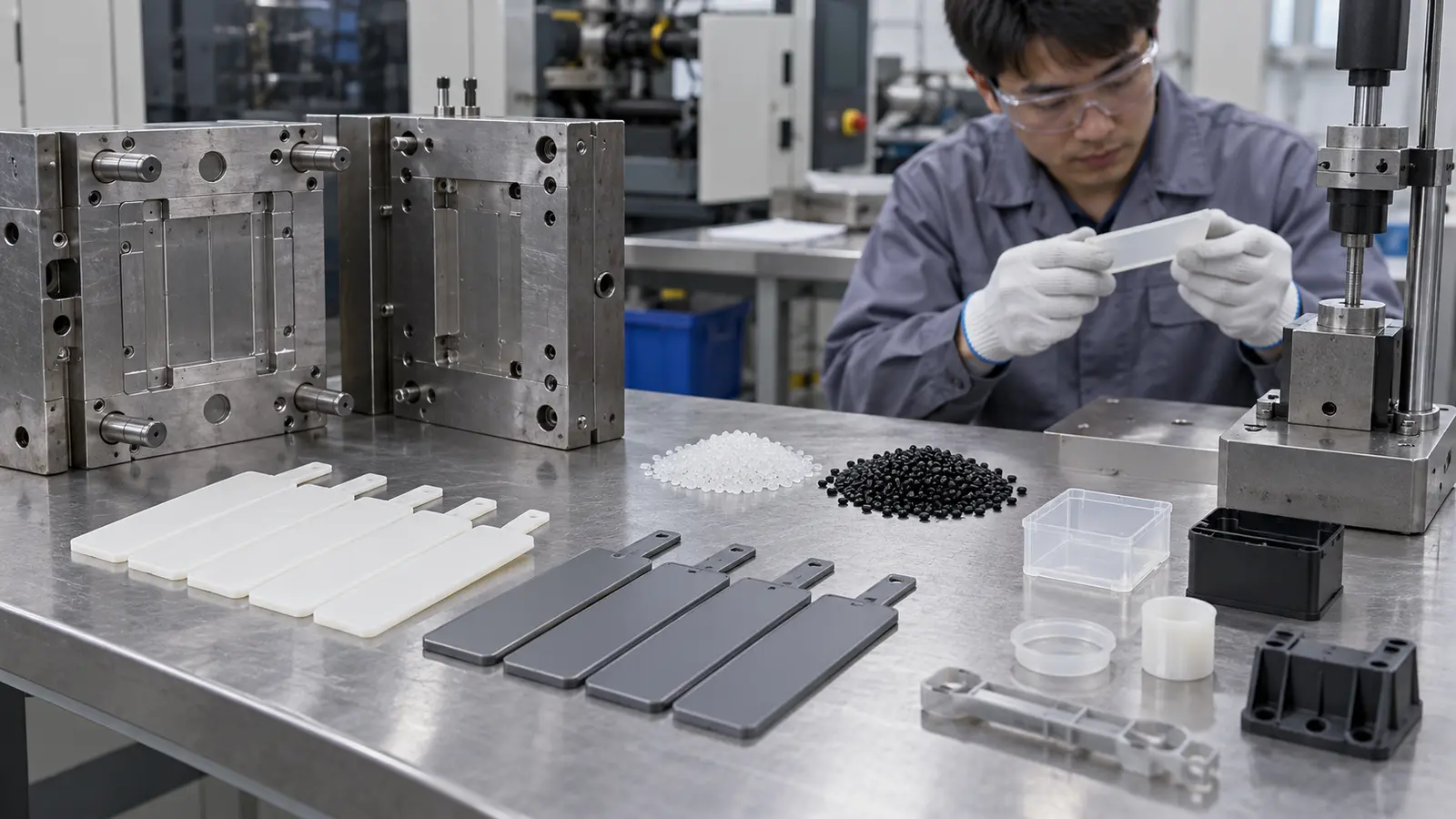
MFI gives a standardized indication of how much molten polymer passes through a test die under specified conditions. It is useful for comparing grades within a material family, checking lot consistency, and spotting a large difference between a general-purpose and a high-flow grade.
It does not directly predict the pressure required to fill every thin cavity. The molding process sees a changing shear field, a cooling boundary layer, the actual gate and runner geometry, and the part’s flow length. Two grades with similar MFI can still produce different weld-line, warpage, surface, or stress results.
Why Geometry Changes the Answer
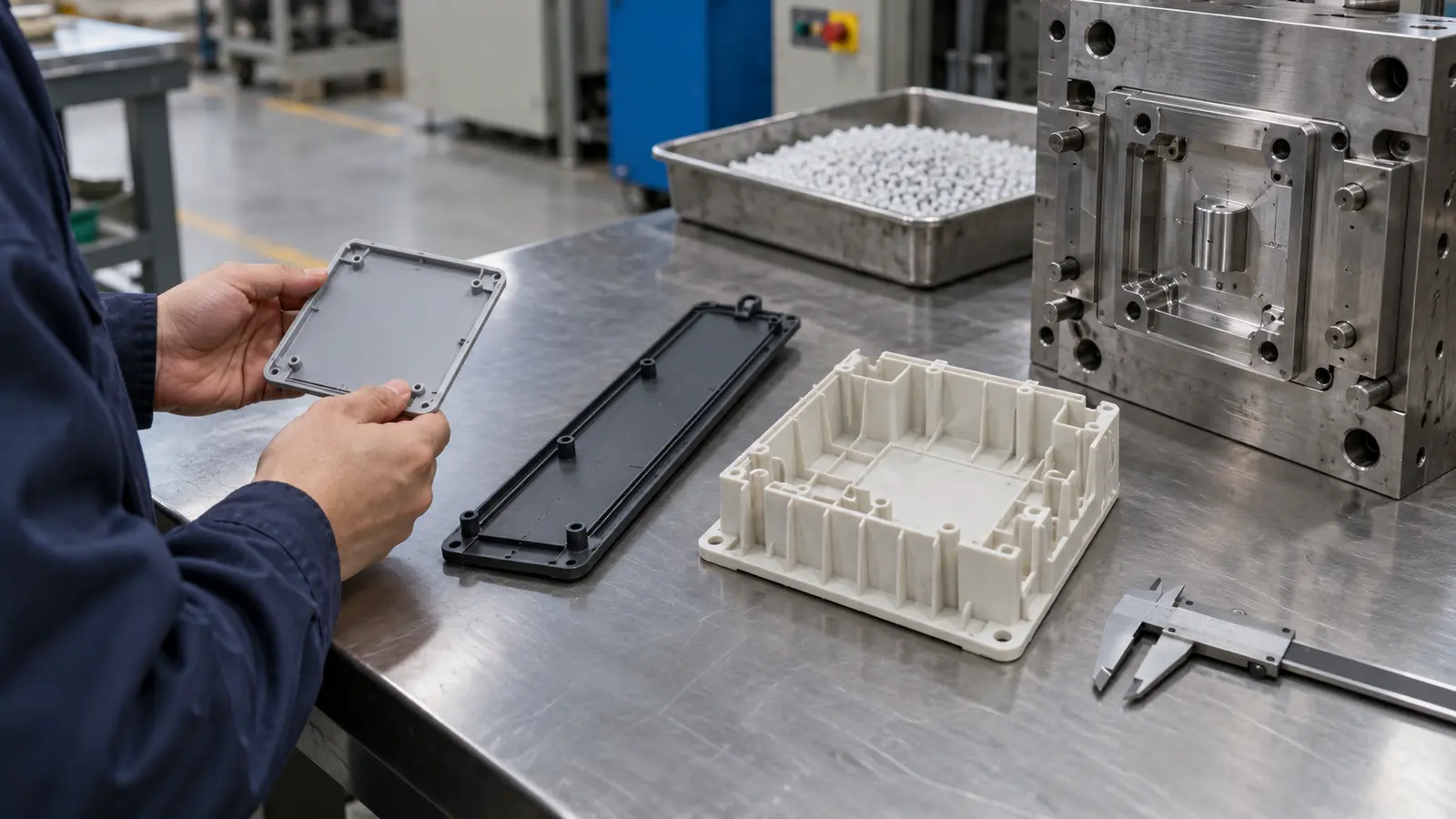
A high-flow resin may fill a short thin panel comfortably but struggle with a long cover containing ribs, windows, or sharp turns. Thickness transitions can create hesitation, and a heavy boss can change local cooling and packing. That is why material selection should be reviewed against a flow-length map rather than a single wall-thickness value.
- Longer flow paths increase pressure loss and freeze-off risk.
- Smaller gates can freeze early and limit packing.
- Sharp corners and abrupt transitions can create local hesitation.
- Fiber-filled grades may change orientation and anisotropic shrinkage.
The broader 薄壁注塑成型 decision should therefore connect resin, gate, mold temperature, venting, and inspection requirements before the material is approved.
Which Trade-Offs Need Testing

| Potential benefit | Possible cost | Test focus |
|---|---|---|
| Lower filling resistance | Different strength or impact behavior | Functional load and drop performance |
| Faster cavity filling | More shear heating or molded-in stress | Appearance, stress, and dimensional stability |
| Shorter fill time | More difficult venting or flash control | End-of-fill defects and parting-line condition |
| Better thin-section fill | Changed shrinkage or surface texture | Critical dimensions and visual standard |
How to Connect Resin to Process

Process development should use the resin supplier’s processing window as a boundary, then identify a stable project-specific window inside it. Mold temperature and injection profile affect how long the melt remains capable of filling the thin section. Higher speed is not automatically better, and a hotter setting can introduce degradation or ejection problems.
- Confirm the grade, lot, drying requirement, and intended color or additive package.
- Review gate and runner dimensions with the expected flow path.
- Check venting at the final-fill region and around trapped-air features.
- Run a controlled matrix that separates fill, pressure, temperature, and cooling effects.
- Measure both cosmetic and functional results before locking the process.
A Practical Selection Sequence

Begin with the part’s required performance, then remove grades that cannot satisfy heat, chemical, electrical, impact, compliance, or appearance requirements. Compare flow data among the remaining candidates, but keep the gate and mold concept visible during the comparison. Finally, confirm the decision with a moldability review or simulation when the flow path is long or the margin is narrow.
A material with a moderate MFI can be the better production choice if it provides a wider quality window and more predictable shrinkage. A high-flow grade is valuable when it solves a demonstrated filling constraint without creating a larger reliability problem.
How to Avoid Choosing Flow at the Expense of Reliability

A high-flow resin is only a good choice when the added flow margin solves a real constraint without undermining the part. Check whether the grade changes impact strength, heat resistance, chemical exposure, shrinkage, color stability, or the required surface finish. Those changes can be more important than a lower fill pressure.
Use a short material decision record: required performance, candidate grades, flow evidence, dimensional risk, defect risk, and the test that will close the decision. This prevents MFI from becoming a substitute for an engineering comparison.
- Compare grades under the supplier’s stated test condition.
- Review the actual gate and wall geometry before interpreting the comparison.
- Check orientation and shrinkage when the part has tight fit features.
- Validate the selected grade on molded parts, not only on a datasheet.
For difficult thin sections, an injection molding DFM analysis can test whether a material change is really needed. The precision electronics molding reference also illustrates why flow, surface quality, and dimensional stability should be reviewed together.
FAQ: High-Flow Resin Selection

Is higher MFI always better for thin walls?
No. MFI is one comparison point. Strength, shrinkage, orientation, surface appearance, processing window, and the actual gate and geometry must also fit the application.
Can MFI predict the exact injection pressure?
No. Exact pressure depends on shear rate, flow length, wall thickness, gate and runner design, mold temperature, melt temperature, and cavity resistance.
When should a material comparison include molded samples?
Include molded samples when appearance, sealing, impact, dimensional stability, or long flow length makes the material decision difficult to reverse.