
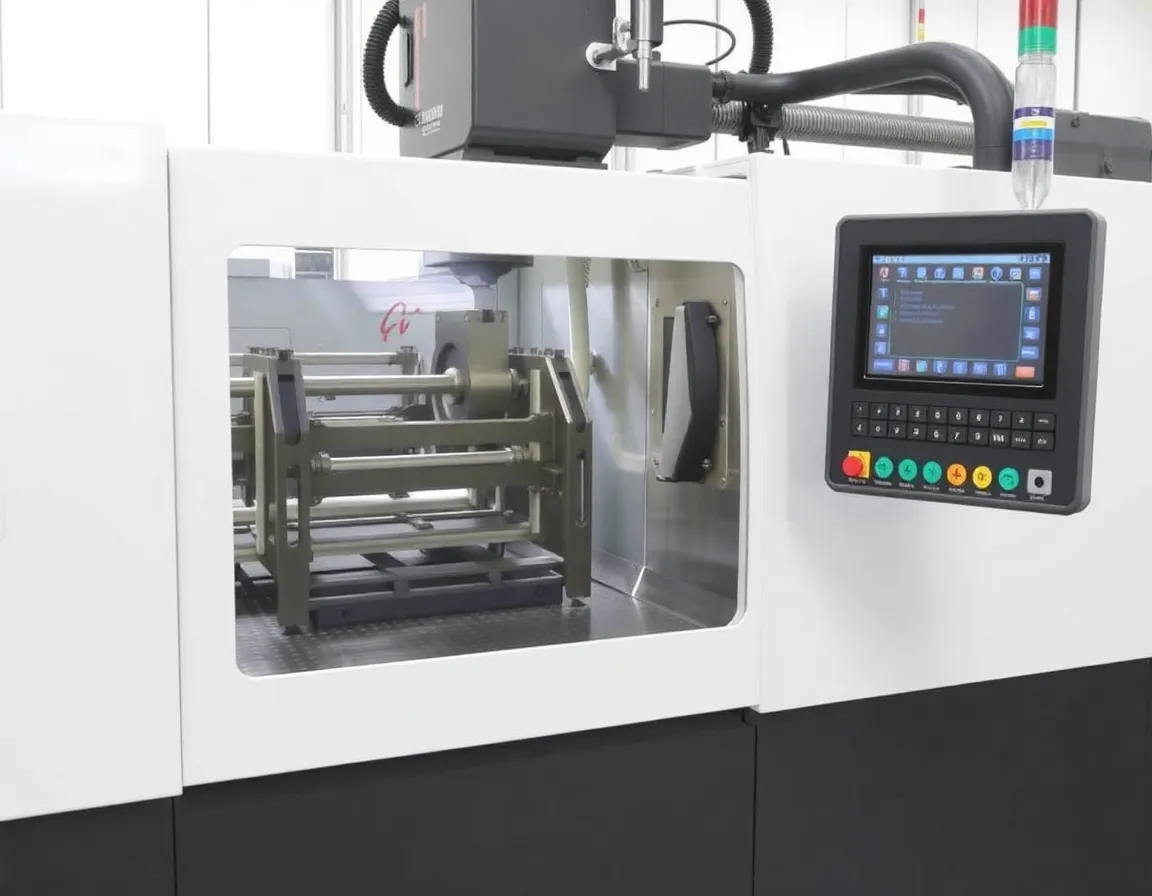
What Is High Accuracy Injection Molding?
High accuracy injection molding is a specialized manufacturing process designed to produce plastic components with extremely tight dimensional tolerances, often measured in micrometers. Unlike standard injection molding, which typically achieves tolerances of ±0.005 inches (0.127 mm) or looser, high accuracy injection molding can consistently hold tolerances of ±0.001 inches (0.025 mm) or even tighter, depending on the material and part geometry.
This level of precision is critical for industries where a few thousandths of an inch can mean the difference between a functioning medical device and a failed implant, or between a reliable automotive connector and a safety hazard. High accuracy injection molding combines advanced tooling, precision machinery, rigorous process control, and specialized materials to achieve results that standard molding simply cannot match.
In this ultimate guide, we will explore how high accuracy injection molding works, the benefits it offers, the industries that rely on it, and the best practices that ensure success.
How High Accuracy Injection Molding Works
Achieving tight tolerances in injection molding is not about a single factor—it is the result of a carefully controlled system where every variable is optimized. The process begins long before the first shot is molded and continues through every production cycle.
Precision Tooling and Mold Design
The mold is the foundation of high accuracy injection molding. A precision mold must be machined from high-grade tool steels using CNC machining, electrical discharge machining (EDM), and wire EDM to achieve cavity and core dimensions within microns. Mold design must account for material shrinkage, which varies by polymer and can range from 0.2% to 2.5%. Engineers use advanced simulation software such as Moldflow to predict shrinkage, warpage, and flow behavior before the mold is cut.
Key tooling considerations for tight tolerances include:
- Sistemas de canais balanceados to ensure equal filling pressure across all cavities
- Precision cooling channels placed close to the part surface for uniform heat removal
- Hardened tool steel inserts to resist wear over millions of cycles
- Tight shut-offs and interlocks to prevent flash and dimensional drift
Machine and Process Control
High accuracy injection molding requires electric injection molding machines rather than hydraulic ones. Electric presses offer repeatability of ±0.01 mm on shot position, faster response times, and better energy efficiency. The machine must be equipped with closed-loop process control that monitors and adjusts injection speed, pressure, holding time, and cooling time in real time.
Process parameters that directly affect tolerances include:
- Injection speed and pressure – inconsistent fill leads to variable shrinkage
- Melt temperature – fluctuations change viscosity and flow behavior
- Temperatura do molde – non-uniform mold temperature causes warpage and differential shrinkage
- Packing pressure and time – determines final part density and dimensions
- Cooling time – insufficient cooling causes post-mold shrinkage and dimensional instability
Seleção de Material
Not all plastics are suitable for high accuracy injection molding. Amorphous polymers such as polycarbonate (PC), polysulfone (PSU), and polyetherimide (PEI) generally exhibit lower and more predictable shrinkage than semi-crystalline materials like polypropylene or nylon. However, semi-crystalline materials can be used when their shrinkage behavior is well characterized and the mold is designed accordingly.
Material factors that influence accuracy include:
- Shrinkage rate and anisotropy – differences in shrinkage parallel and perpendicular to flow
- Moisture absorption – hygroscopic materials can swell after molding
- Thermal expansion coefficient – affects dimensional stability across temperature ranges
- Filler content – glass or carbon fibers reduce shrinkage but increase wear on tooling
Benefits of High Accuracy Injection Molding
Investing in high accuracy injection molding delivers several advantages that go beyond mere dimensional compliance.
Consistent Part Quality and Interchangeability
When parts are molded to tight tolerances, they are functionally interchangeable. This is essential for assembly operations where components from different production lots must fit together without adjustment. In medical devices, for example, a syringe plunger must seal perfectly against a barrel molded in a separate cycle. High accuracy molding makes this possible.
Reduced Assembly Costs and Scrap Rates
Loose tolerances often lead to manual rework, sorting, or assembly failures. High accuracy molding eliminates these hidden costs by producing parts that meet specification on the first attempt. Scrap rates can drop from 5–10% in standard molding to less than 1% in high accuracy processes.
Desempenho e Confiabilidade Aprimorados
In critical applications such as aerospace connectors, automotive fuel injectors, and surgical instruments, tight tolerances directly affect performance. A gear with a tolerance of ±0.001 inches will mesh more smoothly, generate less noise, and last longer than one with ±0.005 inches. High accuracy molding ensures that the physical part matches the design intent.
Design Freedom for Miniaturization
As products shrink—think wearable medical sensors, microfluidic chips, and miniature optical components—the ability to mold tiny features with high precision becomes essential. High accuracy injection molding enables features as small as 0.1 mm and wall thicknesses down to 0.2 mm without sacrificing dimensional integrity.
Applications of High Accuracy Injection Molding
Several industries depend on high accuracy injection molding for mission-critical components.
Medical and Pharmaceutical
Medical devices demand the highest levels of precision and cleanliness. Applications include:
- Insulin pen components and auto-injector parts
- Microfluidic devices for lab-on-a-chip diagnostics
- Catheter connectors and luer fittings
- Orthopedic implant trials and surgical guides
- Drug delivery device housings with integrated seals
Automotive and Transportation
Modern vehicles rely on precision plastic components for safety, efficiency, and comfort. Examples include:
- Fuel injector bodies and throttle body components
- Transmission sensors and solenoid housings
- LED headlight optics and light guides
- EV battery cell holders and busbar insulators
- ADAS sensor brackets and camera housings
Eletrônica e Telecomunicações
Consumer electronics and network infrastructure require miniaturized, high-precision plastic parts:
- Smartphone camera lens holders and actuator components
- Fiber optic connectors and ferrules
- Board-to-board connector housings
- Micro switches and precision gears
- Antenna modules and RF shields
Aeroespacial e Defesa
Aerospace applications demand lightweight, high-strength, and dimensionally stable components. High accuracy injection molding is used for:
- Cabin interior fasteners and trim clips
- Electrical connector backshells
- Drone structural components
- Optical sight housings and mounts
Best Practices for Achieving Tight Tolerances
Success in high accuracy injection molding requires discipline across design, tooling, processing, and quality control. The following best practices are essential.
Design para Manufaturabilidade (DFM)
Early collaboration between part designers and molders is critical. DFM reviews should address:
- Espessura de parede uniforme to prevent differential shrinkage and warpage
- Proper draft angles (minimum 1–2 degrees) for clean ejection
- Design de nervuras e bossas that avoids thick sections and sink marks
- Gate location and type to control flow and packing
- Tolerance stack-up analysis to ensure that critical dimensions are achievable
Scientific Injection Molding
Scientific molding replaces trial-and-error with data-driven process development. The approach involves:
- Characterizing the viscosity of the material at various shear rates
- Conducting a Design of Experiments (DOE) to identify critical process parameters
- Establishing a processing window where dimensions remain stable despite small fluctuations
- Using cavity pressure sensors to monitor the actual fill and pack conditions inside the mold
In-Mold Sensors and Real-Time Monitoring
High accuracy molding benefits from sensors that measure pressure and temperature directly in the mold cavity. These sensors provide real-time feedback that can be used to automatically adjust process parameters shot-to-shot. This level of control reduces variation and ensures that every part meets tolerance requirements.
Controle Ambiental
Temperature and humidity fluctuations in the production area can affect material behavior and part dimensions. High accuracy molding facilities often maintain controlled environments with:
- Temperature stability within ±1°C
- Humidity control to prevent moisture absorption in hygroscopic resins
- Cleanroom conditions (ISO Class 7 or better) for medical and optical parts
- Vibration isolation for sensitive measurement equipment
Metrology and Quality Assurance
You cannot control what you do not measure. High accuracy injection molding requires a robust metrology strategy:
- Máquinas de Medição por Coordenadas (CMM) for precise 3D dimensional analysis
- Optical comparators and vision systems for high-speed inspection of small features
- Laser scanning for complex freeform surfaces
- Controle Estatístico de Processo (CEP) to monitor trends and detect drift before parts go out of tolerance
- Inspeção da Primeira Peça (FAI) and PPAP documentation for regulated industries
Ongoing Maintenance and Tooling Care
Molds wear over time, and even minor wear can cause dimensions to drift. A preventive maintenance program should include:
- Regular cleaning of vents and cooling channels
- Inspection of gates, runners, and ejector pins
- Replacement of worn inserts before they affect part quality
- Periodic re-qualification of the mold after maintenance
Conclusão
High accuracy injection molding is not a single technique but a comprehensive discipline that combines precision tooling, advanced machine control, careful material selection, and rigorous quality management. It enables manufacturers to produce plastic components that meet the most demanding dimensional requirements, serving industries from medical devices to aerospace.
As products become smaller, more complex, and more demanding, the importance of high accuracy injection molding will only grow. By following the best practices outlined in this guide—DFM, scientific molding, in-mold sensing, environmental control, and robust metrology—manufacturers can achieve tight tolerances consistently and cost-effectively. Whether you are developing a new medical device or optimizing an automotive component, investing in high accuracy injection molding is a strategic decision that pays dividends in quality, reliability, and customer satisfaction.