
Color matching in injection molding should be approved on a representative molded part, not judged from a color number alone. The same pigment can look different when resin chemistry, wall thickness, surface texture, gloss, or viewing light changes. A chip is a useful starting reference; it is not proof that the finished geometry will look identical.
For procurement and product teams, the most reliable color decision is a documented match target plus a molded approval sample made with the intended resin and surface. That turns “looks close” into a repeatable comparison and reduces disputes when production lots begin.
That approval sits within a broader moldeo por inyección de plástico project, where resin, part geometry, and appearance criteria need to be evaluated together.
En este artículo
- Why a chip and molded part can disagree
- Define the target before selecting colorant
- A practical sample-approval sequence
- Keeping production color consistent
- Preguntas frecuentes
Why a chip and molded part can disagree
A color reference is viewed under a particular thickness, texture, gloss, and light. A molded component has its own optical path. A thick boss can appear darker than a thin wall; a textured surface can diffuse reflected light; and a glossy face can show highlights that change perceived saturation.
The resin also matters. Pigment or masterbatch compatibility, base polymer color, reinforcement, recycled content, and processing history can shift the appearance. These variables do not make color matching impossible; they mean the target must be tied to the actual part and material system. When the resin is not selected, browse the available injection molding materials and identify the intended grade before approving a final color.
Lighting is another source of disagreement. Two people may compare the same part under different room lights and describe different color impressions. For critical products, define the viewing environment and compare samples side by side under the same conditions. If instrumental measurement is part of the specification, agree on the method, location, geometry, and acceptance range with the quality team rather than assuming one reading captures the whole part.
Define the target before selecting colorant
Before a colorant supplier or molder starts a match, gather the inputs that determine what “correct” means:
- Reference. Supply the approved physical chip, master sample, or controlled color specification. Identify which reference takes precedence if they disagree.
- Resin. State the exact polymer grade, supplier, reinforcement, and any allowed substitutions. A color match on one grade may not transfer unchanged to another.
- Geometry. Identify the visible face, nominal wall, thick sections, weld-line areas, and any translucent region. A flat plaque may not represent a curved or ribbed part.
- Surface. Specify texture, gloss, coating, or other finish that affects appearance. See the available plastic surface finishing options if appearance depends on a post-mold finish.
- Viewing and use. Explain whether the part is seen indoors, outdoors, next to another component, or under a particular product light source.
- Approval rule. Decide who signs off, how samples are labeled, and how the approved reference will be stored and used for future lots.
These details prevent the color discussion from drifting into a debate about inconsistent references. They also let the molder distinguish a pigment issue from a geometry, finish, or lighting effect.
A practical sample-approval sequence
- Confirm the color intent. Choose whether the goal is a close visual match, a measured match, or functional identification. Do not mix these objectives without stating which one controls acceptance.
- Match on the intended resin. Use the production grade where possible. If a substitute is needed for an early trial, label it clearly and do not treat it as final color approval.
- Mold a representative sample. Use a part feature or sample geometry that reflects the critical wall thickness, surface texture, and viewing face. A plaque may be helpful for colorant development but should not silently replace part approval.
- Compare in controlled conditions. Place the reference and molded sample together under the agreed lighting. Check whether the difference is hue, lightness, saturation, gloss, or texture.
- Record the accepted sample. Assign a revision or sample ID, record resin and colorant details available to the project, and define how future production lots will be compared.
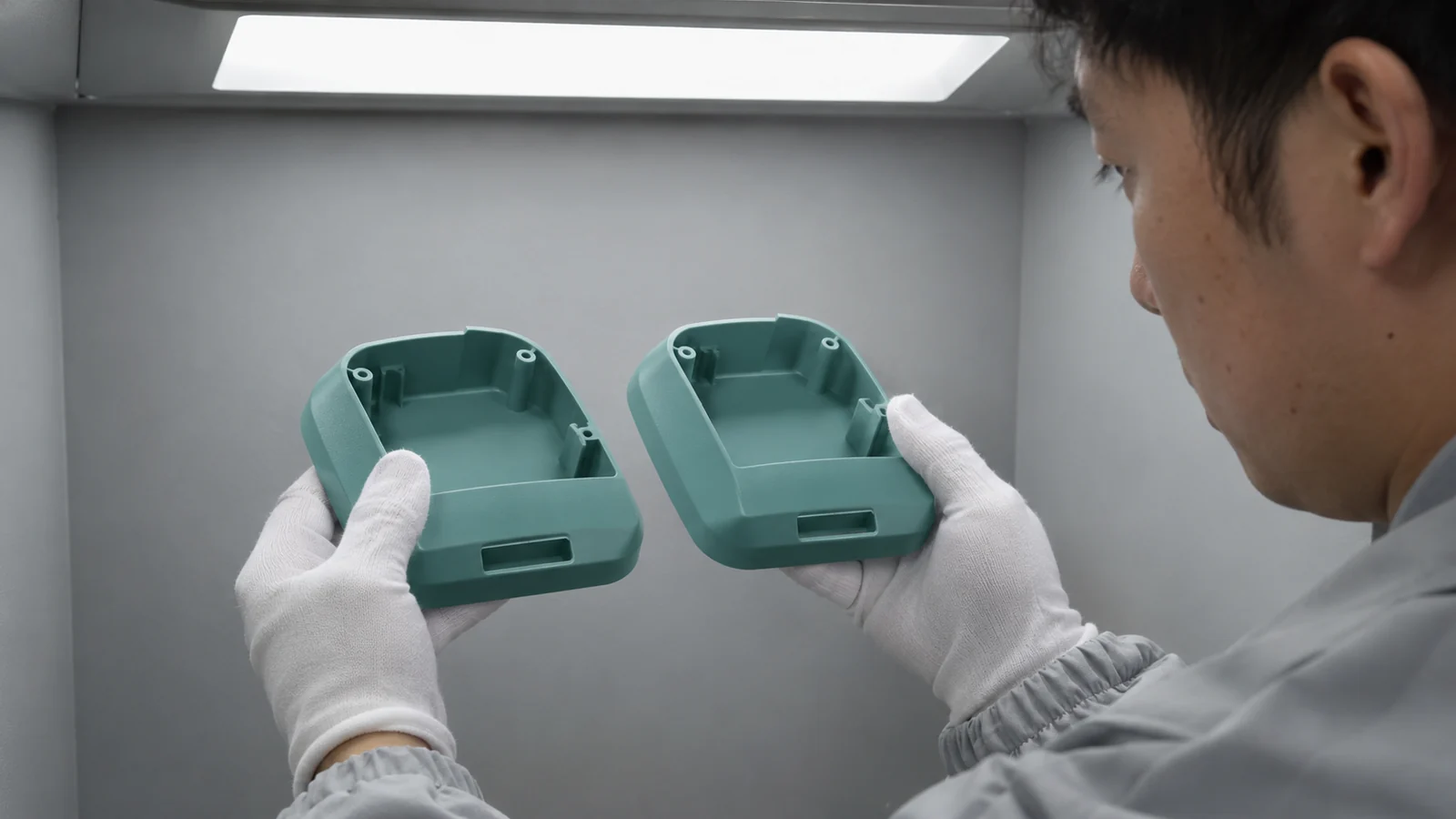
Color approval is most useful when tied to the part revision. If the wall, resin, texture, or coating changes later, the old approval may no longer describe the new appearance.
Keeping production color consistent
Once the target is approved, production consistency depends on controlling inputs and comparing like with like. Keep resin and colorant identification traceable, follow the material supplier’s handling instructions, and separate approved color from a temporary trial match. Do not “correct” a color shift by changing pigment dosage before checking whether the resin lot, moisture condition, machine history, or surface finish has changed.
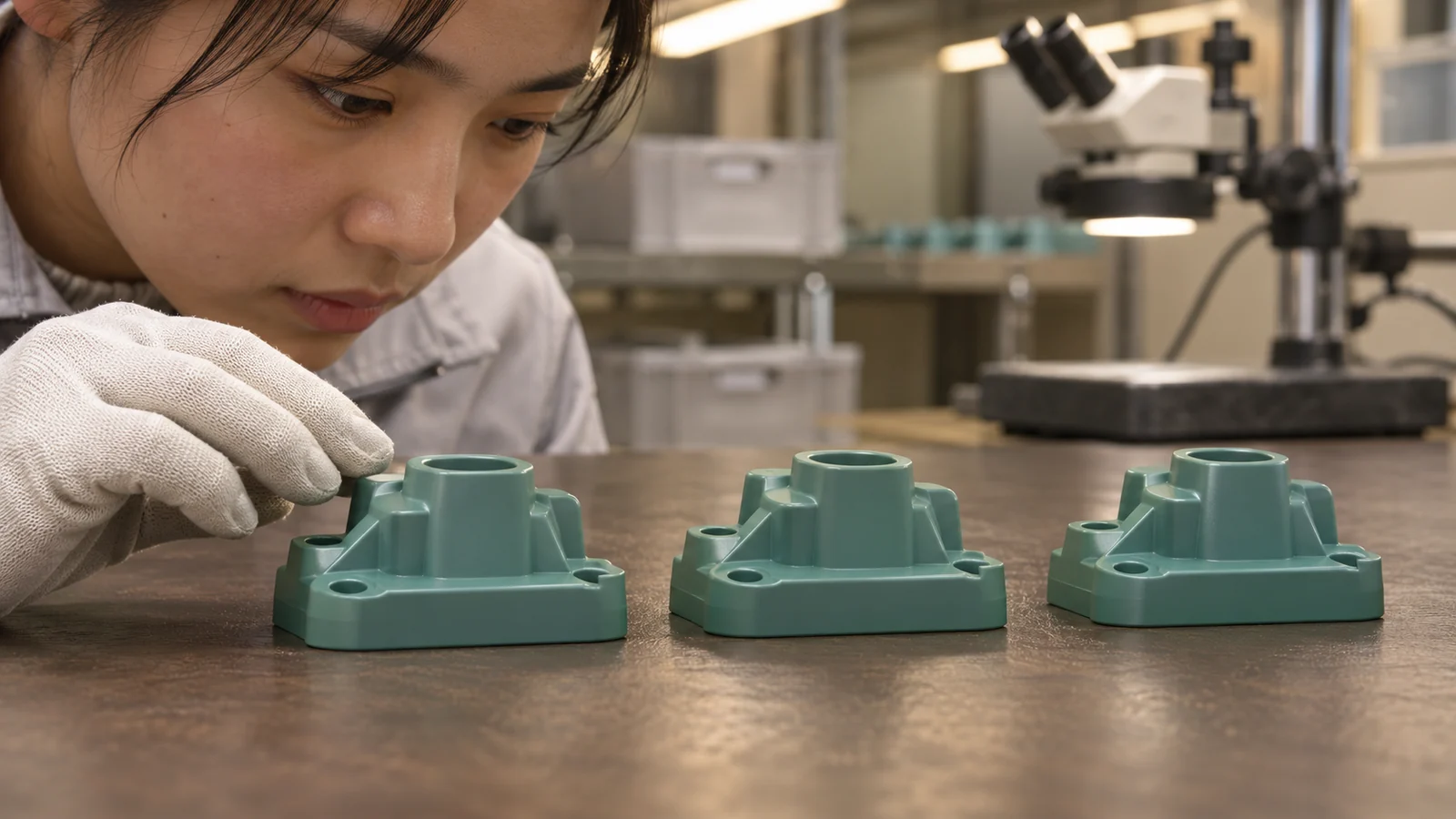
For recurring parts, the inspection plan should say where the color is evaluated and how samples are retained. The proceso de control de calidad should connect the approved visual or measured reference to the lot record, especially when multiple colors or customer-facing components are involved.
If a part looks different after a process adjustment, investigate in a controlled order: confirm resin and colorant lots, compare equivalent surfaces under the same light, check for changes in thickness or finish, and then review process history. Changing several variables at once makes it difficult to identify the cause.
Preguntas frecuentes
Is a Pantone reference enough to approve a molded color?
It can help communicate the target, but it does not by itself define how the color should look on a particular resin, wall thickness, or texture. Approve a representative molded sample when appearance is critical.
Why does the color look different on a thick section?
Thickness changes the optical path through the material, while geometry and surface reflection affect how light reaches the eye. Compare critical visible regions rather than relying only on a flat chip.
Should I approve a color plaque or a finished part?
A plaque can support color development, but a finished part is the stronger approval reference when geometry, texture, or gloss affects appearance. The project should state which sample governs.
Can color be corrected during molding by changing settings?
Sometimes process conditions affect appearance, but first verify the resin, colorant, surface, and viewing conditions. A process change should be evaluated with controlled samples and documented approval.