
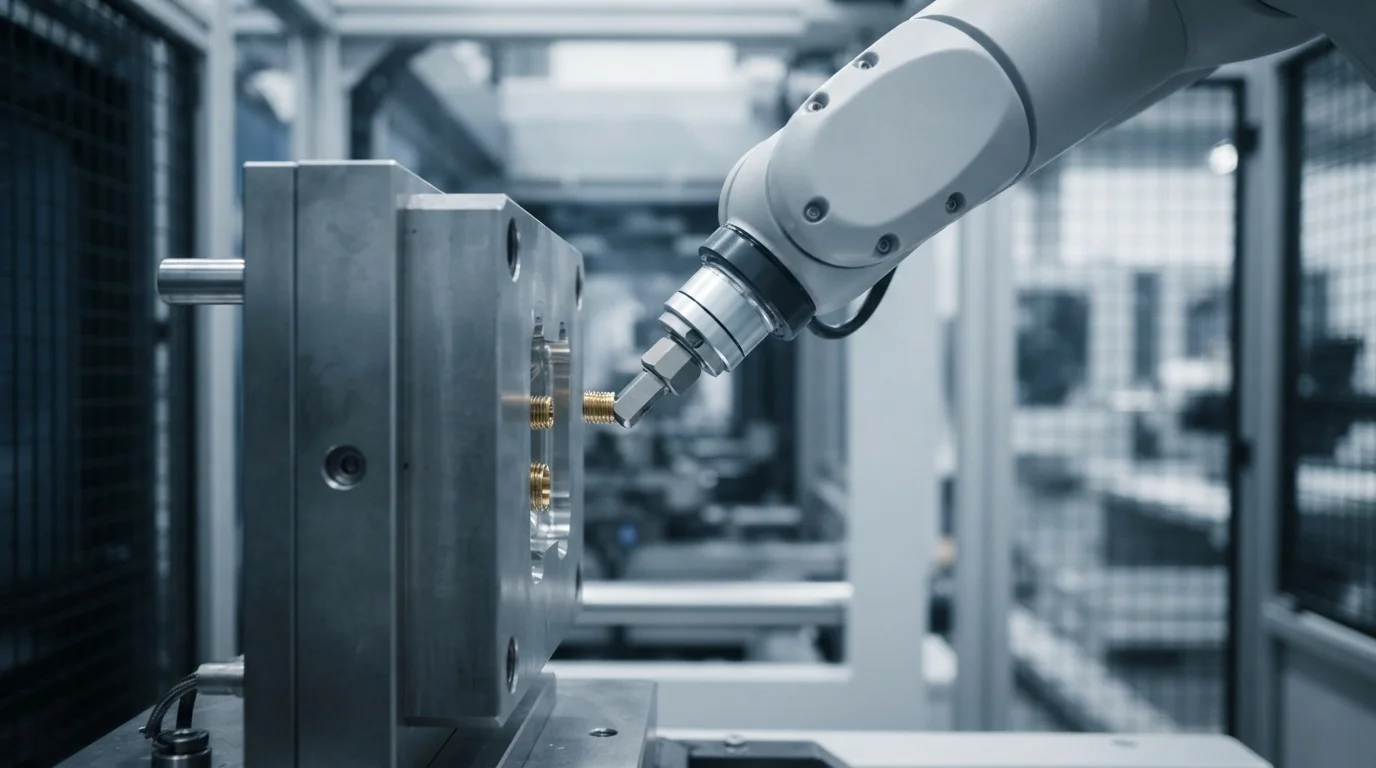
دمج المكونات المعدنية المشكلة مسبقًا مباشرة في الهياكل البلاستيكية المقولبة يوفر قوة ميكانيكية فائقة ودمجًا مكانيًا. غالبًا ما تؤدي تقنيات التركيب بعد القولبة التقليدية مثل التثبيت الحراري أو الإدخال بالموجات فوق الصوتية إلى مقاومة سحب غير متناسقة وتركيز إجهاد موضعي. تحديد التشكيل بالحقن للإدخالات يغلف التلامسات المعدنية والمسامير الملولبة والدبابيس الإلكترونية مباشرة خلال دورة الحقن الأولية. تشغل JUCHENG خلايا تصنيع آلية، وتنتج أجهزة مغلفة عالية الموثوقية وفقًا للرسومات الفنية للعميل بدقة.
جدول المحتويات
تغليف الإدخالات النحاسية الملولبة وقضبان التوصيل النحاسية والدبابيس الإلكترونية
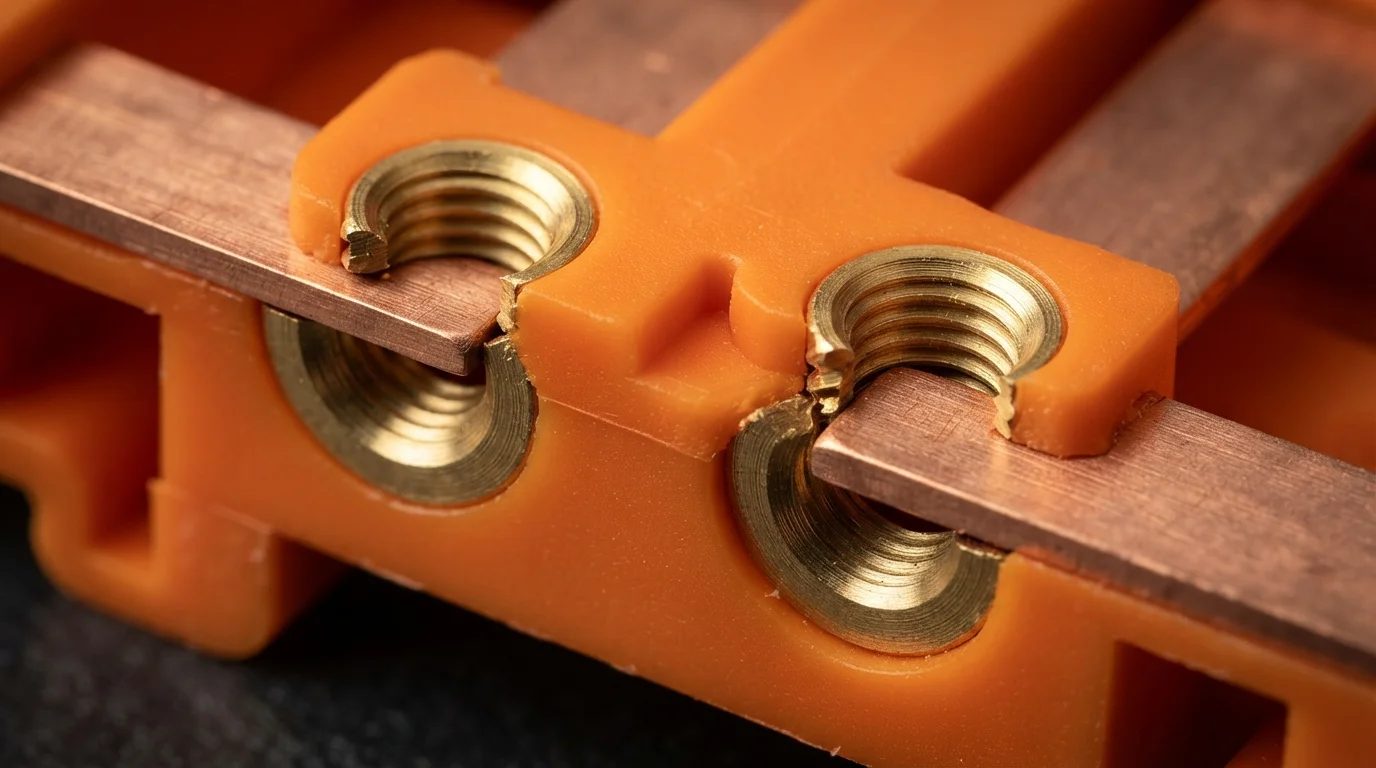
تغليف العناصر المعدنية مثل إدراجات ملولبة من النحاس الأصفر, قضبان توصيل نحاسية, ، والأطراف الإلكترونية المختومة مباشرة داخل البلاستيك توفر مزايا أداء كبيرة. يتدفق الراتنج المنصهر بالكامل حول الملامح المعدنية المخددة، مما يخلق قفلًا ميكانيكيًا دائمًا عند التبريد. يوفر التغليف داخل القالب قوة سحب قوة سحب و قوة عزم الدوران الدورانية مقارنة بالتثبيت الحراري الثانوي. يؤدي التخلص من خطوات التثبيت الثانوية اليدوية إلى تقليل العمالة في التجميع مع ضمان تحديد موضع الإدراج بدقة. تضع أذرع التحميل الآلية الإدراجات المعدنية في تجاويف القلب بدقة دون المليمتر قبل كل دورة حقن.
تشمل معايير تغليف الإدراج الدقيق:
- وضع الإدراج الآلي— استخدام أدوات نهاية الذراع الآلية يضمن تحديد موضع دقيق وقابل للتكرار داخل قلب القالب.
- تشابك الملف المخدد— تدفق الراتنج المنصهر في التخديد المعدني القوي يزيد من مقاومة عزم الالتواء.
- التسخين المسبق للإدراجات المعدنية— تسخين الملامسات المعدنية إلى 100 درجة مئوية قبل التشكيل يقلل من الصدمة الحرارية الموضعية أثناء حقن البوليمر.
- إغلاق مانع للتسرب بدون وميض— أسطح إغلاق فولاذية دقيقة مثبتة تحت ضغط ديناميكي تمنع تسرب البلاستيك إلى أطراف التلامس النشطة.
التحكم في عدم تطابق معامل التمدد الحراري (CTE) ومنع التشقق الناتج عن الإجهاد الحراري
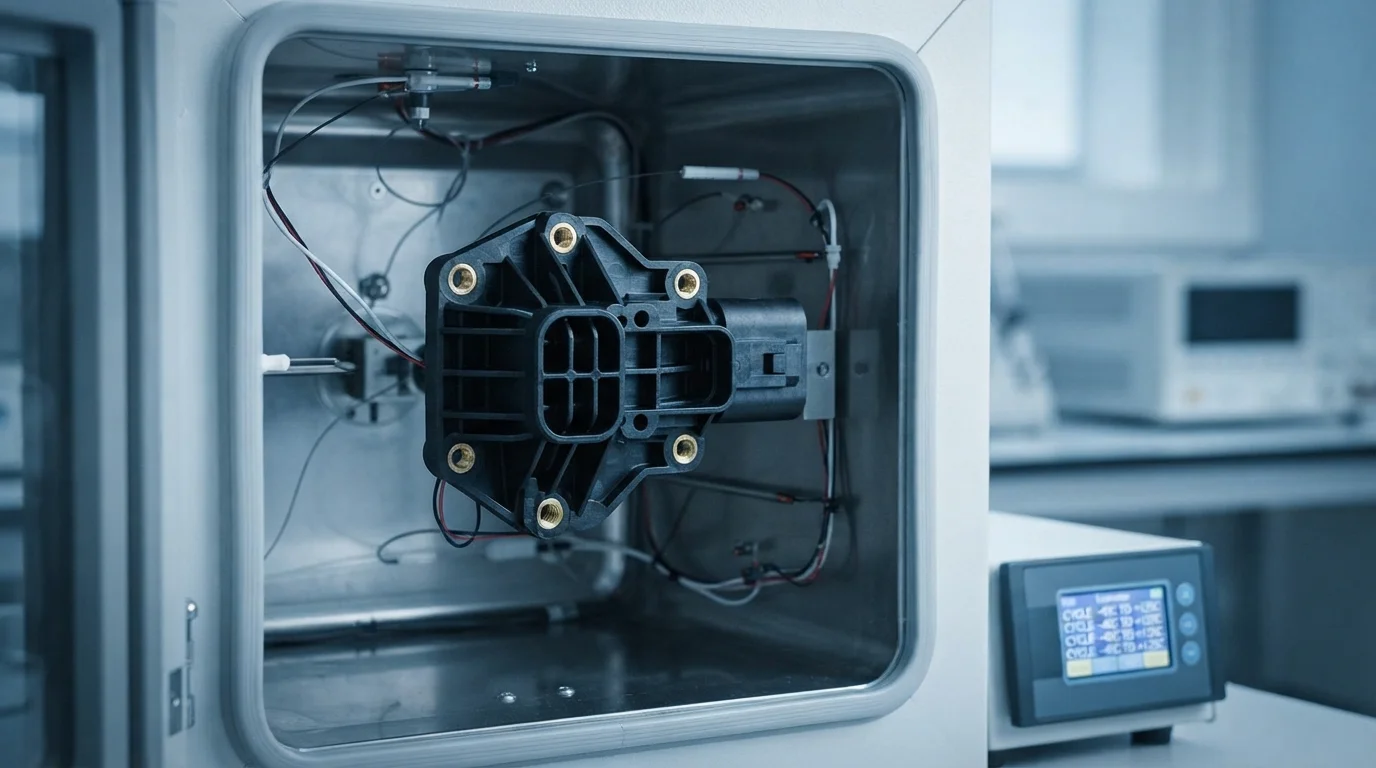
إدارة عدم تطابق CTE بين المعادن الصلبة والبوليمرات المحيطة يمثل التحدي الهندسي الأساسي في تغليف الحشوات. يتمدد النحاس والبرونز بمعدل 16.5 إلى 18.5 جزء في المليون/كلفن، بينما تشهد البلاستيكيات الهندسية معدلات تمدد حراري أعلى بشكل ملحوظ. أثناء دورات الصدمة الحرارية، يؤدي هذا الفرق في التمدد إلى إجهادات شد موضعية داخل جدار البوليمر. اختيار الراتنجات عالية الاستطالة مثل PA66, PBT, ، أو PC/ABS يمنع تكوين الشقوق الدقيقة حول الزوايا المعدنية الحادة. تسخين الحشوات المعدنية مسبقًا قبل القولبة يقلل من تدرجات الحرارة الأولية، مما يعزز تصلب البوليمر بدون إجهاد.
| مادة الحشوة المعدنية | معامل التمدد الحراري للمعدن (جزء في المليون/كلفن) | راتنج البوليمر الموصى به | معامل التمدد الحراري للبوليمر (جزء في المليون/كلفن) | استراتيجية تخفيف الإجهاد |
|---|---|---|---|---|
| نحاس (C36000) | 18.5 | سبيكة PC/ABS (Bayblend) | 60 – 75 | سخّن الحشوات النحاسية إلى 100 درجة مئوية؛ قم بتدوير الحواف الحادة |
| النحاس (C11000) | 16.5 | PA66-GF30 (Zytel) | 25 – 35 | تقوية الألياف الزجاجية تعمل على مواءمة معامل التمدد الحراري للبوليمر مع النحاس |
| فولاذ مقاوم للصدأ (304) | 17.3 | بولي بيوتيلين تيريفثالات مع ألياف زجاجية 30% (فالوكس) | 30 – 40 | حافظ على درجة حرارة قالب 85 درجة مئوية لتخفيف الإجهاد |
عزل زحف الجهد العالي لكابلات المركبات الكهربائية والفضائية
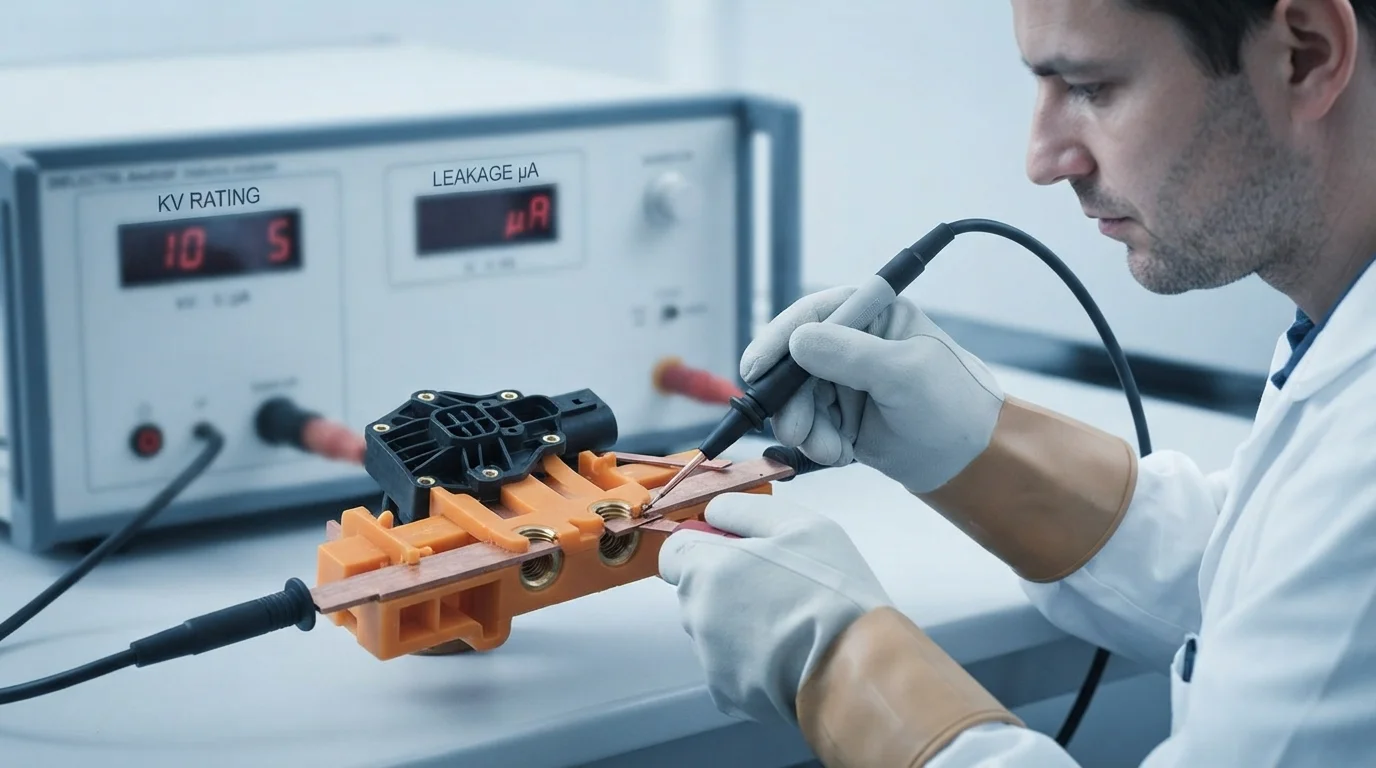
تتطلب المنصات الكهربائية عالية الجهد في المركبات الكهربائية والطائرات تغليفًا عازلًا موثوقًا على طول نقاط التلامس المعدنية. يتطلب تصميم موصلات القضبان المعزولة الامتثال الصارم للمعايير الدولية للعزل مثل IEC 60664-1. تعمل الأضلاع المتاهة المرتفعة المقولبة مباشرة على طول الحدود المعدنية البلاستيكية على زيادة مسافات الزحف والخلوص الفعلية. تمنع أسطح الختم المحكمة الرطوبة ورذاذ الملح والجسيمات الجوية من الدخول وتشكيل مسارات موصلة. يضمن استخدام راتنجات ذات مؤشر تتبع مقارن (CTI) عالي أن تحافظ القضبان المغلفة على عزل كهربائي كامل تحت أحمال تشغيل مستمرة تبلغ 800 فولت.
الأسئلة الشائعة (FAQs)
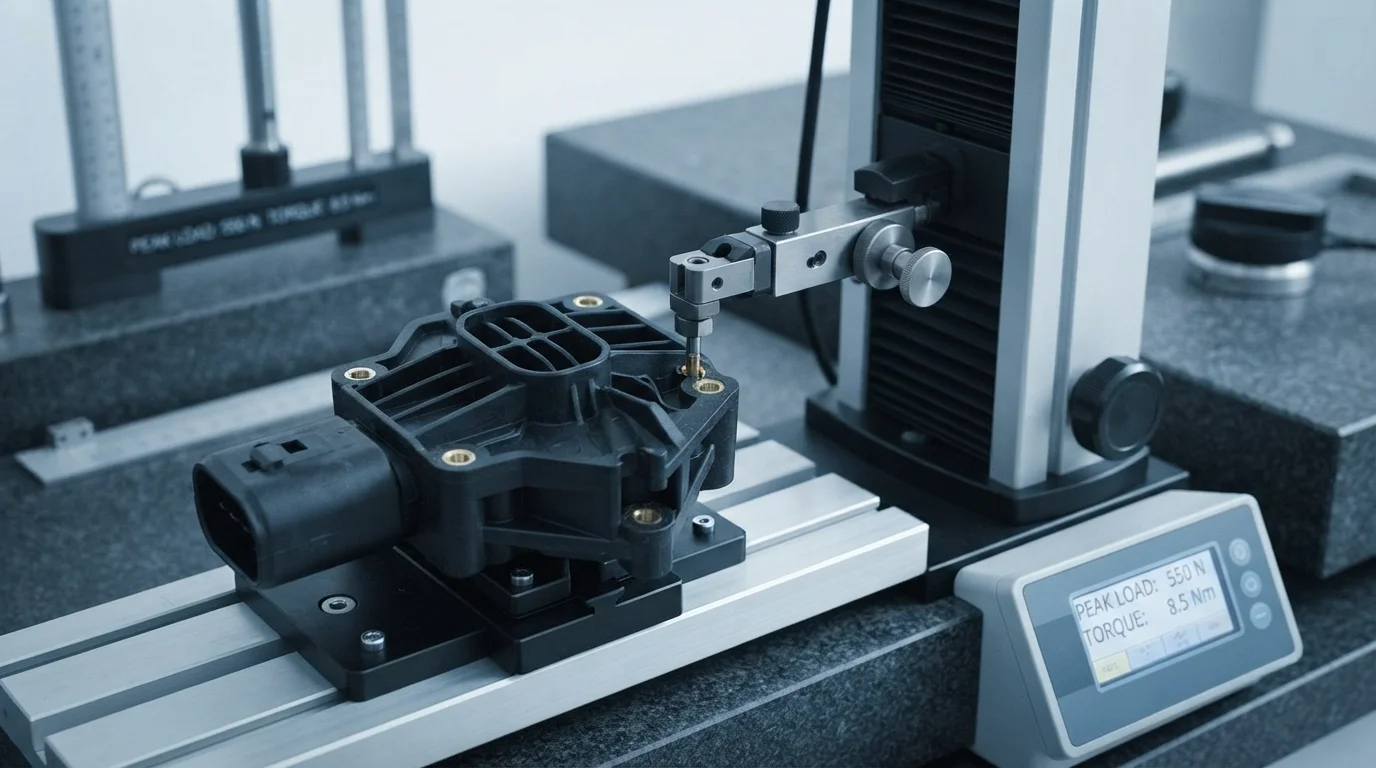
لماذا يوفر القولبة بالحقن مع الإدخال قوة عزم دوران أعلى من التثبيت الحراري بالموجات فوق الصوتية؟
تسمح القولبة بالحقن مع الإدخال بتدفق البلاستيك المنصهر بعمق في الأخاديد المحززة والقطع السفلية تحت ضغط حقن مرتفع. يبرد البلاستيك وينكمش مباشرة حول الشكل الهندسي المعدني، مما يخلق قفلًا ميكانيكيًا سلسًا. بينما يؤدي التثبيت الحراري الثانوي إلى إذابة أسطح الجدران المحلية فقط، تاركًا فجوات دقيقة داخلية تقلل من مقاومة عزم الدوران.
كيف تمنع التشققات الدقيقة حول الإدخالات النحاسية أثناء دورات درجة الحرارة؟
يتطلب منع التشقق الناتج عن الإجهاد الحراري مطابقة خصائص استطالة الراتنج وتسخين الإدخالات المعدنية مسبقًا قبل الحقن. يؤدي التسخين المسبق للإدخالات إلى 100 درجة مئوية إلى خفض التدرج الحراري أثناء القولبة، مما يسمح للراتنج بالتبريد بشكل موحد حول النواة المعدنية.
ما هي أفضل المواد لتغليف قضبان النحاس عالية الجهد؟
يفضل استخدام بولي أميد 66 المملوء بالزجاج (PA66-GF30) و بولي بيوتيلين تيريفثالات (PBT) لتغليف قضبان الجهد العالي. تجمع هذه الراتنجات بين الصلابة الميكانيكية العالية، ودرجة حرارة الانحراف الحراري الممتازة، ومؤشر التتبع المقارن (CTI) الذي يتجاوز 600 فولت.