
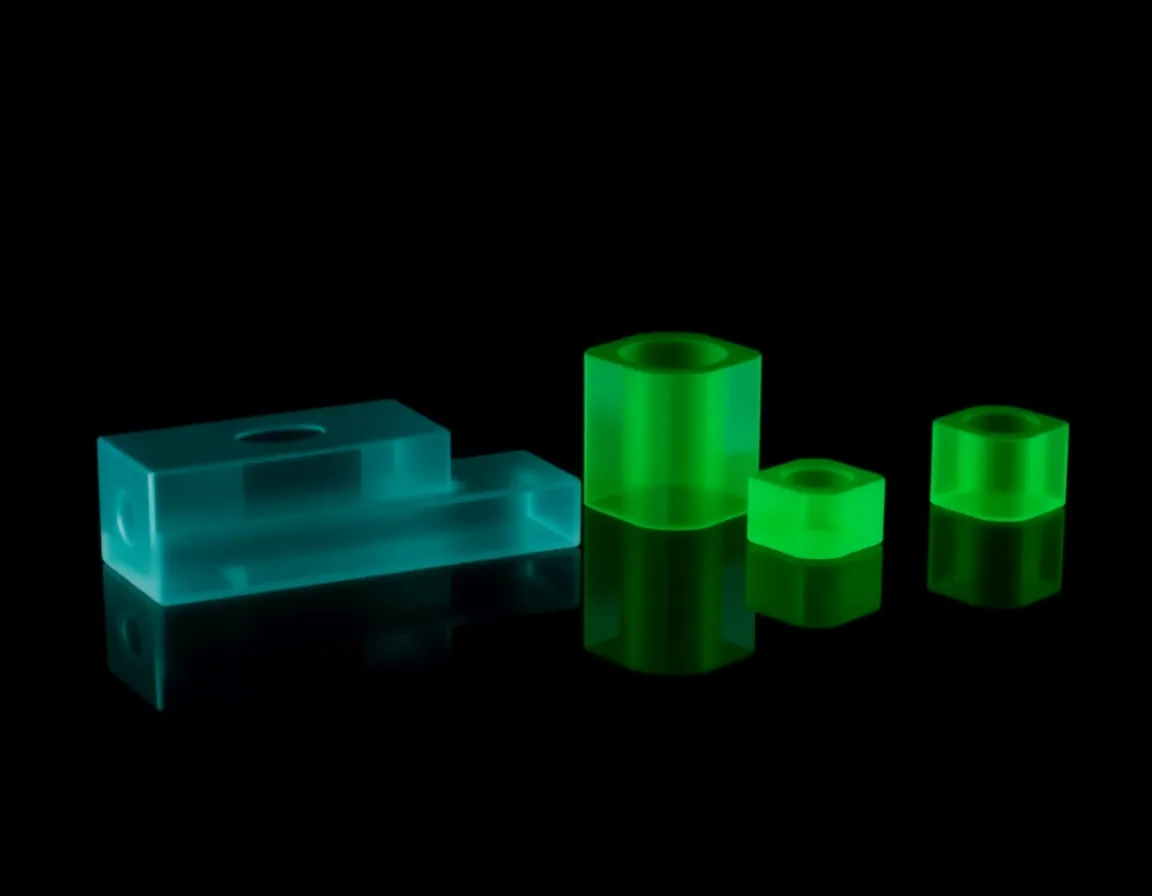
In the relentless pursuit of smaller, faster, and more reliable technologies, the materials we choose often dictate the pace of progress. From the microscopic gears in a surgical robot to the insulating components of a 5G antenna, the demand for parts that perform flawlessly under extreme conditions has never been higher. This is the domain of precision engineering plastics—a class of advanced polymers that are not just substitutes for metal, but often superior alternatives. These materials are the silent enablers of next-generation innovation, bridging the gap between theoretical design and tangible, high-performance reality.
What Are Precision Engineering Plastics?
At its core, precision engineering plastics refers to a specialized category of high-performance polymers that are manufactured to extremely tight tolerances and are designed to maintain their critical physical, chemical, and thermal properties under demanding operational loads. Unlike commodity plastics used in packaging or toys, these materials are engineered at a molecular level to deliver specific, repeatable performance characteristics.
The distinction lies in two key words: "precision" and "engineering."
- Engineering: These plastics possess mechanical strength, thermal stability, and chemical resistance that rival some metals. They are used to create functional parts—bearings, gears, seals, insulators—that must bear loads, resist wear, and operate in harsh environments.
- Precision: They are processed using advanced techniques like tight-tolerance injection molding, CNC machining, and 3D printing to achieve dimensions with micron-level accuracy. A variance of a few micrometers can mean the difference between a functioning heart valve component and a failure.
Common base materials in this family include Polyether Ether Ketone (PEEK), Polyimides (PI), Polytetrafluoroethylene (PTFE), Polyoxymethylene (POM), and Polyetherimide (PEI). Each offers a unique portfolio of properties, from extreme heat resistance to self-lubrication and biocompatibility.
How Do They Work? The Science of High-Performance Polymers
The remarkable properties of precision engineering plastics stem from their complex molecular architecture. Unlike simple polymers with linear chains, these advanced materials feature rigid aromatic rings, strong intermolecular bonds, and sometimes crystalline structures that provide exceptional strength and stability.
Key Mechanisms of Performance
1. Thermal Stability: Materials like PEEK have a glass transition temperature (Tg) exceeding 140°C and a melting point (Tm) around 343°C. This allows them to maintain structural integrity in environments where standard plastics would soften or degrade, such as inside a jet engine or a downhole oil drilling tool.
2. Chemical Inertness: The strong carbon-fluorine bonds in PTFE, for instance, create a shield that resists attack from virtually all industrial chemicals and solvents. This makes them ideal for seals and linings in chemical processing plants.
3. Mechanical Strength and Wear Resistance: By incorporating reinforcing fillers like glass fibers, carbon fibers, or graphite, engineers can dramatically increase a plastic's tensile strength, stiffness, and resistance to creep (deformation under load). This allows a plastic gear to replace a metal one, reducing weight and eliminating the need for external lubrication.
4. Dimensional Stability: Precision engineering plastics have a low coefficient of thermal expansion (CTE). This means they don't swell or shrink significantly with temperature changes, ensuring that a precision-machined component maintains its critical dimensions.
The Role of Additives and Composites
Base polymers are rarely used alone. Formulators add a range of fillers and additives to tailor properties:
- Carbon Fiber: Increases stiffness and strength, and provides electrical conductivity.
- Glass Fiber: Enhances tensile strength and thermal stability at a lower cost.
- PTFE: Added to other plastics to reduce friction and improve wear resistance.
- Mineral Fillers: Improve dimensional stability and reduce warpage.
The Transformative Benefits for Next-Gen Innovation
Adopting precision engineering plastics over traditional materials like steel, aluminum, or ceramics offers a compelling array of benefits that directly fuel innovation.
1. Weight Reduction Without Compromise
The most obvious advantage is a significant reduction in weight. A plastic gear can be up to 80% lighter than its steel counterpart. In aerospace, automotive, and portable medical devices, this translates directly to fuel savings, increased payloads, and improved user ergonomics. The performance is not sacrificed; it is re-engineered.
2. Design Freedom and Part Consolidation
Injection molding allows for the creation of complex, net-shape geometries that would be impossible or prohibitively expensive to machine from metal. Designers can consolidate multiple metal parts into a single, intricate plastic component, reducing assembly time, eliminating fasteners, and minimizing points of failure. This is a game-changer for micro-devices and robotics.
3. Superior Performance in Harsh Environments
Where metals corrode and rust, precision engineering plastics excel. They are immune to galvanic corrosion, resist a vast array of chemicals, and can operate in extreme temperatures. This extends the service life of components in medical implants, semiconductor manufacturing equipment, and offshore energy systems.
4. Enhanced Tribological Properties
Many of these plastics are inherently self-lubricating. Bearings, bushings, and gears made from them operate smoothly without external oil or grease. This is critical in cleanroom environments (like semiconductor fabrication), food processing, and in applications where maintenance is impossible or undesirable.
5. Electrical and Thermal Insulation
Precision engineering plastics are excellent electrical insulators, making them indispensable in connectors, circuit boards, and high-voltage components. Some grades are also thermally conductive, allowing them to dissipate heat in LED lighting and power electronics, a crucial function in miniaturized devices.
Critical Applications Across Industries
The unique combination of properties makes precision engineering plastics vital across a spectrum of high-tech industries.
- Medical Technology: Biocompatible PEEK and PEI are used for surgical instruments, dental implants, and components in dialysis machines. Their ability to withstand repeated sterilization without degrading is paramount.
- Hàng không & Quốc phòng: From fuel system components and brackets to interior panels, these plastics reduce weight and improve fuel efficiency while meeting stringent flame, smoke, and toxicity (FST) standards.
- Automotive & E-Mobility: Under-the-hood components like sensors, connectors, and pump parts benefit from high heat resistance. In electric vehicles, they are used in battery housings and high-voltage connectors for their insulation and lightweight properties.
- Semiconductor & Electronics: The manufacturing of computer chips requires components that are ultra-clean and resistant to aggressive chemicals. Precision plastics like PTFE and PEEK are used in wafer handling tools, fluid handling systems, and test sockets.
- Industrial & Robotics: Lightweight, wear-resistant gears, bearings, and structural components are essential for creating faster, more energy-efficient robotic arms and automated assembly lines.
Best Practices for Success with Precision Engineering Plastics
Harnessing the power of these materials requires a disciplined approach. Success is not just about choosing the right plastic; it's about designing, machining, and processing it correctly.
1. Design for Manufacturability (DFM)
Work closely with your material supplier and molder from the start. Understand the shrinkage rates of the specific plastic, design uniform wall thicknesses to prevent warping, and avoid sharp corners that create stress concentrations. A part designed like a metal component will often fail as a plastic one.
2. Material Selection is Critical
Do not over-specify or under-specify. A material that is too heat-resistant may be unnecessarily expensive and difficult to process. A material that is not robust enough will fail prematurely. Consider all operational factors: temperature, load, chemical exposure, and required lifespan.
3. Precision Processing and Tooling
The "precision" in precision engineering plastics is achieved through high-quality tooling and tightly controlled processing parameters. Mold temperature, injection pressure, and cooling time must be meticulously managed to ensure consistent part dimensions and properties. For machined parts, use sharp tooling and proper feeds and speeds to avoid melting or chipping the material.
4. Quality Control and Testing
Implement rigorous inspection protocols. This includes not just dimensional checks but also material verification (e.g., using DSC or FTIR) and functional testing of the final part under simulated service conditions. This ensures that the material's properties have not been compromised during processing.
5. Consider Total Cost of Ownership
While the raw material cost of a precision engineering plastic is higher than steel or aluminum, the total cost of a finished part can be lower. Factor in the elimination of machining, assembly, painting, and lubrication, as well as the extended service life and reduced maintenance. The value proposition is in the performance.
The Future is Plastic (The Right Kind)
As industries push the boundaries of what is possible—from implantable medical devices that dissolve harmlessly to autonomous drones that fly for hours—the demand for materials that can keep pace will only grow. Precision engineering plastics are no longer a niche curiosity; they are a cornerstone of modern design and manufacturing. They offer a unique synergy of lightweight strength, chemical resilience, and design flexibility that is simply unmatched by conventional materials.
The key to next-gen innovation lies in mastering these advanced polymers. By understanding their science, leveraging their benefits, and adhering to best practices in design and processing, engineers and innovators can unlock new realms of possibility, creating products that are not only more capable but also more efficient, durable, and sustainable. The future is being built one precision-molded component at a time.