
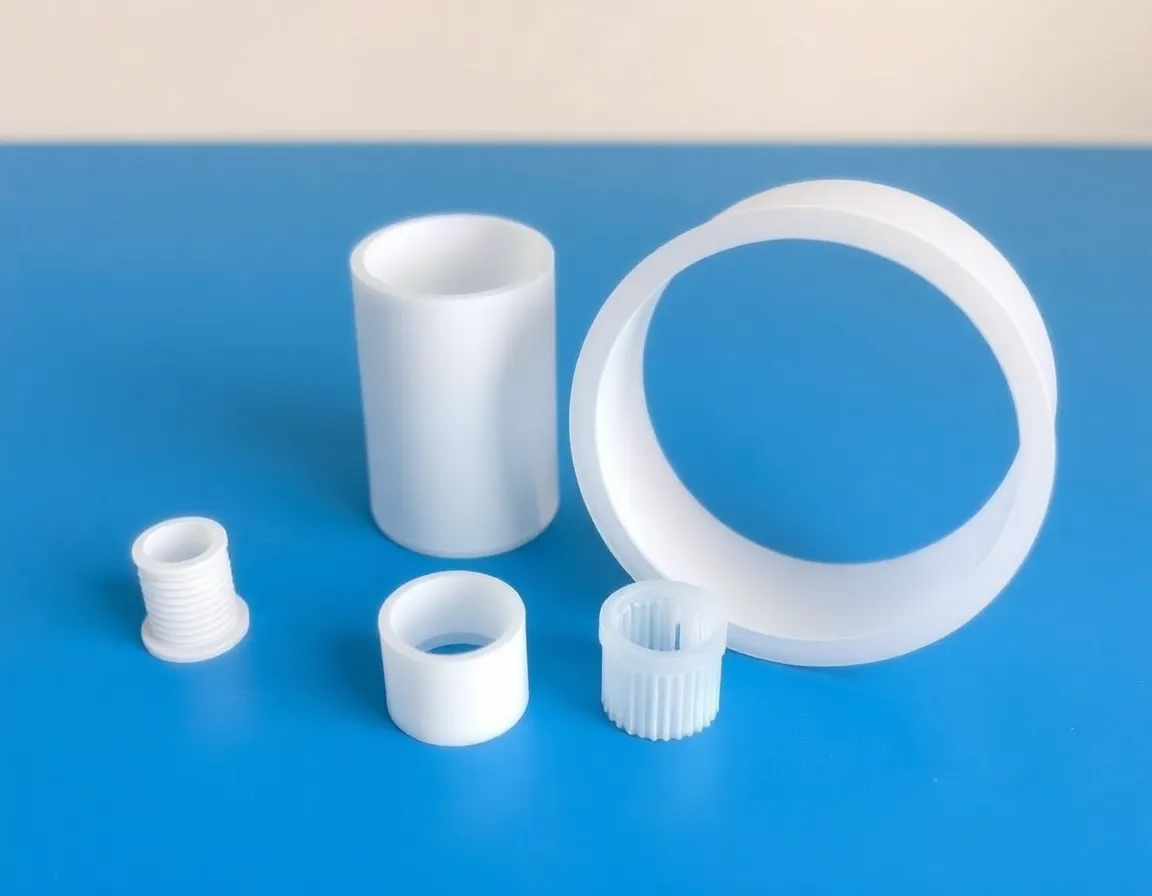
The journey from a conceptual idea to a finished, tangible product is one of the most exciting yet challenging processes in modern manufacturing. At the heart of this journey lies the creation of high quality custom plastic parts. Whether you are an engineer developing complex medical devices, an entrepreneur launching a consumer product, or a manufacturer seeking specialized components, understanding the lifecycle of custom plastic fabrication is essential. This article explores the comprehensive process of taking custom plastic parts from a preliminary prototype to full-scale production, highlighting the technologies, materials, and best practices that ensure success.
Understanding Custom Plastic Parts
Custom plastic parts are components manufactured specifically to meet unique design specifications, tolerances, and performance requirements. Unlike off-the-shelf plastic items, these parts are engineered for a specific function within a larger assembly or as standalone products. The demand for high quality custom plastic parts has skyrocketed due to their versatility, durability, and cost-effectiveness compared to metal or glass alternatives.
The definition of "high quality" in this context goes beyond just the absence of defects. It encompasses dimensional accuracy, material integrity, surface finish, and the ability to withstand environmental stressors such as heat, chemicals, and mechanical wear. Achieving this level of quality requires a meticulous approach that begins long before the first piece of plastic is melted.
The Role of Material Selection
The foundation of any successful custom plastic project is the selection of the right material. Plastics are not a monolith; they range from commodity resins like Polypropylene (PP) and Polyethylene (PE) to high-performance engineering plastics like PEEK, Polycarbonate (PC), and Acrylonitrile Butadiene Styrene (ABS).
- Thermoplastics: These can be melted and remolded multiple times, making them ideal for recycling and injection molding. Examples include Nylon and Acrylic.
- Thermosets: These undergo a chemical change when heated and cannot be remolded. They are excellent for high-heat applications, such as electrical insulators.
- Elastomers: These provide elasticity and flexibility, essential for parts requiring a rubber-like feel or seal, such as gaskets and grips.
Choosing the wrong material can lead to part failure, increased costs, or manufacturing difficulties. Therefore, engineers must balance mechanical properties with manufacturability and cost.
The Prototyping Phase: Proof of Concept
Before investing in expensive tooling, the prototyping phase serves as the critical validation step. This stage is where designs are tested, refined, and perfected. The goal is to identify design flaws early, ensuring that the final product functions as intended.
Rapid Prototyping Technologies
Modern technology has revolutionized how prototypes are made. The days of waiting weeks for a machined part are largely gone, replaced by rapid prototyping methods that deliver results in days or even hours.
1. FDM and SLA 3D Printing: Fused Deposition Modeling (FDM) and Stereolithography (SLA) are additive manufacturing processes that build parts layer by layer. FDM is cost-effective for functional testing, while SLA offers high-resolution details and smooth surfaces, ideal for visual prototypes. These methods allow for rapid iteration without the need for molds.
2. CNC Machining: For prototypes that require the exact material properties of the final production part, CNC machining is often used. This subtractive process cuts a block of plastic into the desired shape, offering tight tolerances and a wide range of material options. It is particularly useful for bridge tooling—creating parts that bridge the gap between prototype and full production.
3. Vacuum Casting: Also known as urethane casting, this process involves creating a silicone mold from a master pattern (often 3D printed) and then casting polyurethane resin into it. It is an excellent method for producing small batches of high-quality parts that look and feel like injection-molded parts.
Design for Manufacturing (DFM)
During prototyping, Design for Manufacturing (DFM) principles must be applied. This involves analyzing the design to ensure it can be manufactured efficiently. Key considerations include:
- Wall Thickness: Uniform wall thickness prevents warping and sinking in injection molding.
- Góc thoát khuôn: Slight tapers on vertical walls allow parts to be ejected from molds easily.
- Ribs and Gussets: These features add strength without significantly increasing part weight or material usage.
- Tolerances: Understanding the capabilities of the manufacturing process is crucial. Overly tight tolerances can drive up costs exponentially.
Bridging the Gap: From Prototype to Production Tooling
Once the prototype is approved, the project moves to the tooling phase. This is often the most expensive and time-consuming part of the process, but it is the gateway to mass production.
Injection Molding: The Industry Standard
Injection molding is the primary method for producing high quality custom plastic parts at scale. The process involves injecting molten plastic into a precision-machined metal mold (tool). When the plastic cools and solidifies, the mold opens, and the part is ejected.
Creating the mold is a complex engineering feat. It must be designed to withstand high pressures and temperatures. Modern molds often incorporate:
- Hệ thống runner nóng: These keep the plastic molten until it enters the cavity, reducing waste and cycle times.
- Complex Cooling Channels: Conformal cooling channels, often made possible by 3D printing metal inserts, ensure uniform cooling and prevent warping.
- Automated Ejection Systems: These ensure parts are removed safely and consistently without damage.
Alternative Methods for Lower Volumes
While injection molding is king for high volumes, it may not be economically viable for lower production runs. In these cases, other methods are employed:
Thermoforming: This involves heating a plastic sheet until it is pliable and draping it over a mold. It is ideal for large parts with simple geometries, such as trays or enclosures.
Rotational Molding: Used for hollow parts like tanks or kayaks, this process rotates a mold while heating it, coating the inside with plastic.
Reaction Injection Molding (RIM): This mixes two reactive liquid components that are injected into a mold. It is excellent for large, durable parts with thick walls.
Ensuring Quality in Mass Production
Transitioning to production does not mean the work is done. Maintaining the integrity of high quality custom plastic parts requires rigorous quality control (QC) throughout the production run.
Kiểm soát Quá trình Thống kê (SPC)
Manufacturers use SPC to monitor and control the production process. By measuring critical dimensions of parts at regular intervals, they can detect drift or anomalies before they result in out-of-spec parts. This data-driven approach ensures consistency from the first part to the millionth.
Material Verification and Traceability
High-quality manufacturing requires strict traceability. Every batch of resin should be verified for melt flow index, color consistency, and moisture content. Using regrind (recycled plastic) must be carefully controlled, as excessive regrind can degrade the mechanical properties of the final part.
Secondary Operations and Assembly
Many custom plastic parts require secondary operations to become finished products. These include:
- Ultrasonic Welding: Joining two plastic components using high-frequency vibrations.
- Pad Printing and Laser Etching: Adding branding, logos, or instructions.
- Surface Finishing: Painting, plating, or texturing to improve aesthetics or functionality.
Managing these operations requires a supply chain that is as robust as the molding process itself.
Best Practices for Success
To successfully navigate the journey from prototype to production, consider the following best practices:
- Involve the Manufacturer Early: Bring your contract manufacturer into the design phase. Their expertise in DFM can save thousands of dollars in tooling modifications later.
- Don't Rush the Prototype: It is tempting to skip steps to save time, but a flawed prototype will lead to a flawed production run. Test thoroughly.
- Plan for Logistics: Consider packaging, shipping, and inventory storage early. Plastic parts can warp if stored improperly.
- Communicate Clearly: Provide detailed 2D drawings and 3D CAD files. Specify critical dimensions and tolerances clearly.
Kết luận
The evolution of custom plastic parts from a digital file to a physical reality is a testament to modern engineering. By leveraging advanced prototyping technologies, selecting the right materials, and adhering to strict quality control standards, businesses can create high quality custom plastic parts that drive innovation. Whether you are producing a thousand units or a million, the principles of DFM, rigorous testing, and partnership with experienced manufacturers are the keys to a successful product launch. The path from prototype to production is complex, but with the right approach, it is a journey that leads to durable, functional, and market-ready products.