
Custom Injection Mold Making
Designing and fabricating high-precision custom injection molds requires a seamless synergy between computer-aided engineering, high-hardness tool steel machining, and scientific process validation. Custom injection mold making serves as the foundational backbone for producing tight-tolerance plastic components across automotive, medical, and consumer electronics industries. At Jucheng Precision, a certified ISO 9001, ISO 13485, and IATF 16949 injection mold manufacturer, we engineer turnkey tooling solutions tailored to exact OEM specifications. Powered by 25+ in-house 5-axis CNC machining centers and mirror-polishing facilities, we cut S136 and H13 steel cavity inserts to ±0.005mm tolerances, delivering high-performance prototype and multi-cavity production molds verified by Zeiss CMM inspection.
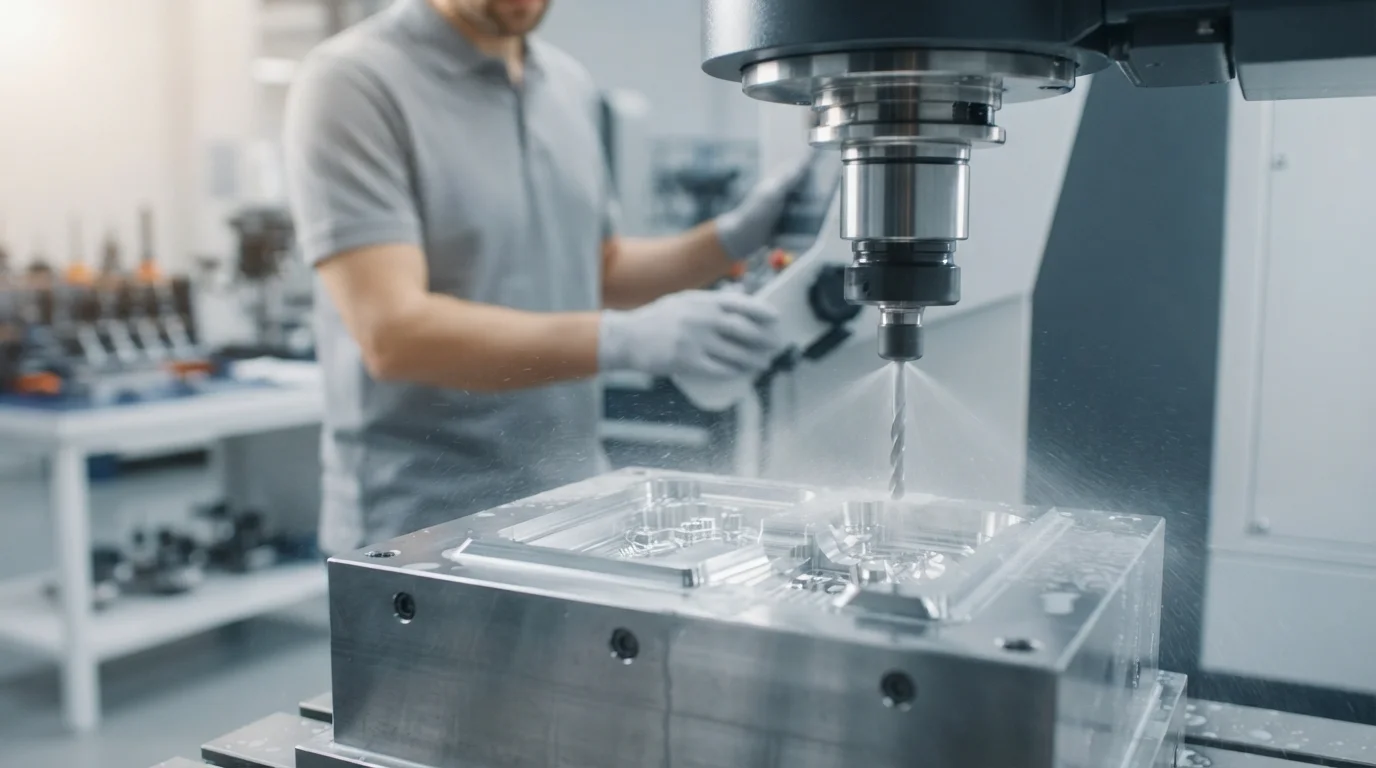
High-quality custom injection mold making designed and manufactured for precision plastic parts, from prototype tooling to high-volume production molds. As an experienced Gia công khuôn mẫu tùy chỉnh manufacturer, Jucheng Precision delivers end-to-end tooling solutions for demanding global OEMs.
Complete Injection Mold Manufacturing Solutions
We offer single-source mold manufacturing capabilities that take your product from early CAD concepts through final production validation:
- Mold Design: Full 3D/2D CAD mold structural engineering and thermal cooling simulation.
- Mold Fabrication: High-speed 5-axis CNC milling, wire EDM, and mirror-surface sinker EDM.
- Trial Testing: Scientific T0/T1 mold sampling and CMM dimensional inspection.
- Production Support: Preventive maintenance, engineering change order (ECO) management, and long-term tool life guarantees.
Our Injection Mold Making Process
Our standardized 5-step tooling engineering workflow ensures total quality control at every phase of mold building:
1. DFM Analysis (Design for Manufacturability)
Our engineers perform a comprehensive DFM Analysis within 24 hours, evaluating wall thickness, draft angles, gate locations, and parting lines to eliminate manufacturing risks before cutting steel.
2. Injection Mold Design & Simulation
Using 3D Injection Mold Design software and Mold Flow Analysis, we optimize runner layouts, gate shear, and conformal cooling circuits to prevent part warpage and sink marks.
3. Precision Mold Manufacturing
Tool steel cavities and cores are machined in-house using 25+ 5-axis CNC machining centers, wire-EDM, and diamond-paste polishers, achieving tight tolerances up to ±0.005 mm.
4. Mold Trial & Validation (T0 / T1 Samples)
We perform scientific Mold Trial & Validation sampling on electric presses, recording decoupled pressure profiles and generating full CMM dimensional inspection reports.
5. Production Validation & Sign-Off
Once sample dimensions and physical properties are approved by the client, the tool is signed off for high-volume Ép phun nhựa or prepared for export shipping.
Types of Injection Molds We Build
We engineer custom tooling configurations based on your production volume, budget, and part complexity:
| Mold Configuration | Tooling Structure & Characteristics | Ideal Manufacturing Use Case |
|---|---|---|
| Prototype Injection Mold | QC-10 aluminum or NAK80 soft steel modular inserts; fast 10-day turnaround. | Design verification, functional samples, and low-volume pilot testing (100 to 10,000 parts). |
| Production Injection Mold | Hardened S136 or H13 steel cavities (52 HRC) with fully automated ejection mechanisms. | High-volume 24/7 continuous mass production (100,000 to 1,000,000+ cycles). |
| Multi-Cavity Injection Mold | 16, 32, or 64+ identical cavity layouts driven by hot runner valve gates. | High-speed disposable medical packaging, bottle closures, and high-volume caps. |
| Family Mold | Multiple different part geometries (e.g., top and bottom housing) in one shared tool base. | Product kits, enclosures, and matching assemblies to reduce overall tooling investment. |
| Ép phun chèn Tooling | Precision cavities designed with locating pins and magnetic nests for metal inserts. | Encapsulating brass threaded studs, copper terminals, and structural metal brackets. |
Injection Mold Tooling Materials & Steels
Selecting the right mold steel is essential to balance tool cost, cycle times, and abrasion resistance against aggressive engineering resins like Glass Fiber (GF) and Carbon Fiber (CF) compounds:
| Tool Steel / Material | Steel Hardness (HRC) | Performance & Resin Compatibility |
|---|---|---|
| Aluminum Tooling (QC-10) | 160 HB (Soft) | Fast heat dissipation, low tooling cost. Ideal for prototype runs processing standard commodity resins like PP, PE, and ABS. |
| P20 / 718 Steel | 28 – 34 HRC (Pre-hardened) | Good polishability and moderate wear resistance. Cost-effective choice for medium-volume production runs (up to 250,000 shots). |
| S136 Stainless Steel | 48 – 52 HRC (Fully Hardened) | High chromium, rust-resistant steel. Takes an SPI A-1 diamond mirror polish; mandatory for optical Polycarbonate (PC) lenses and Biocompatible & Medical Grade Resin parts. |
| H13 Tool Steel | 50 – 54 HRC (Fully Hardened) | Extreme thermal shock and wear resistance. Essential for molding high-temperature super-polymers like Polyetheretherketone (PEEK) and glass-filled engineering resins. |
Why Choose Our Injection Mold Manufacturing
As an ISO 9001, ISO 13485, and IATF 16949 certified tooling partner, Jucheng Precision offers distinct technical advantages for global original equipment manufacturers:
- In-House Tooling Division: Equipped with 25+ 5-axis CNC machining centers, EDM wire-cutters, and mirror polishers, keeping entire mold fabrication under direct quality control.
- Micro-Tolerance Precision: Machining tolerances held strictly within ±0.005 mm, eliminating parting line flash and ensuring tight assembly fits.
- Fast Lead Times: Rapid aluminum prototype molds ready in as fast as 10 business days, helping you accelerate product launch timelines.
- Scientific Process Lock: Every tool is validated on our 35+ injection presses (15T to 3000T) using decoupled molding principles and Zeiss CMM inspection.
Frequently Asked Questions (FAQ)
Q: How long does custom injection mold manufacturing take?
A: Prototype aluminum molds can be completed in as fast as 10 business days. Multi-cavity production molds built from hardened S136 or H13 steel typically require 3 to 5 weeks depending on part complexity and cavitation.
Q: What tool steel materials are used for injection molds?
A: We select tool steels based on production volume and resin aggressiveness. Options include aluminum QC-10 (prototypes), P20 and 718 steel (medium volume), S136 stainless steel (medical/optical high gloss), and H13 steel (high-temperature or glass-filled resins).
Q: Do you provide prototype tooling and low-volume production support?
A: Yes. We manufacture rapid prototype molds for functional sampling (100 to 1,000 parts) and support low-volume bridge production (1,000 to 10,000+ parts) to help clients validate market demand before mass tooling investment.
Q: How do you guarantee part dimensional accuracy during mold making?
A: Every mold design begins with a free 24-hour DFM analysis and Mold Flow Simulation. Tool cavities are machined on 5-axis CNCs within ±0.005 mm tolerances, and T1 sample dimensions are fully verified on Zeiss CMM inspection systems.