
تصنيع قوالب الحقن المخصصة
يتطلب تصميم وتصنيع قوالب الحقن المخصصة عالية الدقة تكاملاً سلسًا بين الهندسة بمساعدة الكمبيوتر، وتشغيل فولاذ الأدوات عالي الصلابة، والتحقق العلمي من العملية. يُعد تصنيع قوالب الحقن المخصصة العمود الفقري الأساسي لإنتاج المكونات البلاستيكية ذات التفاوتات الضيقة عبر صناعات السيارات والطبية والإلكترونيات الاستهلاكية. في شركة Jucheng Precision، وهي شركة مصنعة لقوالب الحقن الحاصلة على شهادات ISO 9001 وISO 13485 وIATF 16949، نقوم بهندسة حلول أدوات تسليم المفتاح مصممة خصيصًا لمواصفات OEM الدقيقة. بفضل أكثر من 25 مركز تصنيع CNC خماسي المحاور داخل الشركة ومرافق التلميع المرآتي، نقوم بقطع إدخالات التجويف من فولاذ S136 وH13 بتفاوتات ±0.005 مم، مما يوفر قوالب إنتاج عالية الأداء للنماذج الأولية وقوالب متعددة التجاويف تم التحقق منها بواسطة فحص CMM من Zeiss.
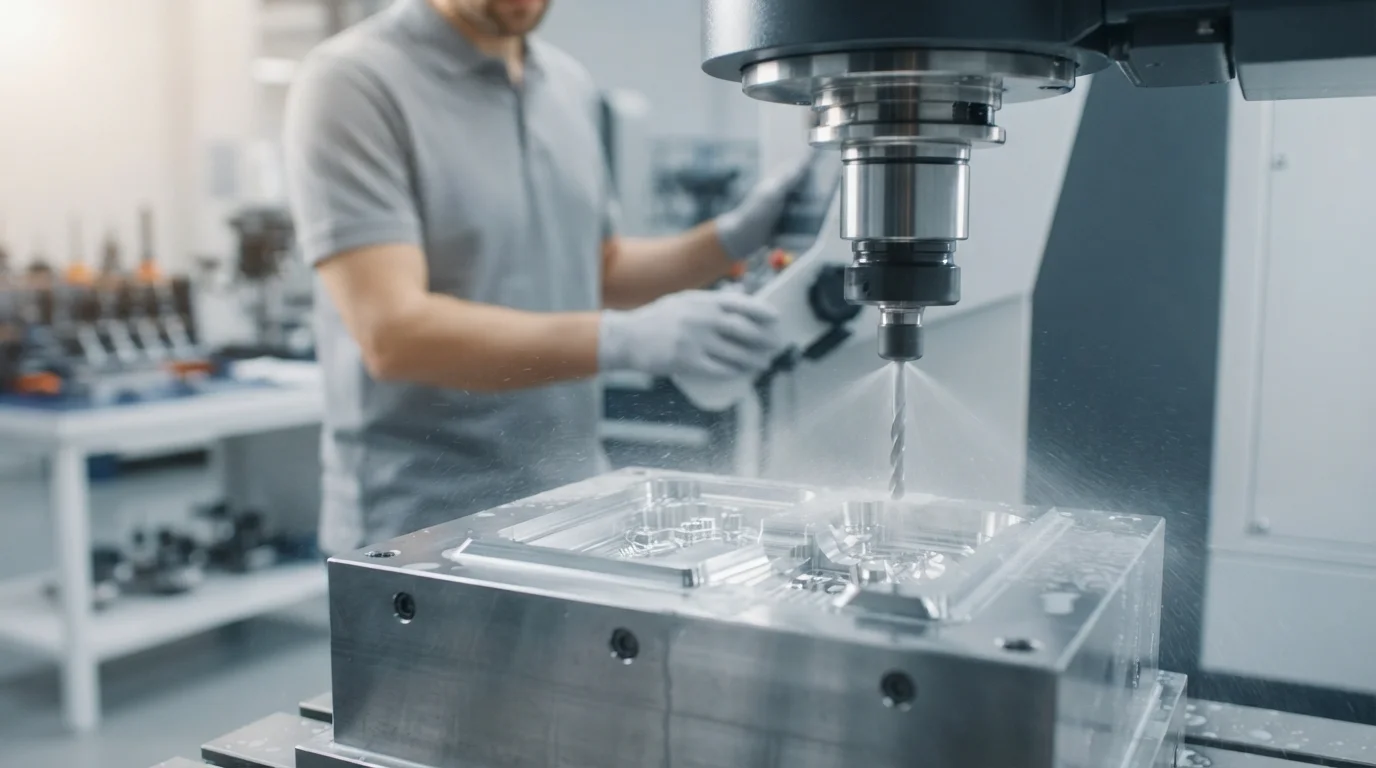
عالية الجودة تصنيع قوالب الحقن المخصصة مصممة ومصنعة لأجزاء بلاستيكية دقيقة، من أدوات النماذج الأولية إلى قوالب الإنتاج عالية الحجم. بصفتنا شركة تصنيع القوالب المخصصة مصنعة ذات خبرة، تقدم Jucheng Precision حلول أدوات شاملة لعملاء OEM العالميين الطموحين.
حلول تصنيع قوالب الحقن الكاملة
نقدم قدرات تصنيع قوالب من مصدر واحد تأخذ منتجك من مفاهيم CAD المبكرة إلى التحقق النهائي من الإنتاج:
- تصميم القالب: هندسة هيكلية كاملة للقالب بتقنية CAD ثلاثية الأبعاد/ثنائية الأبعاد ومحاكاة التبريد الحراري.
- تصنيع القالب: طحن CNC خماسي المحاور عالي السرعة، وقطع الأسلاك بالتفريغ الكهربائي، وتفريغ كهربائي غاطس لسطح مرآة.
- اختبار التجربة: أخذ عينات علمية من القالب T0/T1 وفحص الأبعاد باستخدام CMM.
- دعم الإنتاج: الصيانة الوقائية، وإدارة أوامر التغيير الهندسي (ECO)، وضمانات عمر الأداة على المدى الطويل.
عملية تصنيع قوالب الحقن لدينا
يضمن سير عمل هندسة الأدوات الموحد المكون من 5 خطوات مراقبة الجودة الكاملة في كل مرحلة من مراحل بناء القالب:
1. تحليل DFM (التصميم من أجل قابلية التصنيع)
يقوم مهندسونا بإجراء تحليل شامل تحليل قابلية التصنيع (DFM) خلال 24 ساعة، لتقييم سماكة الجدران، وزوايا السحب، ومواقع البوابات، وخطوط الفصل للقضاء على مخاطر التصنيع قبل قطع الفولاذ.
2. تصميم ومحاكاة قوالب الحقن
باستخدام برنامج تصميم قوالب الحقن ثلاثي الأبعاد و تحليل تدفق القالب, نقوم بتحسين تخطيطات المجاري، وقص البوابات، ودوائر التبريد المطابقة لمنع اعوجاج الأجزاء وعلامات الانكماش.
3. تصنيع القوالب بدقة
يتم تشغيل تجاويف وقلوب فولاذ الأدوات داخليًا باستخدام أكثر من 25 مركز تصنيع CNC بخمسة محاور، وقطع الأسلاك بالتفريغ الكهربائي (EDM)، وأجهزة تلميع بمعجون الماس، لتحقيق تفاوتات ضيقة تصل إلى ±0.005 مم.
4. تجربة القالب والتحقق (عينات T0 / T1)
نقوم بإجراء تجربة القالب والتحقق علمية على مكابس كهربائية، مع تسجيل ملفات الضغط المنفصلة وإنشاء تقارير فحص أبعاد CMM كاملة.
5. التحقق من الإنتاج والاعتماد النهائي
بمجرد اعتماد أبعاد العينة والخصائص الفيزيائية من قبل العميل، يتم اعتماد القالب للإنتاج بكميات كبيرة قولبة حقن البلاستيك أو تجهيزه للشحن للتصدير.
أنواع قوالب الحقن التي نبنيها
نقوم بهندسة تكوينات أدوات مخصصة بناءً على حجم الإنتاج والميزانية وتعقيد القطعة:
| تكوين القالب | هيكل الأداة وخصائصها | حالة الاستخدام المثالية للتصنيع |
|---|---|---|
| قالب الحقن للنماذج الأولية | إدراجات معيارية من الألومنيوم QC-10 أو الفولاذ الطري NAK80؛ فترة تسليم سريعة تبلغ 10 أيام. | التحقق من التصميم، والعينات الوظيفية، والاختبار التجريبي منخفض الحجم (من 100 إلى 10,000 قطعة). |
| قالب الحقن للإنتاج | Hardened S136 or H13 steel cavities (52 HRC) with fully automated ejection mechanisms. | High-volume 24/7 continuous mass production (100,000 to 1,000,000+ cycles). |
| قالب حقن متعدد التجاويف | 16, 32, or 64+ identical cavity layouts driven by hot runner valve gates. | High-speed disposable medical packaging, bottle closures, and high-volume caps. |
| Family Mold | Multiple different part geometries (e.g., top and bottom housing) in one shared tool base. | Product kits, enclosures, and matching assemblies to reduce overall tooling investment. |
| قولبة الحقن بالإدراج الأدوات | Precision cavities designed with locating pins and magnetic nests for metal inserts. | Encapsulating brass threaded studs, copper terminals, and structural metal brackets. |
Injection Mold Tooling Materials & Steels
Selecting the right mold steel is essential to balance tool cost, cycle times, and abrasion resistance against aggressive engineering resins like الألياف الزجاجية (GF) و ألياف الكربون (CF) compounds:
| Tool Steel / Material | Steel Hardness (HRC) | Performance & Resin Compatibility |
|---|---|---|
| Aluminum Tooling (QC-10) | 160 HB (Soft) | Fast heat dissipation, low tooling cost. Ideal for prototype runs processing standard commodity resins like PP, PE, و ABS. |
| P20 / 718 Steel | 28 – 34 HRC (Pre-hardened) | Good polishability and moderate wear resistance. Cost-effective choice for medium-volume production runs (up to 250,000 shots). |
| S136 Stainless Steel | 48 – 52 HRC (Fully Hardened) | High chromium, rust-resistant steel. Takes an SPI A-1 diamond mirror polish; mandatory for optical بولي كربونات (PC) lenses and راتينج متوافق حيوياً وطبي الدرجة parts. |
| فولاذ الأدوات H13 | 50 – 54 HRC (Fully Hardened) | Extreme thermal shock and wear resistance. Essential for molding high-temperature super-polymers like بولي إيثر إيثر كيتون (PEEK) and glass-filled engineering resins. |
Why Choose Our Injection Mold Manufacturing
As an ISO 9001, ISO 13485, and IATF 16949 certified tooling partner, Jucheng Precision offers distinct technical advantages for global original equipment manufacturers:
- In-House Tooling Division: Equipped with 25+ 5-axis CNC machining centers, EDM wire-cutters, and mirror polishers, keeping entire mold fabrication under direct quality control.
- Micro-Tolerance Precision: Machining tolerances held strictly within ±0.005 mm, eliminating parting line flash and ensuring tight assembly fits.
- Fast Lead Times: Rapid aluminum prototype molds ready in as fast as 10 business days, helping you accelerate product launch timelines.
- Scientific Process Lock: Every tool is validated on our 35+ injection presses (15T to 3000T) using decoupled molding principles and Zeiss CMM inspection.
Frequently Asked Questions (FAQ)
Q: How long does custom injection mold manufacturing take?
A: Prototype aluminum molds can be completed in as fast as 10 business days. Multi-cavity production molds built from hardened S136 or H13 steel typically require 3 to 5 weeks depending on part complexity and cavitation.
Q: What tool steel materials are used for injection molds?
A: We select tool steels based on production volume and resin aggressiveness. Options include aluminum QC-10 (prototypes), P20 and 718 steel (medium volume), S136 stainless steel (medical/optical high gloss), and H13 steel (high-temperature or glass-filled resins).
Q: Do you provide prototype tooling and low-volume production support?
A: Yes. We manufacture rapid prototype molds for functional sampling (100 to 1,000 parts) and support low-volume bridge production (1,000 to 10,000+ parts) to help clients validate market demand before mass tooling investment.
Q: How do you guarantee part dimensional accuracy during mold making?
A: Every mold design begins with a free 24-hour DFM analysis and Mold Flow Simulation. Tool cavities are machined on 5-axis CNCs within ±0.005 mm tolerances, and T1 sample dimensions are fully verified on Zeiss CMM inspection systems.