
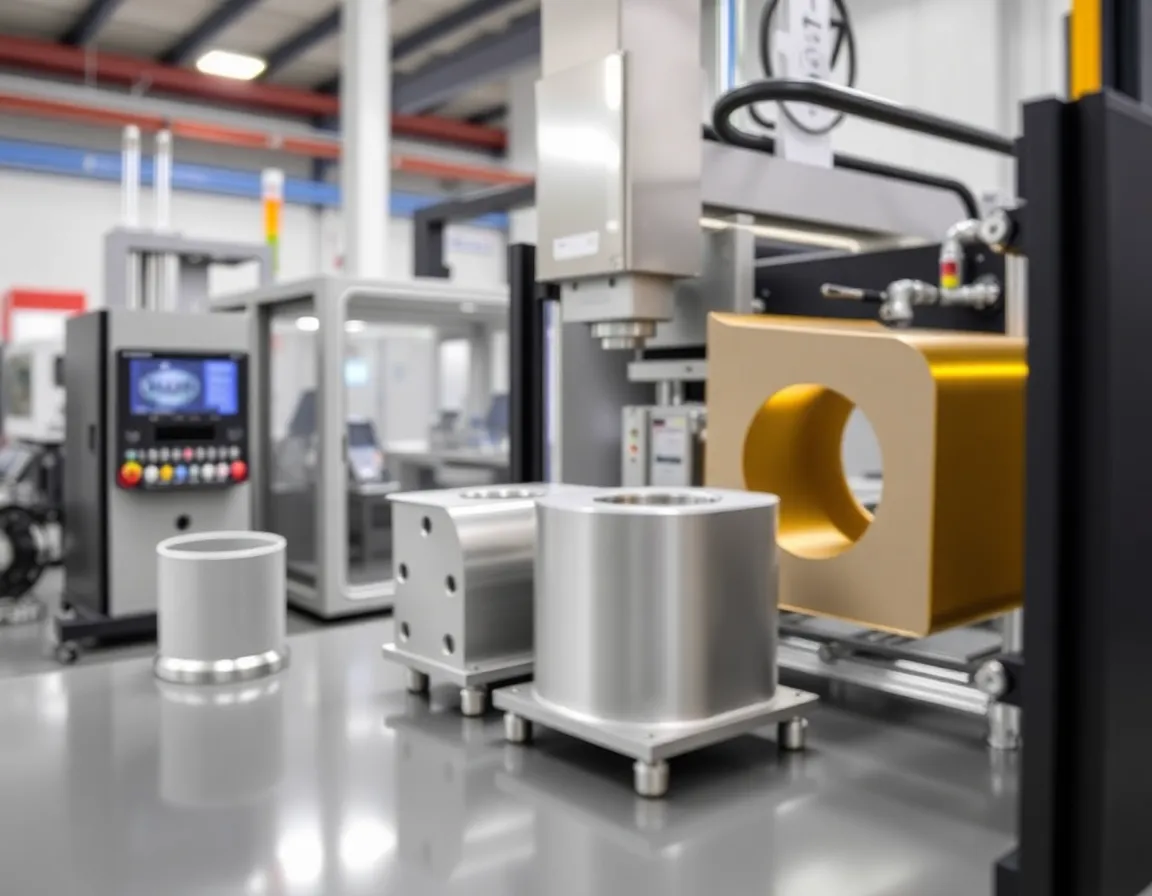
Understanding High-End Injection Molding
In the world of modern manufacturing, the difference between a good part and a flawless part often comes down to microns, seconds, and degrees. High-end injection molding is not simply the act of injecting molten plastic into a steel cavity. It is a precision-driven discipline that combines advanced machinery, scientific process control, premium tooling, and deep material science. Whether you are producing components for medical devices, aerospace systems, automotive sensors, or luxury consumer electronics, the margin for error is virtually zero.
Standard injection molding can produce thousands of parts per hour, but high-end injection molding produces thousands of identical parts per hour—each meeting tolerances that can be as tight as ±0.001 inches. This article reveals five secrets that separate elite molders from the rest, and explains how these practices lead to flawless parts.
Secret 1: Scientific Molding and Process Window Development
The first secret is not a machine or a material—it is a methodology. High-end molders abandon the traditional "trial and error" approach in favor of bilimsel kalıplama. This means every process parameter is derived from data, not intuition.
Decoupling the Variables
In scientific molding, the process is broken down into distinct phases: fill, pack, hold, and cool. Each phase is studied independently to understand its effect on part quality. For example, a molder will perform a viscosity curve study to determine the optimal fill speed, then a pressure drop study to balance the runner system, and finally a gate freeze study to set the hold time precisely.
The Process Window
Flawless parts require a robust process window—a range of acceptable settings for each parameter. High-end molders define this window using Design of Experiments (DOE). They do not simply find one "good" setting; they find a setting that is immune to normal fluctuations in material viscosity, ambient temperature, and machine response. This is how they guarantee consistency from the first shot to the millionth.
- Viscosity curves to optimize fill speed
- Cavity pressure graphs to control packing
- Cooling time optimization using thermal imaging
- Gate seal analysis to prevent overpacking
Secret 2: Precision Tooling and Advanced Mold Design
A high-end injection molding machine is only as good as the mold it holds. The second secret lies in tooling that is engineered to perfection. This goes far beyond a simple two-plate mold.
Steel Selection and Heat Treatment
Flawless parts require molds made from premium tool steels, such as H13, S136, or even powdered metal alloys for abrasive resins. These steels undergo rigorous heat treatment and multi-stage stress relief to prevent dimensional shifts during production. A high-end mold will maintain its cavity dimensions after 500,000 cycles, whereas a standard mold might wear out after 100,000.
Runner and Gate Design
For high-end applications, sıcak yolluk sistemleri with valve gates are often used. These systems eliminate runner waste, reduce cycle times, and provide independent control over each cavity's fill. The gate location and size are simulated using Moldflow analysis to ensure balanced filling and minimal weld lines. A poorly placed gate can cause cosmetic defects, warpage, or weak parts—none of which are acceptable in high-end molding.
Cooling Channel Innovation
Conformal cooling channels, made possible by 3D printing of mold inserts, follow the contour of the part. This ensures uniform cooling, which reduces cycle time and eliminates hot spots that cause sink marks or differential shrinkage. In high-end molding, cooling is not an afterthought—it is a primary design driver.
Secret 3: Material Mastery and Drying Protocols
You cannot mold a flawless part from compromised resin. The third secret is absolute control over material handling.
Resin Selection and Validation
High-end molders do not simply buy "ABS" or "polycarbonate." They specify exact grades, melt flow rates, and additive packages. They also validate every incoming lot for moisture content, molecular weight, and contamination. For critical parts, they may even use medical-grade or aerospace-grade resins that come with full traceability and certification.
The Science of Drying
Moisture is the enemy of flawless parts. Hygroscopic resins like nylon, polycarbonate, and PET absorb water from the air. If not dried properly, that water turns to steam during injection, causing splay marks, bubbles, and internal voids. High-end molders use desiccant dryers with dew point monitors to ensure resin is dried to less than 0.02% moisture. They also verify drying with a moisture analyzer before every production run.
- Dew point monitoring at -40°F or lower
- Residence time control to prevent over-drying
- Closed-loop conveying to avoid re-moisturization
- Purge protocols between material changes
Secret 4: Real-Time Process Monitoring and Closed-Loop Control
The fourth secret is the ability to see and correct what is happening inside the mold—in real time.
Cavity Pressure Sensing
High-end injection molding machines are equipped with pressure sensors inside the cavity. These sensors measure the actual pressure the plastic experiences during packing and holding. If the pressure deviates from the validated process window, the machine automatically adjusts the shot size or transfer point on the next cycle. This is called closed-loop control, and it is the difference between a 99% yield and a 99.99% yield.
Machine Response and Repeatability
Elite molders demand machines with electric or hybrid drives that can repeat shot sizes within 0.1%. They also monitor screw position, injection velocity, and melt temperature continuously. Any drift triggers an alarm or automatic correction. In high-end molding, you do not inspect quality into the part—you build it in, and you verify it every cycle.
İstatistiksel Süreç Kontrolü (SPC)
Data from every cycle is fed into SPC software. Control charts for critical dimensions, part weight, and visual attributes are updated live. If a trend is detected—even before a defect occurs—the process is adjusted. This proactive approach eliminates scrap and ensures flawless parts from start to finish.
Secret 5: Post-Molding Excellence and Metrology
The fifth secret happens after the part is ejected. Flawless parts require flawless post-processing and verification.
Annealing and Stress Relief
Some high-end parts, especially those made from amorphous resins like polycarbonate or polysulfone, require annealing to relieve internal stresses. This prevents warpage or cracking later in the part's life. High-end molders use controlled ovens with precise ramp-up and cool-down profiles.
Deflashing and Surface Finishing
Even a perfect mold can leave a tiny witness line at the gate or parting line. High-end molders use cryogenic deflashing, micro-blasting, or laser finishing to remove these imperfections without altering part geometry. For optical or medical parts, they may also apply plasma treatment or cleanroom packaging.
Metrology and Validation
Finally, no part leaves the facility without passing a rigorous inspection. High-end molders use coordinate measuring machines (CMMs), optical comparators, and white-light interferometry to verify dimensions down to the micron. They also perform functional tests, such as leak tests, burst tests, or electrical continuity checks. For regulated industries, every batch is documented with a Certificate of Analysis (CoA) and full traceability.
- İlk ürün denetimi (FAI) with full dimensional report
- In-process audits every 2 hours
- Final inspection using AQL sampling or 100% automated vision
- Cleanroom packaging for medical and electronic parts
Conclusion: The Pursuit of Zero Defects
High-end injection molding is not a single technology—it is a culture of precision. The five secrets—scientific molding, precision tooling, material mastery, real-time monitoring, and post-molding excellence—work together to create parts that are not just functional, but flawless. Whether you are developing a life-saving medical device or a high-performance automotive component, these practices are non-negotiable.
By adopting these secrets, manufacturers can reduce scrap, shorten lead times, and deliver products that meet the most demanding specifications. In a world where quality is expected, high-end injection molding is the only way to guarantee it.