
اختيار plastic rivets vs screws is not just a fastener decision. It determines whether a molded housing can be reopened, what features must be designed into the part, how assembly access is arranged, and which failure mode needs inspection. A screw is usually the more serviceable option; a rivet is a better fit when a permanent, low-profile joint and one-sided access matter. The right choice still depends on load, resin, geometry, and the cost of a failed joint.
Use this guide to compare the two methods at the molded-part interface—not as universal strength rankings. For broader joining choices, see the site’s plastic part assembly processes.
في هذه المقالة:
- What each fastener does to the molded part
- Service access changes the decision
- Design checks before the drawing is frozen
- How to validate the joint
- الأسئلة الشائعة
What each fastener does to the molded part
A screw creates a clamped connection through a threaded engagement. In a plastic housing, that engagement may be formed by a thread-forming screw entering a molded pilot hole, a machine screw engaging a metal insert, or a screw passing through one component into a separate nut. Each option puts different demands on the boss, thread, and assembly torque. A screw connection can be opened for service, but repeated removal may wear the plastic thread or reduce clamp retention unless the joint was designed for reuse.
A rivet forms a mechanical lock by deforming or expanding a shank so that material captures the joined layers. It can be quick to install and can work where the reverse side is difficult to reach, depending on the rivet style and assembly setup. The trade-off is that disassembly is usually destructive or requires drilling/cutting, and the part must tolerate the setting force without cracking, crushing, or distorting.
Neither label guarantees a stronger joint. Compare the actual load direction, bearing area, edge distance, vibration, temperature, and resin behavior. A screw may loosen or strip; a rivet may pull through, shear, or damage a thin wall during setting. The governing failure mode matters more than a generic fastener ranking.
Service access changes the decision
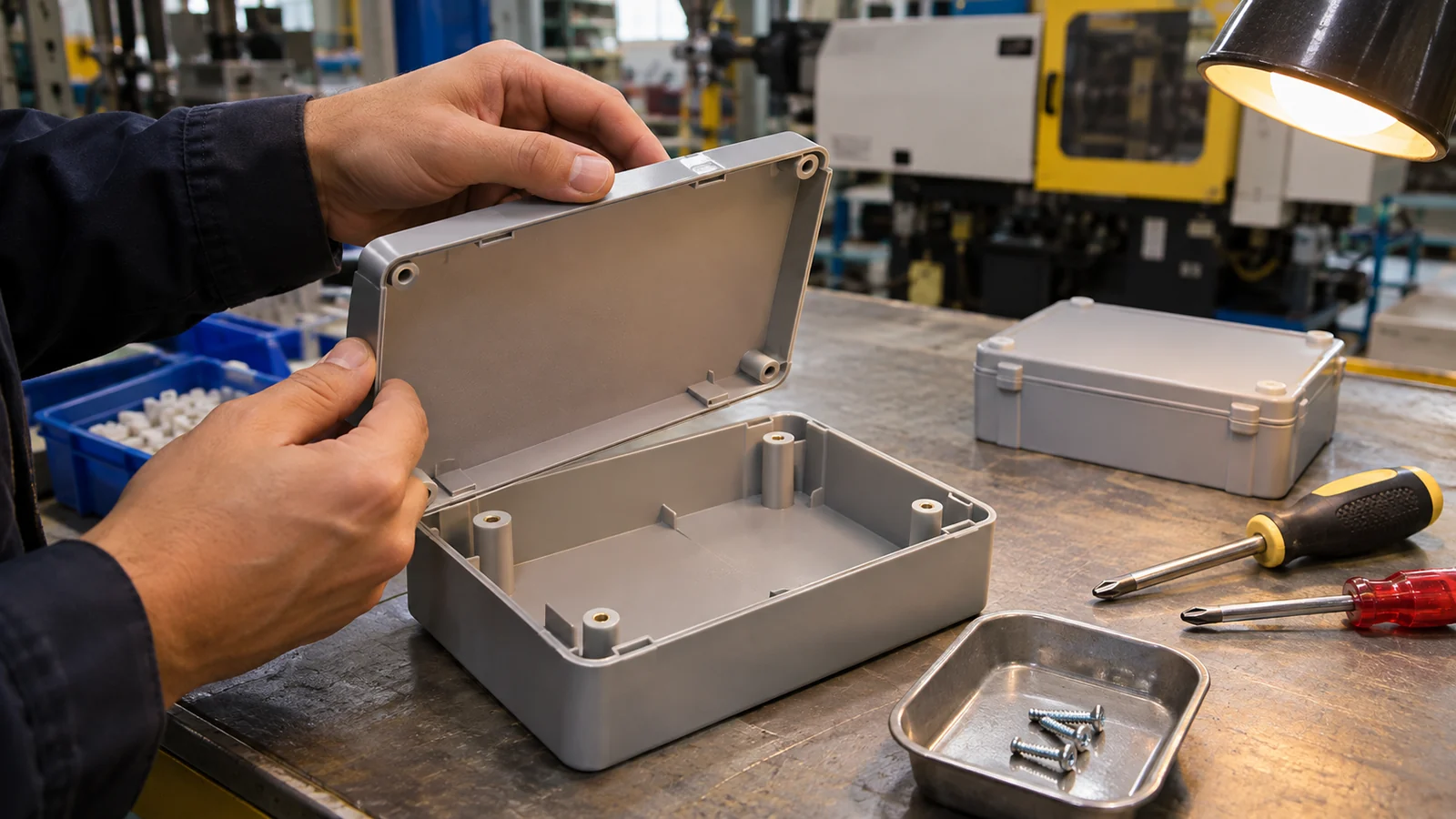
If a technician or end user must replace a battery, board, filter, or other component, a screw often makes the service path clearer. The design must still account for access to the driver, screw retention, torque limits, and the number of expected opening cycles. If the enclosure uses a molded boss, avoid treating it as a solid column: excessive local thickness can create sink or warpage, while a weak root can crack under tightening. Ribs and gussets may help, but their placement should be checked against wall thickness and cosmetic requirements.
 A rivet can make sense for a joint intended to stay closed during normal use, particularly when the assembly has limited access from one side or the fastener must sit close to the surface. Confirm that the mating stack is consistent and that the rivet head will not interfere with adjacent parts. For assemblies that may need repair, plan how a rivet will be removed and whether the surrounding molded feature can survive replacement.
When the parts themselves are molded with fastening features, compare assembly needs early with تجميع البراغي و التثبيت بالبرشام الخيارات. تصف صفحات العمليات هذه المسار المتاح؛ ويحدد رسم الجزء وخطة التأهيل ما إذا كان مناسبًا لمنتج معين.
Design checks before the drawing is frozen
- حدد مهمة الوصلة. اذكر ما إذا كانت تحمل أحمال سحب أو قص أو تثبيت أو اهتزاز أو إحكام أو محاذاة، وحدد الاتجاه الحرج.
- تحقق من الهندسة المحلية. راجع جدار النتوء، ونصف قطر الجذر، ومسافة الحافة، وحجم الثقب، والنتوءات المجاورة، وخطر الانخساف على السطح التجميلي المقابل.
- تأكد من إمكانية الوصول للتجميع. يحتاج البرغي إلى مسار وصول لأداة الربط وطريقة ربط محكومة؛ ويحتاج البرشام إلى مساحة لأداة التثبيت وخلوص للرأس المشكّل.
- طابق المثبّت مع الراتنج والطبقات. يمكن لصلابة الراتنج والزحف والرطوبة ودرجة الحرارة والحشوات وسماكة الجزء أن تغيّر جميعها قدرة التثبيت. لا تنقل حد عزم أو مقاومة سحب من درجة أو هندسة مختلفة.
- حدد توقعات الخدمة. وثّق ما إذا كانت الوصلة للاستخدام مرة واحدة، وعدد دورات الخدمة المتوقعة، وما إذا كان يُسمح باستبدال العتاد.
يجب أن تنعكس هذه الفحوصات في نموذج ثلاثي الأبعاد وملاحظات الرسم ومواصفات التجميع. إذا كان يُنظر إلى حشوة معدنية بدلًا من سن برغي مباشر، فاحتفظ بذلك كمسار تصميم منفصل: فالقولبة بالحشوة أو الإدخال بعد القولبة يغيّر متطلبات الأدوات والتجميع ولا ينبغي التعامل معه كبديل للبرشام.
How to validate the joint
ابنِ تجميعات تمثيلية باستخدام راتنج وفولاذ مثبتات وهندسة مقولبة مطابقة للإنتاج. سجّل أداة التجميع وظروف العزم أو التثبيت ودفعة الأجزاء وأي تلف ظاهر. ثم اختبر الخاصية التي يحتاجها المنتج فعليًا: مقاومة السحب أو القص أو ثبات التثبيت أو متانة الاهتزاز أو الفتح المتكرر أو التعرض البيئي. قد لا تجيب نتيجة حمل ذروة واحدة عما إذا كانت الوصلة تبقى قابلة للخدمة أو ما إذا كان النتوء البلاستيكي يتشقق بعد الدورات.
افحص أسطح الفشل بالإضافة إلى القيمة المقاسة. فالنتوء المجرّد، والجدار المتشقق، والبرشام المشوّه، والبرغي المرتخي تشير كلها إلى إجراءات تصميمية مختلفة. وإذا حدث الفشل في الميزة المصبوبة، فإن تغيير إعداد التجميع فقط قد ينقل الضرر إلى مكان آخر دون حل مشكلة الشكل الهندسي. حدّد حدود القبول قبل التجربة حتى لا يُحكم على نتيجة حدّية بالمظهر وحده.
بالنسبة لحزمة الرسومات، حدّد نوع المثبّت ومقاسه، وهندسة الثقب أو الثقب الإرشادي، والجانب القابل للوصول، وحدود المظهر الجمالي، وظروف التجميع، واختبار التحقق المطلوب. وهذا يجعل ملاحظات المورّد أكثر فائدة ويمنع أن تعني كلمة “محكم” أشياء مختلفة لدى فرق التصميم والإنتاج والجودة.
الأسئلة الشائعة
هل البراشيم دائمًا أرخص من البراغي؟
ليس تلقائيًا. فسعر المثبّت ليس إلا جزءًا واحدًا من المقارنة. إذ يمكن أن تغيّر أدوات تصنيع الميزة المصبوبة، ووقت التركيب، وإمكانية الوصول، والفحص، والصيانة، وتكلفة الاستبدال التكلفة الإجمالية للتجميع.
هل يمكن إعادة فتح مبيت بلاستيكي بعد البرشمة؟
عادةً يجب إزالة البرشام بطريقة إتلافية، وقد يحتاج الوصل إلى مثبّتات جديدة لإعادة التجميع. وإذا كان الوصول الدوري مطلوبًا، فقيّم استخدام برغي أو تصميم آخر قابل للصيانة قبل اعتماد تصميم الحاوية نهائيًا.
ما الذي ينبغي اختباره على نتوء البرغي؟
اختبر وظيفة التثبيت أو الشد ذات الصلة في ظروف التجميع والخدمة المتوقعة. ووفقًا للتطبيق، قد يشمل ذلك عزم التركيب، أو انسلاخ السن اللولبي، أو مقاومة السحب، أو الاهتزاز، أو التعرض لدرجات الحرارة، أو الفتح المتكرر. استخدم درجة الراتنج الفعلية والشكل الهندسي المصبوب.