
Prototype Injection Molding
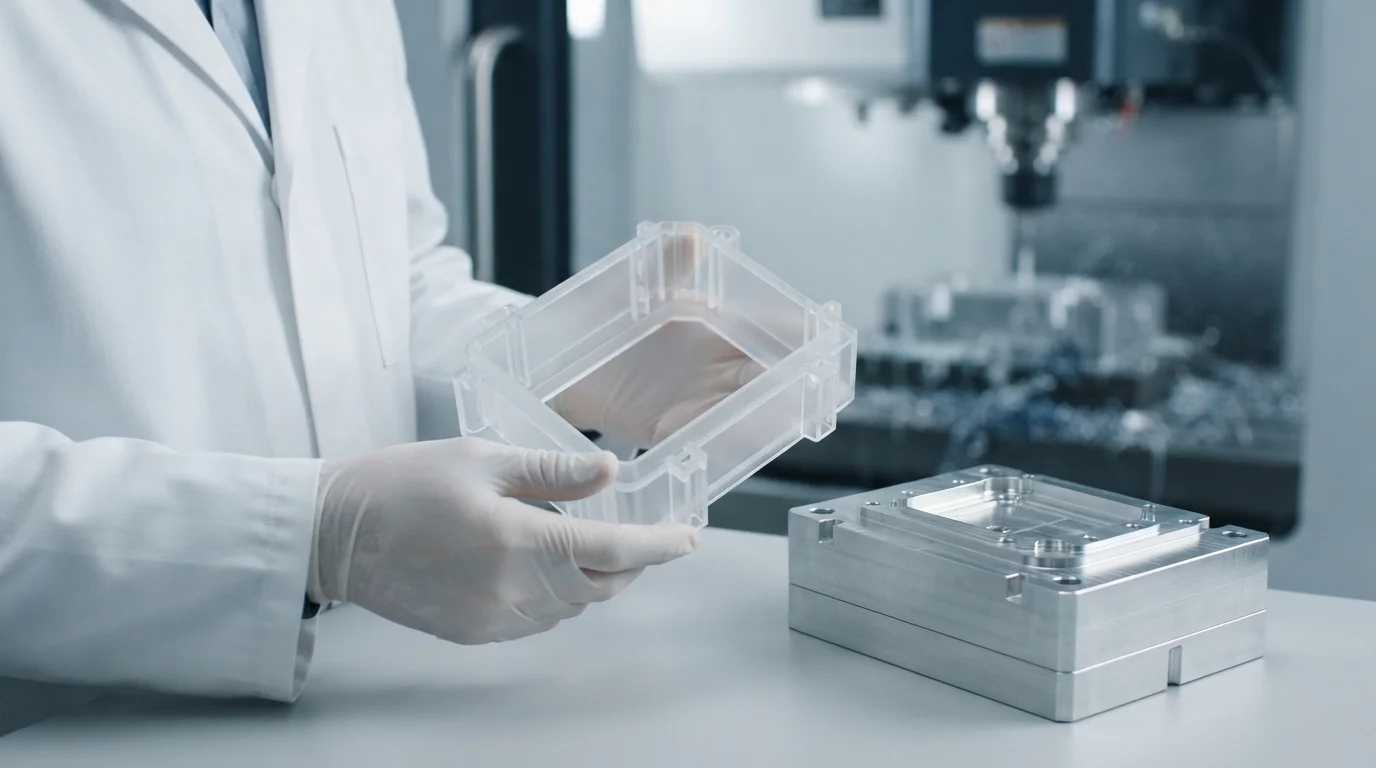
Accelerating product development and validating complex part geometries requires real production-grade plastic parts before committing to full-scale manufacturing. Prototype injection molding bridges the gap between initial 3D printing and high-volume production, utilizing rapid aluminum or pre-hardened steel tooling to produce functional prototypes in as fast as 10 business days. At Jucheng Precision, we specialize in rapid prototype tooling and low-volume bridge production. Backed by 25+ in-house 5-axis CNC machining centers and 35+ injection presses, we process real engineering thermoplastics with identical shrinkage and mechanical properties, delivering fully validated prototype parts backed by free 24-hour DFM analysis and Zeiss CMM inspection.
Prototype Tooling vs. Production Tooling Capabilities
Prototype injection molding utilizes Rapid Tooling and modular mold bases to bridge the gap between initial 3D printing and full-scale manufacturing:
| Tooling Attribute | Rapid Prototype Molds | Production Mold Tooling |
|---|---|---|
| Mold Material Choice | QC-10 Aluminum / Pre-Hardened NAK80 Steel | Hardened S136 Stainless Steel / H13 Steel (52 HRC) |
| Lead Time to First Part | As fast as 10 business days | 4 to 6 weeks for multi-cavity automated tools |
| Expected Tool Life | 100 to 10,000+ prototype parts | 100,000 to 1,000,000+ mass production cycles |
Prototyping Resin Adaptability & Material Engineering Matrix
Unlike 3D printing, prototype injection molding uses production-grade thermoplastics to validate physical design performance:
| Resin Category | Prototyping Strategy | Verification Focus |
|---|---|---|
| Engineering Resins (ABS, PC, PA) | Rapid aluminum cavities with manual insert hand-loads to test mechanical snap-fits and structural ribbing. | Validates physical drop-tests, tensile assembly strength, and thermal resistance before mass tooling investment. |
| High-Performance Polymers (PEEK, PBT) | Pre-hardened steel prototype cores with oil heating to simulate end-use crystallization and flow shrinkage. | Confirms extreme heat deflection, chemical insolubility, and tight tolerance compliance on functional prototypes. |
| Elastomeric Overmolding (TPE) | Prototype 2-shot or hand-load overmold tooling to verify chemical bonding over rigid sub-substrates. | Tests ergonomic soft-touch grip aesthetics, peel resistance, and sealing lip compression set. |
Prototype Tooling & Rapid Verification Technical Guide
Creating functional prototype plastic parts requires balancing speed, cost efficiency, and production-grade fidelity:
1. Free DFM Analysis within 24 Hours
Every CAD file uploaded is reviewed by our engineering team within 24 hours. We evaluate wall thickness uniformity, draft angles, gate locations, and potential sink marks to refine the design for rapid prototyping.
2. Fast 5-Axis CNC Aluminum Tooling
Using our 25+ in-house 5-axis CNC machining centers, we cut aluminum QC-10 or P20 steel mold inserts rapidly. Aluminum dissipates heat quickly, reducing cycle times and allowing us to deliver first-off prototype samples in as fast as 10 business days.
3. Seamless Transition to Bridge Tooling
Prototype molds can serve as Bridge Tooling to launch market pilot runs or fulfill initial Moldagem por Injeção de Baixo Volume orders while high-cavitation production molds are being manufactured.
4. Production-Grade Material & CMM Verification
Prototype parts are molded from identical production resins rather than simulative 3D printing filaments. Dimensional accuracy is verified on Zeiss CMM inspection systems, including options for Moldagem por Injeção em Sala Limpa if required.
Key Application Fields for Prototype Injection Molding
- Medical Devices & Biotech: Functional surgical instrument prototypes, drug delivery casing trials, and clinical testing cartridges prior to FDA validation.
- Automotive Engineering: Under-the-hood sensor housing prototypes, cabin trim concept verification, and pre-production functional testing.
- Eletrônicos de Consumo e Ferragens: Smart home device enclosures, power tool housing prototypes, and handheld device snap-fit testing.