
The advantages of plastic injection molding matter most when a part design is stable, repeat production is expected and the tool can make the required geometry consistently. The process can combine repeatability, complex features and efficient output, but those benefits are not automatic. Tooling investment, design changes, material choice, inspection and production volume all shape the decision.
إجابة مختصرة: injection molding is worth evaluating when the part and demand justify a dedicated mold and the process can meet the acceptance requirements over the intended run. For a prototype, uncertain design or very small quantity, the tooling commitment may outweigh the per-part benefit.
في هذا الدليل:
- Which advantages matter to buyers
- Conditions that make the benefits real
- When the process may not pay off
- A practical decision check
- الأسئلة الشائعة
Which Advantages Matter to Buyers?
The strongest case is not that molding is always fast or inexpensive. It is that a well-designed tool can produce a defined part repeatedly, with features and material behavior suited to the application. Buyers should connect each claimed advantage to a measurable requirement.
- Repeatable geometry: a stable tool and controlled process can support consistent dimensions across a planned production run. The relevant question is which dimensions are critical and how they will be measured.
- Complex molded features: ribs, bosses, snap features and integrated details can be formed as part of the component when the geometry, draft, gate and ejection strategy work together. A feature that is easy to draw may still be difficult to mold or inspect.
- Material choice: the process can use a broad range of thermoplastics, including reinforced and engineering grades. Resin selection still has to match strength, temperature, chemical exposure, appearance and processing needs.
- Repeat production: once tooling and process conditions are established, the same cavity can support recurring orders without machining every part from stock. Actual economics depend on run size, cycle, scrap and inspection requirements.
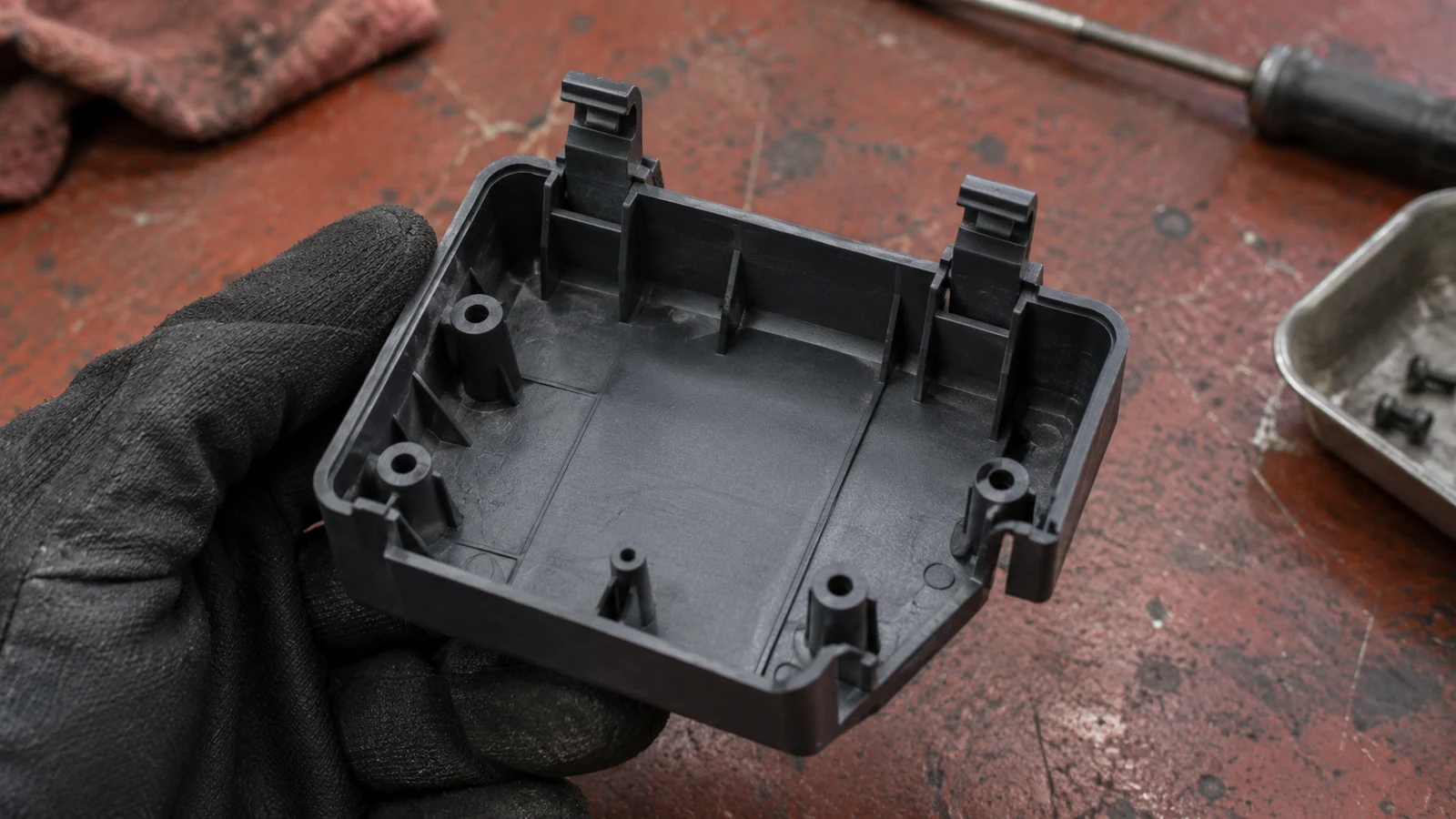
These are engineering and commercial advantages only when the part passes its functional and quality checks. A nominally repeatable process is not enough if the chosen datum scheme, appearance standard or packaging condition changes from one order to another.
Conditions That Make the Benefits Real
Begin with design maturity. If the enclosure, connector layout, wall thickness or interface is still changing, a production tool may lock in assumptions too early. A prototype or design-validation step can expose fit, assembly and usability issues before the mold is finalized.
Next, define demand as a realistic range rather than a single optimistic forecast. Tooling is a one-time commitment, while resin and processing recur with production. A clear forecast helps the team compare tool architecture, cavity count and order cadence without pretending there is one universal volume break-even point.
Then connect material and geometry. A resin chosen for heat, impact, chemical exposure or reinforcement can affect shrinkage, gate design, wall transitions and cycle behavior. DFM review should consider the complete part, not just the material data sheet. The plastic injection molding process overview describes how tooling and process decisions work together.
When Injection Molding May Not Pay Off
The process may be a poor fit when quantity is very low, demand is unpredictable or the design is likely to change after tooling begins. In those cases, a lower initial commitment can matter more than a low theoretical unit cost. Ask what happens if the product needs a revised interface, a new material or a different cosmetic surface after the mold is built.
Complexity also has a cost. Side actions, tight shutoffs, high-polish surfaces, multi-cavity balance and special inspection can add design, build and validation work. A molded part that needs extensive secondary finishing or rejects a high share of output may not deliver the expected advantage.
That does not mean avoiding molding whenever risk exists. It means making the risk visible before purchase: define the critical features, review the mold concept, agree the sample acceptance plan and record what changes require a new quote. A structured خطة تجربة القالب والتحقق من الصلاحية can help confirm whether the proposed process produces acceptable parts under agreed conditions.

A Five-Question Decision Check
- Is the part design stable? Identify open design changes and interfaces that could affect the mold.
- Is repeat demand credible? Use a forecast range and order pattern, not only a best-case annual volume.
- Can the geometry be molded and released? Review wall transitions, draft, gates, vents, shutoffs and ejection.
- Does the resin meet the use condition? Check the complete environment and functional requirement, not a single headline property.
- Can acceptance be measured? Name the critical dimensions, appearance criteria, sample plan and documentation needed for release.
If the answers are clear, compare total program assumptions rather than a single per-part figure. If several remain open, resolve them before treating the tooling quote or cycle estimate as final. For the tooling investment itself, see the custom mold making service details.
الأسئلة الشائعة
What is the biggest advantage of plastic injection molding?
There is no single advantage for every part. Repeatable production, feature integration and material options can be valuable when they match a stable design and credible demand.
Does injection molding always become cheaper at high volume?
Not automatically. Tooling can be spread across more parts, but resin, cycle, scrap, inspection, secondary work and order pattern still affect total cost.
Is injection molding a good choice while the design is changing?
Frequent design changes can create rework or new tooling expense. Validate the design and critical interfaces before committing to production tooling where practical.
How can a buyer verify the claimed advantages?
Define the part requirements, trial conditions, sample size, inspection method and acceptance criteria. Then compare measured results with the drawing and intended use.